
Northern fruit fly
Bactrocera aquilonis
Description
How to identify
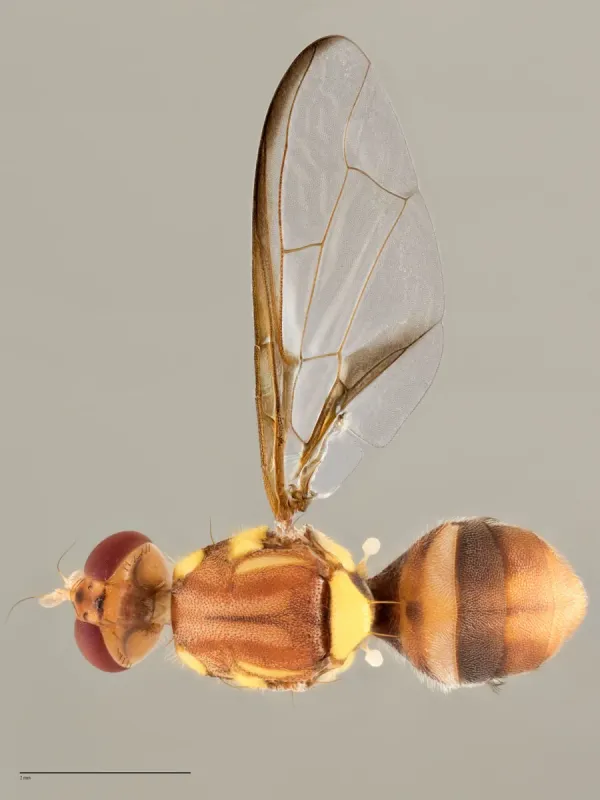
The Northern fruit fly (Bactrocera aquilonis) is a significant agricultural pest belonging to the family Tephritidae (Order: Diptera). Adult flies are relatively small, typically featuring a distinctive yellowish-brown body coloration that aids in camouflage within fruit tree foliage.
These flies possess a specialized ovipositor, which the female uses to penetrate the skin of host fruits to deposit eggs directly into the pulp. The head is equipped with mouthparts adapted for feeding on sugars, nectar, and plant juices.
The larvae, or maggots, are legless, creamy-white in color, and grow through several instars while consuming the fruit tissue. They are highly mobile within the fruit, leading to rapid degradation of the host material.
Pupation typically occurs in the soil beneath the host plant. The species is endemic to northern parts of Australia and is closely related to other economically damaging fruit fly species, often requiring expert morphological analysis for confirmation.
Due to their high reproductive rate and adaptability, they pose a constant biosecurity threat to commercial horticulture and local backyard orchards in their native range.
What it damages
The Northern fruit fly is highly polyphagous, meaning it can infest a wide variety of fruit crops. Common hosts include mangoes, peaches, citrus, and numerous native and exotic tropical fruits, making it a generalist pest.
The larvae feed on the internal flesh of the fruit, creating tunnels that destroy the fruit structure. This process is often accompanied by opportunistic secondary fungal and bacterial infections, causing the fruit to rot from the inside out.
A clear symptom of infestation is the premature ripening and dropping of fruits from the tree. In commercial settings, this leads to significant yield losses and reduces the overall marketability of the produce.
Because they target a wide range of cultivars, they can sustain themselves in the environment even when primary crops are not available, utilizing wild or abandoned fruit trees as reservoirs.
The economic impact extends beyond crop loss, as the presence of this pest triggers strict trade and movement restrictions, significantly affecting regional agricultural exports.
When it appears
The activity of the Northern fruit fly is heavily influenced by temperature and humidity. They thrive in tropical climates, where the absence of severe winter allows for continuous breeding cycles if host fruits are present.
Several generations can occur within a single year, with the duration of the life cycle depending on environmental factors. The most active periods correlate with the availability of ripening fruit in the orchards.
Spring and summer represent the periods of peak activity, during which adult populations increase rapidly. This is the critical window for implementing monitoring and control measures.
Overwintering is possible at various life stages depending on local conditions; however, they remain largely active throughout the year in the northern regions where they are established.
Integrated Pest Management (IPM) programs rely on seasonal data collected from monitoring traps to time interventions perfectly, ensuring that populations are kept below economic injury levels.
Signs of infestation
The initial sign of infestation is often the appearance of tiny "sting" marks or punctures on the surface of the fruit where the female has inserted her eggs. These marks may become discolored or sunken as the fruit develops.
When an infested fruit is cut open, one can typically find maggots burrowing through the softening, discolored flesh. In later stages, the fruit may emit a sour, fermented odor due to the decaying tissue.
Premature dropping of fruit is a major indicator of an infestation. If fallen fruit is picked up and examined, it often reveals a high density of larvae, confirming the presence of the pest in the vicinity.
- Microscopic puncture wounds on the fruit peel.
- Dark, sunken spots around egg-laying sites.
- Soft, discolored, or rotting internal tissue.
- Premature fruit fall from trees.
- Presence of creamy-white maggots inside the fruit.
Regular inspection of trees and the use of specialized bait traps are essential diagnostic tools for identifying the presence of Bactrocera aquilonis early in the season.
Control measures
Effective control requires a multi-pronged approach, starting with good orchard hygiene. This involves the prompt collection and destruction of all fallen and overripe fruit to prevent the next generation of larvae from entering the soil.
Chemical control focuses on the use of bait sprays that incorporate an attractant with a low-toxicity insecticide. This method targets adult flies, reducing the population before significant egg-laying occurs.
Biosecurity measures, such as the regulation of produce movement out of infested regions, are critical to preventing the spread of the fly to non-infested commercial areas.
Biological control through the release of parasitoid wasps (braconids) is an emerging strategy aimed at reducing fly populations naturally without heavy reliance on synthetic chemicals.
Monitoring using pheromone-based or protein-based traps is mandatory for early detection. These tools provide the data necessary to make informed decisions about when and where to apply targeted control actions.
Taxonomy
- Latin name
- Bactrocera aquilonis
- Order
- Diptera (flies)
- Family
- Tephritidae
- EPPO code
- BCTRAQ
Discussion
No discussions yet — be the first.