
Bactrocera albistrigata
Bactrocera albistrigata
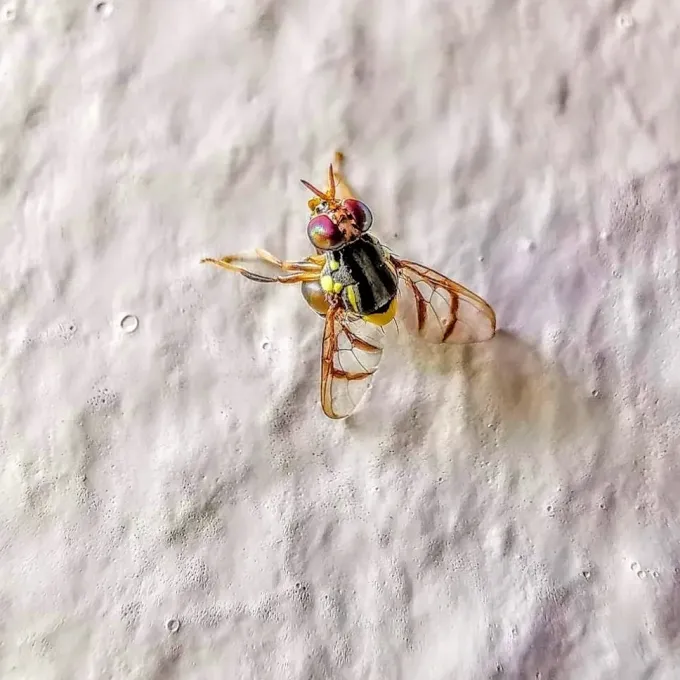
Description
How to identify
Bactrocera albistrigata is a species of fruit fly belonging to the family Tephritidae, order Diptera. As a member of the diverse Bactrocera genus, it is recognized as a significant agricultural pest that requires accurate identification.
The adult fly has a distinct body pattern and wing venation typical of the family. Due to its morphological similarity to other species in the genus, taxonomic identification often requires expert examination or molecular diagnostics.
The larvae are typical of Tephritid fruit flies: apodous (legless), creamy-white to yellowish in color, and spindle-shaped. They possess sclerotized mouth hooks for feeding within the host fruit tissues.
Pupation typically occurs in the soil, where the larvae form a protective puparium. This stage is crucial for the fly's survival during harsh environmental conditions or seasonal transitions.
The life cycle follows a complete metamorphosis: egg, larva, pupa, and adult. Each stage requires specific ecological conditions to thrive, and the duration of each phase depends heavily on ambient temperature.
What it damages
This fruit fly is a notorious polyphagous pest, known to attack a wide variety of tropical and subtropical fruits. Key hosts include commercial crops like mangoes, guavas, and numerous other plant species.
Damage is primarily caused by larvae that feed within the fruit. As they tunnel through the flesh, they break down the fruit's integrity, leading to significant post-harvest losses and reduced shelf life.
The punctures made by the female during oviposition often serve as entry points for secondary bacterial and fungal pathogens. This accelerates the decay of the fruit, making it unmarketable.
Economic damage includes direct yield loss, increased costs for phytosanitary measures, and potential trade restrictions on agricultural products from regions where the fly is present.
Because the larvae reside inside the fruit, the damage is often invisible until it is too late. This makes the pest particularly difficult to detect during commercial shipments and inspections.
When it appears
The activity of Bactrocera albistrigata is highly correlated with the fruiting seasons of its host plants. In tropical environments, the fly can remain active year-round, provided suitable hosts are available.
Population peaks are typically observed during warmer and more humid months, which are optimal for the development and reproduction of the flies. High temperatures generally accelerate the life cycle.
Multiple generations can occur throughout a single growing season. This rapid turnover of generations can lead to a massive infestation within a short period if control measures are not implemented.
Wintering or periods of low activity are usually spent as pupae in the soil. As soon as temperatures become favorable and new host fruit becomes available, the adult flies emerge to begin the next cycle.
Integrated pest management programs utilize traps baited with male lures to monitor the presence and population density of the fly throughout the growing season.
Signs of infestation
Initial signs of infestation are subtle, consisting of small punctures on the skin of the fruit where the female inserted her ovipositor. In some cases, localized discoloration or slight skin depressions appear.
Internally, the fruit shows signs of tunnel formation filled with larval excrement and decaying plant tissue. This can lead to rapid softening and the development of a fermented or rotten odor.
Premature ripening and fruit drop are common indicators of a heavy infestation. Fruits that appear perfectly healthy on the outside may be heavily infested with larvae inside.
Exit holes, where mature larvae emerge from the fruit to pupate in the soil, are a late-stage sign of infestation. At this point, the fruit is almost entirely destroyed.
- Darkening of the skin near oviposition sites.
- Soft, watery spots on the surface.
- Internal pulp decay and fermentation.
- Presence of larval exit holes on the peel.
Control measures
Managing Bactrocera albistrigata requires an integrated pest management (IPM) approach. Quarantine measures are essential to prevent the spread of the fly to new geographical areas.
Cultural control is the first line of defense, involving the regular collection and disposal of fallen fruit. Destroying infested fruit by burying it deeply or composting at high heat is critical.
Chemical control focuses on the adult stage using bait sprays. These sprays combine an insecticide with a food attractant to lure the flies and minimize the amount of chemicals used.
The use of male attractant traps is highly effective for both monitoring and "male annihilation" strategies, which reduce the probability of females finding mates and thus lowering egg-laying success.
Biological control options, including the release of specific parasitoid wasps that target the larval stage of the fruit fly, are used to manage populations in larger orchard settings.
Taxonomy
- Latin name
- Bactrocera albistrigata
- Order
- Diptera (flies)
- Family
- Tephritidae
- EPPO code
- BCTRAL
Discussion
No discussions yet — be the first.