
Fruit fly of the genus Bactrocera
Bactrocera
Description
How to identify
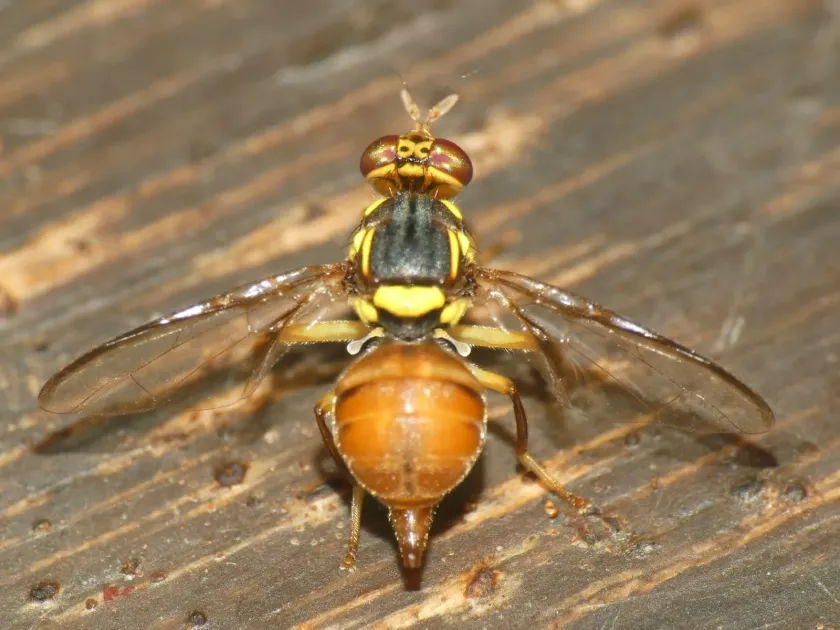
The genus Bactrocera comprises some of the most destructive agricultural pests worldwide. These insects belong to the order Diptera and the family Tephritidae. Adult flies typically resemble small wasps, with body lengths ranging from 6 to 8 mm.
They are characterized by well-developed compound eyes and transparent wings, often featuring distinct dark patterns or bands along the margins. The body color varies from yellowish-brown to nearly black, aiding in camouflage within orchard foliage.
Females possess a robust ovipositor, enabling them to pierce the skin of various fruits to deposit eggs directly into the pulp. The larvae are legless, creamy-white in color, and typical of many fruit-infesting maggots, growing up to 10 mm in length.
Their life cycle includes complete metamorphosis: egg, three larval stages, pupa, and adult. Adults feed on plant sap, honeydew, and nectar, which enhances their survival and reproductive capacity in favorable conditions.
Spread primarily occurs through the transport of infested produce. Their high ecological plasticity allows them to colonize new regions quickly, making them a major target for global phytosanitary agencies.
What it damages
Bactrocera species are highly polyphagous, attacking over 400 plant species. Major hosts include citrus, mango, peaches, apricots, apples, and vegetables such as tomatoes, peppers, and eggplants.
The primary damage is caused by the larvae, which tunnel through the fruit pulp as they feed. This leads to premature fruit drop and complete loss of market value for the affected crop.
Infested fruit is susceptible to rapid decay due to the introduction of secondary fungal and bacterial pathogens through the feeding tunnels. This secondary infection often destroys the entire fruit structure within days.
In regions with high population densities, crop losses can reach 80–100%. This high level of damage poses a severe threat to commercial fruit production and regional food security.
The presence of these flies triggers strict quarantine regulations, leading to significant economic losses for exporters who face bans on shipping fruit from affected areas.
When it appears
Activity is heavily dependent on ambient temperature and humidity. The flies thrive in warm conditions, with optimal reproduction occurring between 25°C and 32°C.
In tropical and subtropical climates, they can produce up to 8–10 generations per year, ensuring continuous pressure throughout the entire growing season of susceptible host plants.
Overwintering occurs either as pupae in the soil or as adults in sheltered areas. As temperatures rise, the population recovers and expands rapidly.
The peak of damage occurs during the fruit ripening stage, as females aggressively seek suitable sites for oviposition. This period requires the highest level of vigilance from orchard managers.
When cultivated fruits are unavailable, the flies can survive by utilizing wild host plants, maintaining a reservoir of the pest that can infest nearby commercial orchards later.
Signs of infestation
The initial sign of infestation is the presence of minute puncture wounds on the fruit skin, often surrounded by small dark spots or indentations. A droplet of juice or frass may be visible near the sting site.
Softening of the fruit tissue around the oviposition site indicates internal larval feeding. Affected fruit often drops from the tree while still appearing relatively intact on the outside.
Slicing open the fruit reveals internal tunnels filled with larval excrement and the larvae themselves, which is definitive proof of an infestation.
The capture of adult flies on yellow or white sticky traps is a critical early warning sign, indicating that immediate monitoring and control actions are required.
Secondary signs include yellowing of the fruit and the smell of fermentation or decay. In advanced stages, exit holes may appear on the fruit skin as mature larvae emerge to pupate.
Control measures
Strict phytosanitary control is the first line of defense, including the prohibition of importing non-certified produce from infested regions and thorough cargo inspections.
Pheromone-based monitoring traps are essential for early detection and population assessment, which helps guide the timing of management interventions.
Cultural control involves the rigorous collection and destruction of fallen fruit (sanitation), which breaks the life cycle by removing the environment required for larvae to pupate.
Chemical control usually involves the use of insecticide-bait sprays, focusing on the adult stage to prevent egg-laying while minimizing residue on the developing fruit.
- Pruning trees to improve light penetration and air circulation.
- Individual fruit bagging to prevent female flies from accessing the skin.
- The use of the Sterile Insect Technique (SIT) to reduce population growth in wider areas.
Taxonomy
- Latin name
- Bactrocera
- Order
- Diptera (flies)
- Family
- Tephritidae
- EPPO code
- BCTRSP
Discussion
No discussions yet — be the first.