
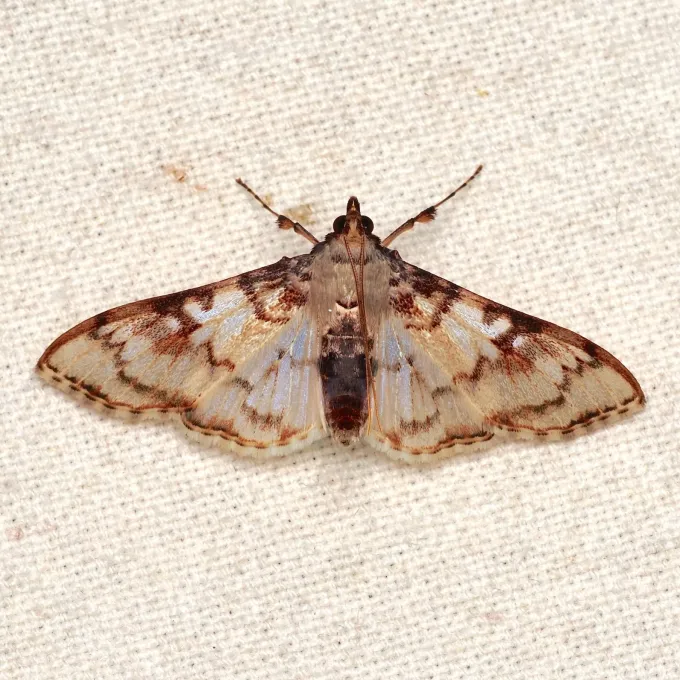
Azochis gripusalis
Azochis gripusalis
Description
How to identify
Azochis gripusalis is a species of moth belonging to the family Crambidae. It is recognized as a specialized pest that targets specific botanical hosts, primarily within the genus Ficus.
The adult moth exhibits typical morphological characteristics of the Spilomelinae subfamily, often adapted to nocturnal or crepuscular activity patterns in tropical and subtropical climates.
The life cycle encompasses four distinct stages: egg, larva, pupa, and adult. The larval stage is the primary cause of concern for agronomists due to its feeding habits.
Proper identification of this species is essential for effective management, often requiring examination of wing patterns and genital structures to distinguish it from related crambid moths.
Understanding the habitat preferences of Azochis gripusalis is crucial, as it thrives in environments where its host plants are cultivated in abundance.
What it damages
The primary crop damaged by this species is the common fig (Ficus carica). The larvae are known to cause significant physiological stress to the host plant through leaf consumption.
By feeding on leaves, the larvae reduce the photosynthetic capacity of the plant, which is vital for both vegetative growth and fruit development in fig trees.
Feeding activity on young shoots can lead to stunted growth and structural deformations, affecting the overall health and vigor of the tree over time.
In cases of high infestation, the larvae can penetrate the fruit, rendering it unmarketable and susceptible to rotting or secondary fungal infections.
The cumulative damage often results in significant economic losses for commercial fig producers, especially if the infestation remains undetected during early stages.
When it appears
The activity of Azochis gripusalis is highly dependent on seasonal temperature fluctuations, with peak infestations typically occurring during the warmer months.
Multiple generations can occur within a single growing season, provided that the climate remains favorable and the host plants are in an active growth phase.
The emergence of adults often coincides with the onset of favorable spring weather, after which they lay eggs that give rise to the first generation of larvae.
Monitoring the accumulation of degree-days is a common agronomical practice used to predict the life cycle transitions of the pest and schedule control measures.
As temperatures decline in autumn, the population growth usually slows down, and the insect may enter a diapause stage to survive the colder dormant season.
Signs of infestation
One of the earliest signs of an infestation is the appearance of irregular, skeletonized leaves, where only the primary veins of the foliage remain.
The presence of silken webbing between leaves or around shoots is a clear indicator of larval activity, as these threads are used for both shelter and protection.
Small, granular frass (larval droppings) accumulating on the leaves or the ground beneath the canopy confirms that the pests are actively feeding.
Yellowing and premature wilting of foliage are symptomatic of the stress induced by larval feeding and the potential disruption of nutrient flow.
Visual confirmation of fruit penetration, often accompanied by latex weeping on the fruit surface, is a critical sign of severe infestation requiring immediate intervention.
Control measures
Chemical control involving systemic insecticides is effective when applied during the early larval development stage, before the pest causes deep tissue damage.
Biological control measures, such as the application of Bacillus thuringiensis, offer a targeted approach that minimizes impact on beneficial insect populations.
Cultural practices, including the removal and destruction of infested twigs and leaves, play a vital role in reducing the overall pest population in the orchard.
Pheromone trapping is an invaluable tool for monitoring population density and identifying the optimal timing for protective spraying, thus optimizing chemical use.
Maintaining orchard hygiene and ensuring proper tree health through adequate irrigation and fertilization helps strengthen the plant's natural defenses against pest attacks.
Taxonomy
- Latin name
- Azochis gripusalis
- Order
- Lepidoptera (butterflies)
- Family
- Crambidae
- EPPO code
- AZOIGR
Discussion
No discussions yet — be the first.