
Azochis
Azochis
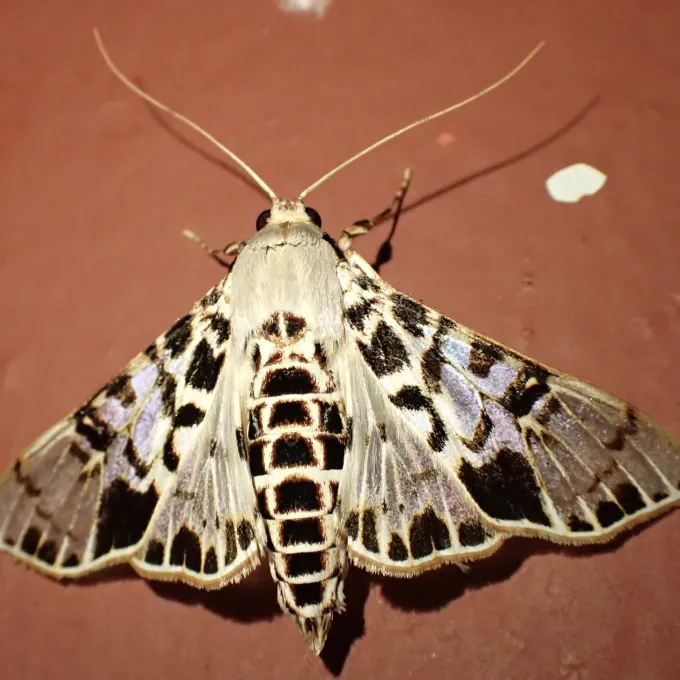
Description
How to identify
The genus Azochis belongs to the Crambidae family of moths. These insects are primarily recognized for their larval stage, which acts as a destructive herbivore on various host plants.
Adult moths are typically nocturnal, possessing camouflage patterns that allow them to blend into the surrounding vegetation during daylight hours.
The life cycle involves four distinct stages: egg, larva, pupa, and adult. Each stage is temperature-dependent and often influenced by the humidity levels of the environment.
Larvae are characterized by a chewing mouthpart structure, enabling them to consume leaves and buds with high efficiency throughout their development.
Correct identification often requires close inspection of the leaf surface, as eggs are small and typically deposited in groups on the underside of foliage.
What it damages
Azochis pests primarily target tropical and subtropical trees and shrubs, showing a particular preference for members of the Moraceae family, such as Ficus species.
The damage starts with larvae feeding on the leaf epidermis, which eventually leads to skeletonized leaves and significantly reduced plant vigor.
If left unmanaged, the infestation can lead to stunted growth, distorted leaf development, and in severe cases, the death of young plants.
The presence of larvae also attracts secondary pathogens because the feeding wounds provide entry points for various bacterial and fungal infections.
Significant economic loss can occur in nurseries and botanical collections, where maintaining the aesthetic and health standards of the plants is essential.
Signs of infestation
One of the most noticeable signs of infestation is the presence of webbed or rolled leaves, which the larvae create for protection while feeding.
Frass (larval excrement) found on the leaves or falling to the soil surface is a clear indicator that the larvae are actively feeding nearby.
Key visual symptoms include:
- irregular holes in the leaf blades;
- yellowing and wilting of the foliage;
- damage to the terminal growing points;
- webbing between stems and leaves.
Disturbed plants may show sudden leaf drop or a lack of new growth in the infested areas, which often signals a higher population density.
Observing the plant at night using a flashlight may reveal the activity of the adult moths or even larvae moving across the leaf surface.
Control measures
Monitoring using light traps is a highly effective way to detect the presence of adult Azochis and determine the optimal timing for intervention.
Biological control using formulations of Bacillus thuringiensis has shown success in reducing larval populations without significantly harming beneficial insects.
Chemical control measures should involve the application of systemic or contact insecticides targeting the early larval stages when they are most vulnerable.
Cultural practices, such as the pruning and disposal of infested shoots, are essential to break the life cycle and reduce the number of overwintering pupae.
Integrated Pest Management (IPM) programs should be adopted, alternating different classes of insecticides to prevent the development of resistance.
Taxonomy
- Latin name
- Azochis
- Order
- Lepidoptera (butterflies)
- Family
- Crambidae
- EPPO code
- AZOISP
Discussion
No discussions yet — be the first.