
Autoba
Autoba
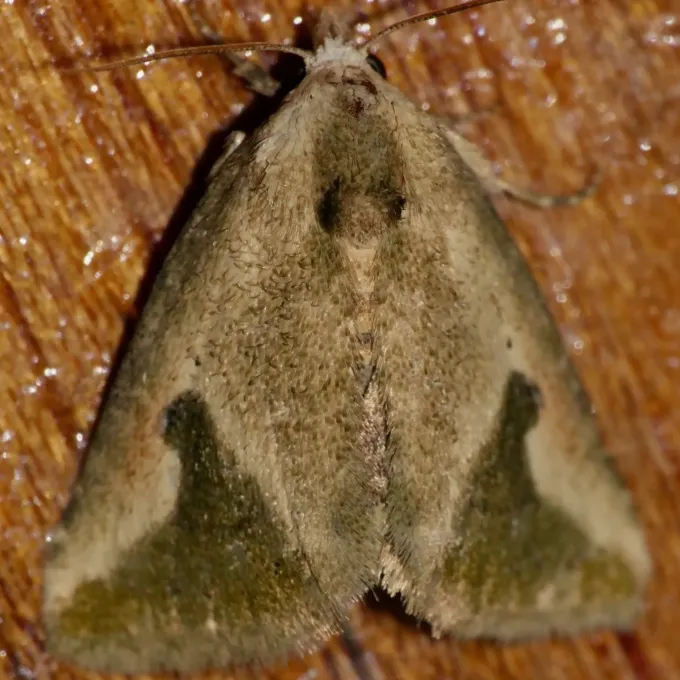
Description
How to identify
The genus Autoba belongs to the Erebidae family within the order Lepidoptera. These are typically nocturnal moths that often remain undetected due to their cryptic coloration and nocturnal lifestyle.
Adult moths are characterized by specific genital structures, which serve as the primary diagnostic feature for accurate identification in both field and laboratory settings.
The larvae, or caterpillars, undergo several developmental instars, during which their appearance may change slightly, making early identification somewhat complex for practitioners.
An important morphological trait is the wing pattern of the adults, which allows the insect to perfectly blend in with tree bark or dry vegetation during the day.
The presence of adults in agroecosystems is frequently recorded using light traps, which allow for population monitoring during the active night hours.
What it damages
Representatives of the Autoba genus cause damage to a wide range of woody and shrubby plants, including orchard fruit crops.
The caterpillars primarily feed on leaves, consuming the leaf blades along the margins or skeletonizing them, which significantly reduces the total photosynthetic surface area.
In cases of high population density, the pest is capable of damaging young buds and flowers, which directly impacts the yield reduction of fruit crops.
The lesions caused by this pest serve as entry points for secondary infections, including fungal diseases of the bark and leaf tissues.
Crop plants weakened by larval activity become more susceptible to unfavorable climatic factors and show reduced resilience during winter dormancy.
When it appears
The pest's activity is closely linked to the phenology of host plant development, with population peaks typically occurring in the second half of the growing season.
The overwintering stage of Autoba is usually represented by the pupa, which is contained within a dense cocoon in the leaf litter or crevices of tree bark.
The emergence of the first generation of adults coincides with the period of active sap flow and the formation of young foliage, providing nutrition for emerging larvae.
The flight period of the moths is extended, making targeted insecticide applications difficult without prior population monitoring.
Temperature regimes and humidity play a key role in the rate of generational development, with additional generations possible in favorable years.
Signs of infestation
The first sign of infestation includes characteristic "windows" on the leaves or uneven leaf margins left by larvae during their feeding stages.
The presence of frass on the leaf surfaces under the tree canopy indicates active larval feeding in the upper layers of the plant.
Inspecting the shoots often reveals curled or webbed leaf nests where caterpillars hide from natural predators during the daylight hours.
Wilting of individual shoots or premature yellowing of foliage is often a consequence of tissue damage near buds or tender stems.
Detecting pupae in bark folds or under dry leaves in autumn allows for accurate forecasting of the pest population for the following year.
Control measures
Effective control of Autoba is based on an integrated pest management (IPM) system that combines agrotechnical, biological, and chemical methods.
Agrotechnical measures include regular cleaning of orchards to remove fallen leaves and plant debris where the pest pupae hibernate.
During the period of mass larval emergence, biological preparations based on Bacillus thuringiensis are highly effective and safe for beneficial insects.
Chemical insecticides with a broad spectrum of action are used only when economic injury levels are exceeded, typically during early morning or evening hours.
- Optimizing orchard lighting to reduce canopy humidity.
- Encouraging natural enemies (birds, predatory insects) within the agroecosystem.
- Regular monitoring using pheromone traps.
- Timely pruning and destruction of heavily infested branches.
Taxonomy
- Latin name
- Autoba
- Order
- Lepidoptera (butterflies)
- Family
- Erebidae
- EPPO code
- AUTBSP
Discussion
No discussions yet — be the first.