
Austrotephritis
Austrotephritis
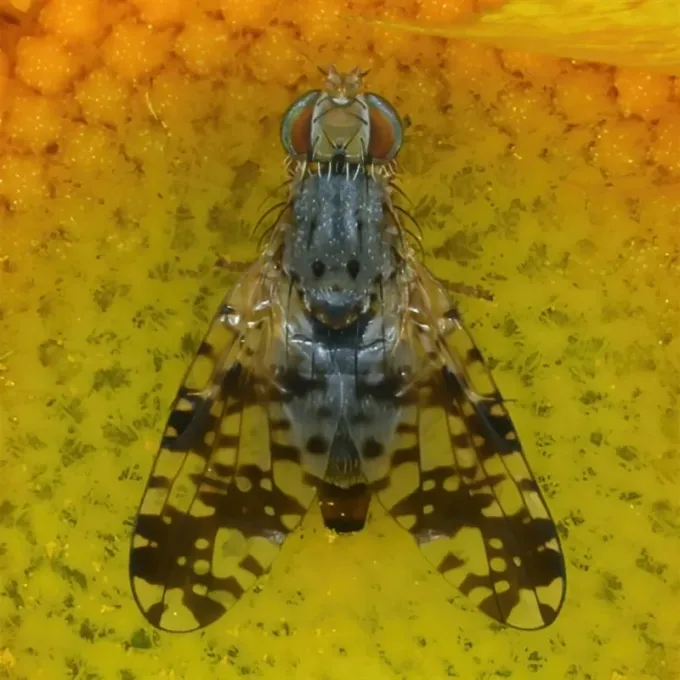
Description
How to identify
Austrotephritis is a genus of insects belonging to the family Tephritidae, commonly known as fruit flies. These insects are characterized by their intricate wing patterns and small body size, making them a part of a diverse group of dipterans known for their specialized host plant associations.
Adults are typically elusive, often camouflaged by their environment. Due to the morphological similarity between various species within the Tephritidae family, accurate identification often requires expert analysis of specific genital structures.
The larvae are typically maggot-shaped, white to yellowish in color, and lack legs. They possess a flattened body structure which is highly efficient for maneuvering and mining within the internal tissues of host plants.
The development cycle follows complete metamorphosis, consisting of egg, larval, pupal, and adult stages. Each stage is finely tuned to the phenology of the host plant, ensuring survival during critical growth periods.
Understanding the biology of Austrotephritis is essential for agricultural professionals to implement timing-sensitive control measures, specifically focusing on the most vulnerable stages of the pest's life cycle.
What it damages
Austrotephritis primarily targets plants within the Asteraceae family. This pest species is known to cause significant damage to the floral structures of both ornamental and medicinal plant varieties.
The larvae penetrate the flower heads where they feed on developing seeds and the floral receptacle. This feeding activity disrupts the plant's reproductive processes, leading to malformed blossoms and poor seed set.
In cases of high infestation levels, the pest can effectively destroy a large portion of the flowers, significantly impacting the yield and quality of the cultivated plants.
For seed production farms, the presence of this pest poses a severe threat, as it compromises the marketability and viability of the seeds produced by the host plants.
Furthermore, the physical damage caused by the larvae often provides entry points for secondary infections, such as bacterial or fungal rot, which further deteriorates the health of the flowers.
When it appears
The life cycle of Austrotephritis is deeply synchronized with the budding and flowering phases of its host plants. Adults typically emerge and become active exactly when the plant is preparing to bloom.
Females deposit eggs directly into the developing buds, utilizing their ovipositor to place eggs deep within the floral tissues where the offspring will have immediate access to nutrients upon hatching.
The larval stage is the most destructive phase, lasting several weeks. During this period, the larvae remain hidden inside the flower head, passing through multiple instars while consuming vital tissues.
Pupation generally occurs either within the remnants of the host plant or in the surrounding soil, depending on local environmental conditions and the specific species of the pest.
The overwintering strategy usually involves a puparium, which is a hardened protective shell. This allows the insect to remain dormant in the soil or plant debris throughout the winter months, ready to emerge the following season.
Signs of infestation
A primary visual sign of infestation is the premature yellowing or wilting of individual petals and flower heads before they reach maturity. This indicates internal feeding damage that hinders normal development.
Close inspection of the flower heads may reveal small punctures or scarring on the surface of the buds, which are entry points created by females during the egg-laying process.
Opening a suspected flower head often reveals the presence of larvae or empty cavities, which are direct evidence of larval activity within the receptacle.
Deformed or asymmetrical flower heads are common indicators of an ongoing infestation. These flowers typically show stunted growth and fail to open properly compared to healthy specimens.
Secondary signs include the appearance of mold or decay on the flower heads, caused by pathogens that entered through the larval damage sites and began colonizing the weakened tissues.
Control measures
Effective management begins with the timely removal and destruction of infested flower heads, which prevents the larvae from completing their development and reduces the population for the next season.
Implementing deep soil tillage after the harvest helps expose and destroy overwintering puparia, significantly lowering the pest pressure for the following planting cycle.
Chemical control with systemic insecticides can be applied during the adult flight period; however, this should be done cautiously to minimize impact on beneficial pollinators.
The use of pheromone traps is highly recommended for monitoring the arrival of the pest, allowing growers to target their intervention strategies more accurately.
- Practice crop rotation to disrupt the host plant cycle.
- Remove wild host weeds from the vicinity of the cultivation area.
- Encourage natural predators and parasitoids that target fruit fly larvae.
Taxonomy
- Latin name
- Austrotephritis
- Order
- Diptera (flies)
- Family
- Tephritidae
- EPPO code
- AUSHSP
Discussion
No discussions yet — be the first.