
Atolmis
Atolmis
Description
How to identify
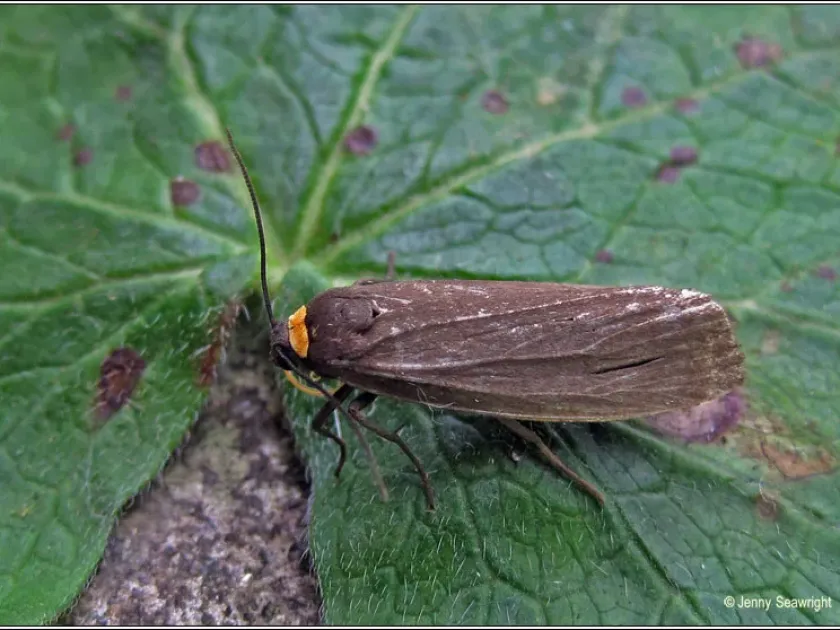
Atolmis (Atolmis rubricollis), commonly known as the Red-necked Footman, is a moth species belonging to the Erebidae family, subfamily Lithosiinae.
Adult moths have a wingspan of approximately 30–35 mm, with coal-black wings and a distinct, bright orange-red prothorax, from which the name is derived.
The larvae are typically hairy, reaching a length of about 25 mm, and possess characteristic light-colored stripes running along their bodies.
The life cycle undergoes complete metamorphosis, consisting of egg, larva, pupa, and imago stages.
While primarily a forest-dwelling species, it is often found in coniferous woods and habitats where lichen growth on tree trunks is abundant.
What it damages
The larvae are primarily lichenivores, meaning they feed on the lichens that grow on the bark of coniferous and deciduous trees.
Although they are not major agricultural pests, in high population densities, they may cause minor damage to the outer layer of tree bark.
By consuming the lichen layer, they remove the natural protective cover of the tree, potentially exposing the bark to secondary infections.
Their impact is most significant in forestry nurseries and dense woodlots where trees are young and the lichen cover is particularly thick.
The damage is rarely fatal to mature trees but can be an aesthetic and physiological issue for young decorative plantings.
When it appears
Adult moths are typically on the wing from late May through July, with their activity peaking in mid-summer.
Larvae are active during the late summer and autumn months as they feed on lichen patches before entering hibernation.
Hibernation occurs in the larval stage, with the insects overwintering in crevices of bark or within the forest litter layer.
Pupation takes place in the spring, inside a loose, web-like cocoon spun by the larvae using their own hair and silk.
The moths are strictly nocturnal and are highly attracted to artificial light sources during their flight period.
Signs of infestation
The primary sign of infestation is the visible depletion of lichen patches on tree trunks, which appear scraped or uneven.
The presence of dark larval droppings (frass) accumulated in bark crevices is a strong indicator of their feeding activity.
Direct sighting of the hairy larvae on tree bark, particularly during cloudy weather or twilight, confirms their presence.
Areas of bark showing signs of shallow grazing or light discoloration suggest the activity of these lichen-feeding caterpillars.
Mass attraction of adult moths to outdoor lights in forest-adjacent areas during June serves as a monitor for the local population density.
Control measures
Chemical control is rarely justified for Atolmis rubricollis, given its status as a minor forest pest with limited agricultural significance.
Mechanical cleaning of tree trunks during the dormant season helps to reduce the availability of lichen, thereby discouraging larval survival.
If necessary, approved general-purpose insecticides can be used in nurseries if larvae are observed in damaging numbers.
Silvicultural practices, such as maintaining healthy tree stands and proper spacing, naturally mitigate the conditions that favor high lichen growth.
Monitoring using pheromone or light traps is recommended for high-value forest plots to determine if intervention is ever required.
Taxonomy
- Latin name
- Atolmis
- Order
- Lepidoptera (butterflies)
- Family
- Erebidae
- EPPO code
- ATLMSP
Discussion
No discussions yet — be the first.