
Athrycia cinerea
Athrycia cinerea
Description
How to identify
Athrycia cinerea is a species of fly in the family Tachinidae, characterized by its specialized parasitic lifestyle on other insect larvae.
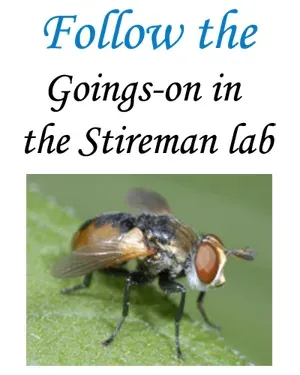
Adult flies of this species are robust and covered in stiff bristles, which is a hallmark feature of the Tachinidae family, helping them survive in various field conditions.
They are generally ash-grey in color, which makes them well-camouflaged when resting on stems or leaf surfaces during their search for hosts.
The larvae are endoparasitoids, meaning they complete their development inside the host's body, effectively killing the pest as they mature.
Classification-wise, this fly belongs to the order Diptera, representing a group of insects that perform critical ecosystem services in agriculture.
What it damages
Athrycia cinerea is not a crop pest; rather, it is a highly beneficial insect that serves as a natural enemy to various harmful caterpillars.
The larvae feed internally on host pests, thereby reducing the populations of organisms that would otherwise cause significant economic damage to crops.
By controlling the number of leaf-eating larvae, this species helps maintain the health and vigor of cereals, vegetables, and technical crop varieties.
The impact of this species is most visible in its ability to prevent the rapid population spikes of pests during the peak growing season.
Consequently, farmers and agronomists view this tachinid fly as a valuable asset for integrated pest management (IPM) strategies.
When it appears
The active flight season for adults typically spans from late spring through to early autumn, depending on the local climate and temperature.
During this time, adults are found in fields, meadows, and forest edges where they feed on nectar from flowers and search for suitable hosts.
The life cycle is closely linked to the developmental stages of the target caterpillars, ensuring that parasitoid larvae have sufficient food sources.
Pupation usually occurs in the soil or within protective plant debris, which allows the species to survive through the winter period.
Population density often fluctuates in response to the abundance of available caterpillar hosts throughout the agricultural season.
Signs of infestation
Detecting the presence of Athrycia cinerea involves looking for indirect signs of reduced pest activity within the crop canopy.
Heavily parasitized caterpillars often show decreased appetite, stunted growth, and a sluggish movement pattern compared to healthy individuals.
Eventually, the host larvae die, often leaving behind a characteristic exit hole where the tachinid larva emerged to pupate.
Field monitoring might reveal a reduction in the overall damage rate to foliage, indicating successful biological suppression by these flies.
- Reduced feeding damage from caterpillars.
- Lethargic or dying caterpillars.
- Presence of puparia near the remnants of dead host larvae.
Control measures
No control measures are needed for Athrycia cinerea, as it is a beneficial insect that aids in natural pest suppression.
Agro-ecological management should focus on preserving this species by avoiding the unnecessary use of broad-spectrum chemical insecticides.
Implementing selective pest control measures helps protect the population of this fly, ensuring its presence for long-term ecological balance.
Maintaining floral borders around agricultural fields provides essential nectar sources, which significantly increases the lifespan and efficacy of adult tachinids.
By prioritizing biological control, growers can effectively harness the natural power of Athrycia cinerea to reduce the need for synthetic inputs.
Taxonomy
- Latin name
- Athrycia cinerea
- Order
- Diptera (flies)
- Family
- Tachinidae
- EPPO code
- ATHRCI
Discussion
No discussions yet — be the first.