
Athaumastus haematicus
Athaumastus haematicus
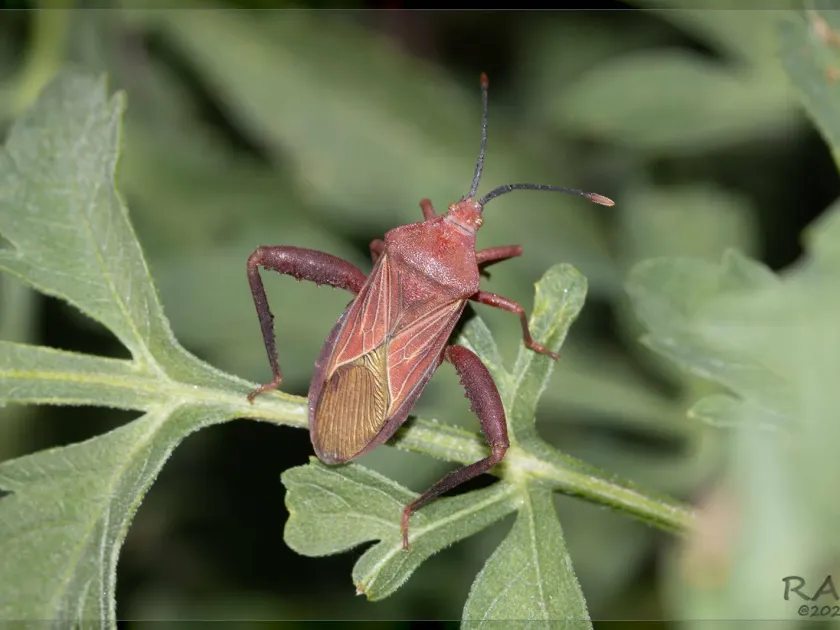
Description
How to identify
Athaumastus haematicus is a species of true bug belonging to the Coreidae family, order Hemiptera. These insects are easily recognized by their striking reddish or brownish-red coloration, which serves as a warning signal in nature.
Adult insects typically measure between 10 and 12 mm in length. They possess a characteristic rostrum designed specifically for piercing plant tissues and extracting sap.
The life cycle of the pest involves incomplete metamorphosis, progressing through egg, five nymphal instars, and the adult stage. The nymphs are similar in appearance to adults but lack functional wings.
These bugs are known for their social behavior, with nymphs often congregating in clusters on host plants, which increases the impact of their feeding in specific areas.
Overwintering occurs primarily in the adult stage, where they seek refuge in soil crevices, plant debris, or under fallen leaves to survive the colder months.
What it damages
Athaumastus haematicus primarily targets plants from the Brassicaceae family, though it can opportunistically feed on a wider range of vegetation.
The insects damage plants by injecting enzymes during feeding, which causes local necrosis and disrupts the transport of water and nutrients throughout the plant.
Both nymphs and adults contribute to the damage, feeding on leaves, tender stems, and developing reproductive organs such as flowers and buds.
Heavy infestations can lead to stunted growth, leaf deformation, and, in severe cases, the complete death of young seedlings during the early growth stages.
In addition to direct physical damage, the wounds caused by the bugs can become entry points for secondary pathogens, further weakening the plant's health.
Signs of infestation
Visible symptoms begin with the appearance of tiny chlorotic spots on the leaves, marking the locations where the bugs have pierced the plant tissue.
As the infestation progresses, leaves may curl, turn yellow, and eventually wither, reflecting the loss of vitality in the plant.
Detection is often achieved by inspecting the underside of the leaves, where nymphs tend to cluster in dense groups, especially in the early morning.
A noticeable reduction in the general vigor of the field, combined with irregular growth patterns in susceptible crops, serves as a strong indicator of pest pressure.
Observation of the adult bugs on stems or flower stalks during daylight hours confirms the presence of an active colony that requires management.
Control measures
Cultural management is the first line of defense; this includes the removal of weeds and crop residues that serve as harborages for the bugs during off-seasons.
Crop rotation helps to disrupt the life cycle of the pest, preventing the buildup of large populations in fields previously infested with host crops.
Chemical control with systemic insecticides is considered when the population density reaches economic damage thresholds, ensuring that applications are timed correctly.
Biological control methods, including the encouragement of natural predators such as birds and beneficial insects, can help suppress population growth naturally.
Effective scouting protocols are essential, using monitoring tools like sticky traps to detect the onset of infestation and allow for timely intervention.
Taxonomy
- Latin name
- Athaumastus haematicus
- Order
- Hemiptera (bugs, aphids, leafhoppers)
- Family
- Coreidae
- EPPO code
- ATHAHA
Discussion
No discussions yet — be the first.