
Ascalapha
Ascalapha
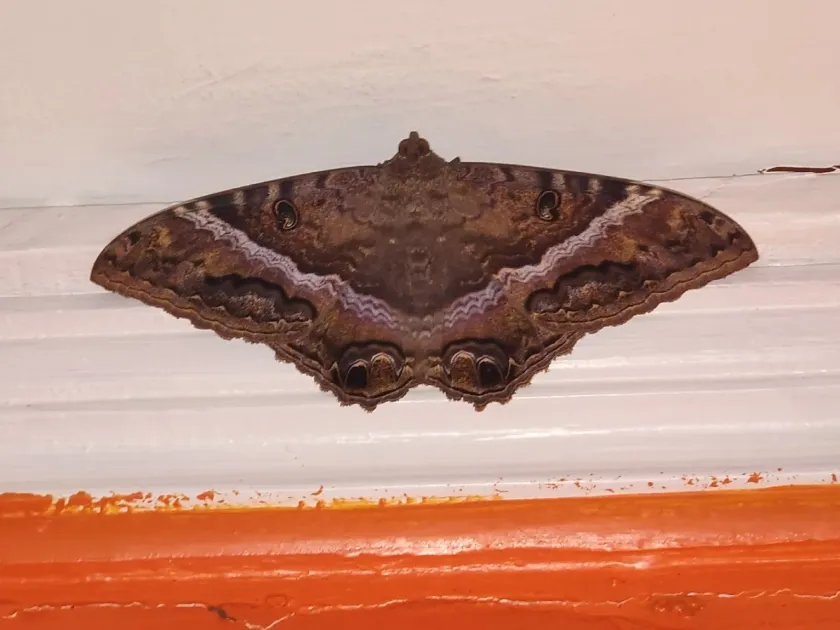
Description
How to identify
Ascalapha belongs to the order Lepidoptera, family Noctuidae. This insect is a moth characterized by a specific morphological structure common to many members of the Erebinae subfamily.
The adult insect has a wingspan that varies depending on the species and the larva's nutrition conditions. The wings are usually colored in camouflage tones of brown or gray, which allows the insect to hide effectively on tree bark or in dense vegetation during the daytime.
The pest's life cycle includes four stages of metamorphosis: egg, larva (caterpillar), pupa, and imago. Each of these stages has its own characteristics, determining the species' survival strategy in different climatic zones.
Ascalapha larvae possess a developed chewing mouthpart adapted for the rapid consumption of large volumes of plant mass. The larva's body is often covered with sparse hairs and has protective coloring corresponding to the color of the host plant.
Pupae usually form in the soil or in rolled-up leaves, creating a durable cocoon around themselves. This stage is the most vulnerable to agrotechnical measures, such as deep plowing.
What it damages
This pest primarily damages a wide range of agricultural crops, including cereals, vegetables, and some ornamental plants. The greatest damage occurs during the phase of active vegetative growth of plants.
Caterpillars actively feed on leaves, stems, and sometimes the generative organs of plants, leading to a significant decrease in the photosynthetic activity of the crop. During mass reproduction, complete defoliation of plantings is possible.
Damage to plant tissues opens access to secondary infections, including fungal and bacterial diseases. This significantly worsens the overall health of the crop and reduces its resistance to adverse environmental factors.
The economic impact of the pest lies in direct yield reduction as well as the deterioration of the quality of marketable products. The larvae's waste products can contaminate the surface of fruits, making them unsuitable for storage and sale.
In large agricultural enterprises, Ascalapha can destroy entire plots of crops if crop rotation rules are not followed and if there is no population monitoring. Regular field inspections are a critical element of agronomy.
When it appears
The emergence of adults and subsequent egg-laying directly depend on the temperature regime of a specific region. Most often, the peak of activity is observed in mid-summer, when optimal conditions are created for the development of offspring.
Caterpillars show maximum activity at night, which complicates the visual detection of the pest. During the day, larvae prefer to hide at the base of stems or in the shaded parts of the foliage.
The development cycle can last from a few weeks to several months, which allows the pest to produce multiple generations during a single growing season under favorable weather conditions.
The autumn period usually marks the transition of the population to the pupal stage, which serves as the overwintering stage. In this state, the insect survives unfavorable winter temperatures by burying itself deep in the soil horizon.
Monitoring seasonal population dynamics is carried out using pheromone traps or light traps, which allow for predicting the timing of chemical control measures.
Signs of infestation
The main sign of infestation is irregular eating of the leaf edges, resembling jagged cuts. In advanced cases, only the coarse veins remain of the leaves.
The presence of excrement on the leaf surface or under the bushes indicates active feeding by the caterpillars in the area. This is one of the easiest ways to identify the pest in field conditions.
Wilting of individual shoots or top parts of plants in the absence of visible diseases may indicate hidden feeding of larvae inside the stem part or near the root neck.
When inspecting plants at dusk, one can notice adults or caterpillars performing active movements. Using flashlights with a red filter allows for observation without startling the insects.
The presence of silken threads or rolled leaves, in which caterpillars create temporary shelters, is also an important diagnostic marker requiring the agronomist's attention.
Control measures
Protection measures include a comprehensive approach, combining agrotechnical, biological, and chemical methods. The main goal is to limit the pest population below the economic threshold of harmfulness.
- Deep autumn plowing to destroy pupae.
- Compliance with crop rotation to exclude pest accumulation.
- Use of entomophages, natural enemies of Ascalapha.
- Application of biological insecticides based on Bacillus.
- Treatment with contact insecticides during mass emergence of larvae.
Chemical treatment should be carried out taking into account the insect's activity periods. It is important to rotate the preparations used to prevent the formation of resistance in the pest population to active ingredients.
The biological control method, based on the use of fungal or viral pathogens, is the most environmentally safe way to reduce the pest population in intensive farming conditions.
Constant monitoring of crop status and timely removal of weeds, which can serve as additional food sources, significantly reduce the risks of the insect spreading within the agro-ecosystem.
Taxonomy
- Latin name
- Ascalapha
- Order
- Lepidoptera (butterflies)
- Family
- Erebidae
- EPPO code
- ASCASP
Discussion
No discussions yet — be the first.