
Artaxa digramma
Artaxa digramma
Description
How to identify
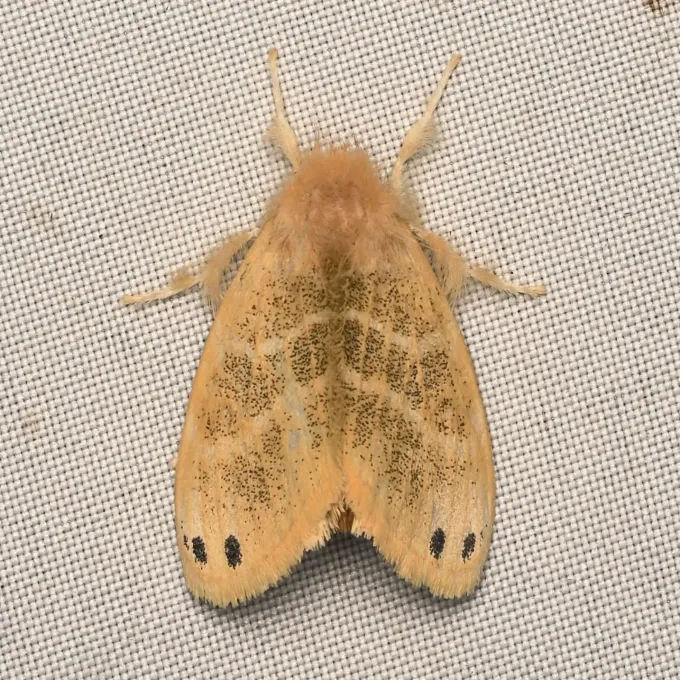
Artaxa digramma is a moth belonging to the Erebidae family (subfamily Lymantriinae). Adult individuals typically possess the characteristic appearance of the family, featuring a fuzzy body and ochre-yellow or brownish wings.
The larvae of this species are easily recognizable by their dense hair cover, which consists of bundles of stiff bristles. The coloration of the caterpillars is often variable but usually includes bright stripes that serve as a warning of their toxicity to predators.
The insect undergoes complete metamorphosis, passing through the stages of egg, larva (caterpillar), pupa, and adult. Females are generally larger than males and lay eggs in dense clusters on the underside of leaves.
The head of the caterpillar is often contrastingly colored, which, combined with the bristles, aids in camouflage among foliage and provides defense against natural enemies during feeding.
Adults are primarily active during twilight and nighttime hours; they are attracted to artificial light sources, which allows for the use of light traps to monitor population levels in the field.
What it damages
This pest is a polyphagous insect that attacks a wide range of woody plants, shrubs, and some herbaceous vegetation. Host plants include orchards, forest trees, and ornamental plantings.
Early-instar caterpillars primarily feed on the epidermis of leaves, causing skeletonization. As they mature, they consume the entire leaf blade, leaving only coarse veins, which leads to significant defoliation.
Mass outbreaks of the pest result in a sharp decrease in the photosynthetic capacity of plants. This weakens trees, stunts their growth, and significantly reduces yield metrics for fruit and berry crops.
The damage caused by caterpillars creates entry points for secondary infections, including fungal and bacterial diseases that thrive in areas where tissues have been consumed.
In cases of severe infestation, young saplings may die entirely due to the loss of vegetative mass required for accumulating nutrients before the winter dormancy period.
When it appears
The life cycle of Artaxa digramma is closely linked to regional climatic conditions. Typically, one or more generations occur per season, depending on the temperature regime.
The emergence of larvae from eggs is synchronized with the period of bud burst and young leaf growth on host plants. This is when the pest is at its most voracious stage.
Adult moth flights are most commonly observed in mid-summer, when mating occurs and eggs are laid for the next generation. This period is crucial for conducting regular orchard inspections.
The insects typically overwinter in the pupal stage, encased in dense cocoons hidden in secluded spots such as bark crevices, plant debris, or the soil surface layer.
Weather factors, such as humidity and temperature, critically influence larval survival. Prolonged rainy periods can trigger outbreaks of fungal diseases within the pest population, reducing its numbers.
Signs of infestation
The first visual sign of pest presence is the appearance of skeletonized leaves on shoot tips and throughout the tree canopy. Damaged areas look like a semi-transparent net.
The presence of caterpillar frass in the form of small, dark granules on leaf surfaces or underneath the tree canopy also indicates active larval feeding in the upper tiers.
Rolled or web-tied leaves, within which caterpillars or pupae are concealed, serve as an important diagnostic indicator for quickly identifying infestation hotspots.
Detecting large numbers of caterpillars, especially during the day under high humidity conditions when they are less active, allows for the rapid identification of the threat.
The emergence of web nests, where young individuals often concentrate, is a signal to take immediate action to localize the pest population within the orchard.
Control measures
Mechanical control methods include regular inspection of plants and manual collection of egg clusters or caterpillar nests, which is effective for small gardens and private plots.
Biological preparations based on Bacillus thuringiensis demonstrate high efficacy against early-instar larvae while remaining largely harmless to beneficial entomophages.
The use of chemical insecticides (organophosphates or pyrethroids) is justified when the economic injury threshold is exceeded in commercial orchards.
- Attracting natural enemies: insectivorous birds and predatory insects.
- Using pheromone traps for male disorientation and population suppression.
- Timely sanitary pruning and destruction of infested branches.
Agrotechnical practices, such as whitewashing trunks and cleaning bark of dead tissue, help destroy overwintering sites and reduce the potential infection pressure for the following season.
Taxonomy
- Latin name
- Artaxa digramma
- Order
- Lepidoptera (butterflies)
- Family
- Erebidae
- EPPO code
- EUPRDI
Discussion
No discussions yet — be the first.