
Webster's potato moth
Aroga websteri
Description
How to identify
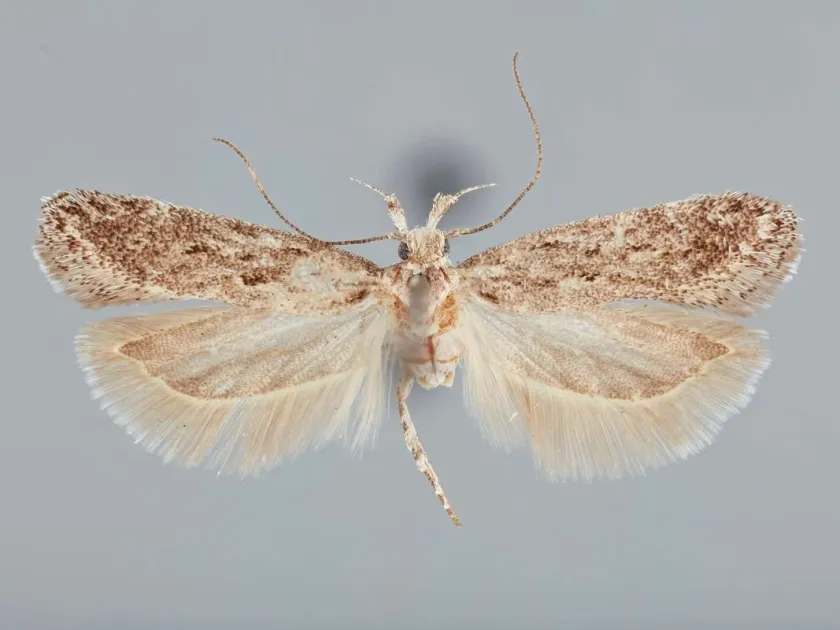
Webster's potato moth (Aroga websteri) belongs to the order Lepidoptera and the family Gelechiidae. This small moth is characterized by narrow, fringed wings that help it blend into its natural environment.
Adult moths are typically greyish-brown, which provides excellent camouflage against soil and foliage. Like other members of the Gelechiidae family, they are most active during twilight or at night.
The larvae, or caterpillars, are the primary life stage responsible for crop damage. They are small and cylindrical, often displaying greenish or yellowish hues that match the tissues of the host plants.
Pupation occurs within a silken cocoon, which is usually found in the soil surface, among plant debris, or in storage facilities, serving as a survival strategy against seasonal changes.
The life cycle is closely synchronized with the growth of the potato plant. Temperature plays a critical role in the rate of development, with warmer conditions significantly accelerating the maturation of generations.
##damage##The primary host plant for Aroga websteri is the potato (Solanum tuberosum). It primarily targets the foliage and tubers, posing a major risk to agricultural yields.
Larvae consume leaf tissue, creating mines and skeletonizing the foliage, which reduces the plant's photosynthetic capacity and ultimately stunts tuber growth and development.
Tubers are particularly vulnerable, as larvae tunnel into the flesh. These tunnels degrade the quality of the potatoes and provide entry points for secondary bacterial and fungal infections.
Stored potatoes are highly susceptible to damage if the moth is present in the storage area. Infested tubers often rot quickly, leading to significant economic losses during the post-harvest period.
While potato is the preferred host, the moth may also survive on other wild solanaceous plants, which can act as reservoirs for the pest population in a specific area.
##signs##The earliest signs of infestation include the appearance of distinct mines on potato leaves, which later turn brown and necrotic as the larvae feed.
Evidence of larval presence can often be found on the soil surface, where small amounts of frass (larval excrement) accumulate near the base of the plant or around entry holes in tubers.
Tunnels in the tubers are a clear indicator of damage. When a potato is cut, dark, meandering paths reveal where the larvae have been feeding, often showing signs of decay.
Premature wilting of the potato haulm can be an external sign of significant larval activity, particularly when the larvae tunnel through the stems of the plants.
Presence of fine webbing on leaves or at the entrance of tunnels is another visual cue that suggests the activity of the moth larvae during their developmental stages.
##control##Deep plowing in the autumn is a primary cultural control method, as it disrupts the pupal stage and buries the insects, making it difficult for them to emerge in the spring.
Effective crop rotation is essential to prevent the buildup of pest populations. Moving potato cultivation away from previous fields breaks the continuity of the insect's life cycle.
The use of certified, clean seed potatoes is the most critical preventative step to avoid introducing the pest into new areas and ensuring a healthy start for the crop.
Chemical control measures, including the application of approved insecticides, should be timed based on scouting and the monitoring of adult moth flight peaks.
- Regular hilling of potato rows to cover exposed tubers.
- Removal and destruction of volunteer potato plants and solanaceous weeds.
- Prompt harvesting to reduce the exposure time of tubers to egg-laying moths.
Taxonomy
- Latin name
- Aroga websteri
- Order
- Lepidoptera (butterflies)
- Family
- Gelechiidae
- EPPO code
- AROGWE
Discussion
No discussions yet — be the first.