
Sorrel moth
Aroga velocella
Description
How to identify
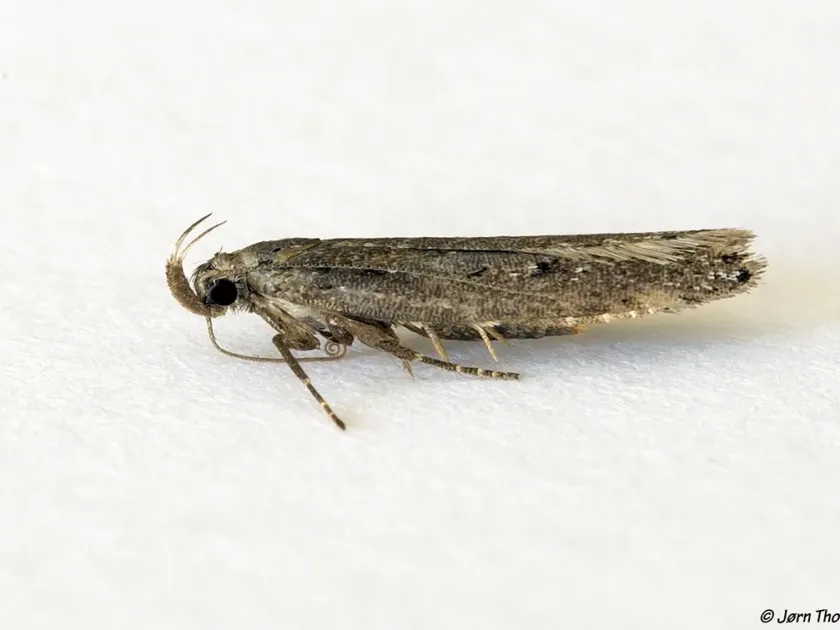
The sorrel moth (Aroga velocella) belongs to the Gelechiidae family, a group of insects known for their larvae that feed within plant tissues. Adults are small, inconspicuous moths that are primarily nocturnal.
The larvae are typically greenish-brown with a darker head, growing up to 10 mm in length. They are specialized feeders, primarily targeting plants within the Polygonaceae family, with a preference for sorrel.
The life cycle undergoes complete metamorphosis, including egg, larva, pupa, and adult stages. The pupal stage often occurs in the topsoil or within folded leaves.
During the day, adults remain hidden near the base of host plants, which makes them difficult to spot during routine garden inspections.
Overwintering occurs as larvae in the soil or protected debris, allowing them to emerge quickly as soon as temperatures rise in the spring.
What it damages
The primary damage is caused by larvae that skeletonize the leaves or create irregular mines within the leaf blade, severely impacting plant health.
Heavy infestation leads to a significant loss of leaf area, making the sorrel unsellable and undesirable for home culinary use due to the damaged texture.
The feeding activity compromises the plant's photosynthetic capacity, which leads to stunted growth and reduced yields throughout the growing season.
Injured tissues often provide entry points for secondary pathogens, such as fungi or bacteria, which can cause leaf rot and premature death of the foliage.
Since sorrel is often a perennial crop, a chronic infestation can weaken the root system over several years, eventually leading to thin or dead patches.
When it appears
The emergence of adult moths typically begins in late spring, coinciding with the rapid growth phase of host plants after winter.
Peak activity generally occurs throughout mid-summer, when higher temperatures provide optimal conditions for the larvae to feed and develop rapidly.
Multiple generations may occur in a single season, meaning that gardeners must remain vigilant for the presence of larvae from May through August.
Temperature fluctuations directly affect the life cycle; warmer summers usually lead to a more severe impact on crop quality compared to cooler years.
By late summer, the larvae prepare for diapause, seeking shelter in the soil to survive the upcoming winter months.
Signs of infestation
Early symptoms include small pale spots on the leaves, which eventually turn into ragged holes as the larvae continue their feeding process.
The presence of fine webbing that binds leaf edges together is a clear indicator that a larva has established a feeding shelter on the leaf.
Curling or twisting of the younger, more tender leaves is another classic sign of sorrel moth activity in the garden bed.
Accumulation of tiny, dark fecal pellets on the leaf surface or within the crown of the plant confirms the presence of active larvae.
If the infestation is severe, the entire planting may look withered, with leaves turning yellow prematurely due to excessive stress.
Control measures
The most effective strategy involves cultural practices, such as removing debris and weeds that might host the pest during its non-feeding stages.
Autumn soil cultivation, including deep tilling, is highly effective at destroying overwintering larvae and pupae within the top layer of the ground.
Biological control using specific entomopathogenic bacteria is a viable option for organic growers looking to manage populations without chemical residue.
Regular harvesting of mature leaves helps to remove larvae that have not yet reached maturity, keeping the overall population in check.
- Maintain proper crop rotation.
- Monitor for moth flights using light traps.
- Manually pick and destroy infested leaves immediately.
Taxonomy
- Latin name
- Aroga velocella
- Order
- Lepidoptera (butterflies)
- Family
- Gelechiidae
- EPPO code
- AROGVE
Discussion
No discussions yet — be the first.