
Arna bipunctapex
Arna bipunctapex
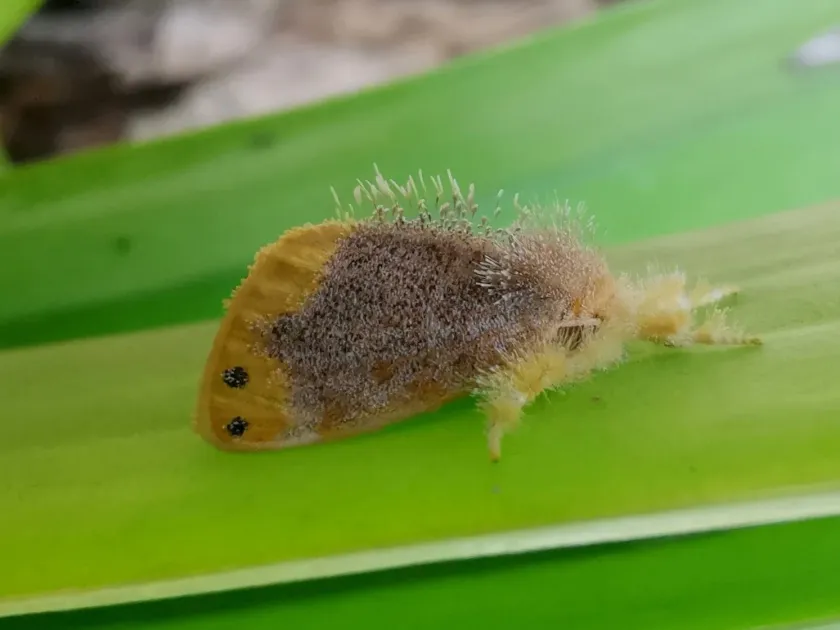
Description
How to identify
Arna bipunctapex is a species of tussock moth belonging to the family Erebidae (subfamily Lymantriinae). The adult moths are generally inconspicuous, with shades of brown and gray that allow them to blend into the bark of trees and shrubs, serving as a primary defense mechanism against avian predators.
The larvae, or caterpillars, are the most recognizable stage of this pest. They are characterized by a dense covering of setae (hairs), often arranged in prominent tufts along the body. These hairs serve a dual purpose: physical protection from predators and chemical defense, as they can cause skin irritation in humans and animals upon contact.
The pupal stage occurs within a durable cocoon, which the caterpillar constructs by interweaving its own shed hairs with silk and bits of plant debris. These cocoons are typically well-hidden within the foliage or bark crevices, making them difficult to locate during routine inspections.
The development follows a complete metamorphosis: egg, larva, pupa, and adult. In tropical and subtropical regions, the species can produce multiple overlapping generations throughout the year, which necessitates vigilant monitoring and continuous management efforts to prevent population spikes.
On early developmental stages, the larvae often exhibit gregarious behavior, feeding in clusters on the undersides of leaves. This grouping behavior is an important clue for farmers to identify the presence of a new infestation before the larvae disperse throughout the tree canopy.
What it damages
Arna bipunctapex is recognized as a polyphagous pest, meaning it feeds on a diverse range of host plants. It has been documented as a significant threat to tea plantations, various fruit-bearing trees, and several species of forest trees, causing severe economic disruption where outbreaks occur.
The feeding pattern involves the defoliation of the host plant. Initially, the caterpillars feed on the soft leaf epidermis, but as they reach maturity, they consume the entire leaf lamina, leaving only the primary veins (skeletionization) and leading to significant loss of leaf surface area.
Extensive defoliation directly inhibits the plant's photosynthetic capacity, resulting in weak growth and reduced fruit or crop yield. Over time, the cumulative stress from repeated infestations significantly depletes the plant's stored energy reserves, making it susceptible to drought or secondary diseases.
Plants weakened by larval feeding often develop necrotic patches and become prone to secondary pathogen infections. The wounds caused by mouthparts can serve as entry points for fungi or bacteria, further deteriorating the health and quality of the plant tissue.
In high-density scenarios, nurseries and young plantations are particularly vulnerable. The loss of foliage on young saplings can lead to stunted growth or even total plant death, necessitating the costly replanting and long-term recovery of the affected agricultural land.
Control measures
Monitoring is the cornerstone of effective management for Arna bipunctapex. The use of pheromone traps to detect adult flight patterns provides essential data to time interventions precisely, targeting the vulnerable early larval stages before they cause widespread damage.
Biological control is highly encouraged, particularly the use of Bacillus thuringiensis (Bt) based formulations. These bio-insecticides are highly effective against lepidopteran larvae while remaining safe for beneficial insects, natural predators, and the broader environment.
Integrated Pest Management (IPM) practices also include cultural methods such as maintaining tree health through proper fertilization and pruning. Pruning helps to improve canopy airflow, which can create microclimates that are less hospitable for the egg-laying and larval development of the moth.
Chemical control should be considered as a last resort in cases of high population density. When necessary, the application of selective insecticides is preferred to maintain a balance between eliminating the pest and preserving the biodiversity of the ecosystem, especially in orchards near natural habitats.
- Manual removal of egg masses during the early season.
- Encouraging natural predator populations such as wasps and birds.
- Implementing regular field inspections to spot early cluster feeding behavior.
Taxonomy
- Latin name
- Arna bipunctapex
- Order
- Lepidoptera (butterflies)
- Family
- Erebidae
- EPPO code
- EUPRBI
Discussion
No discussions yet — be the first.