
Willow aristotelia
Aristotelia ivae
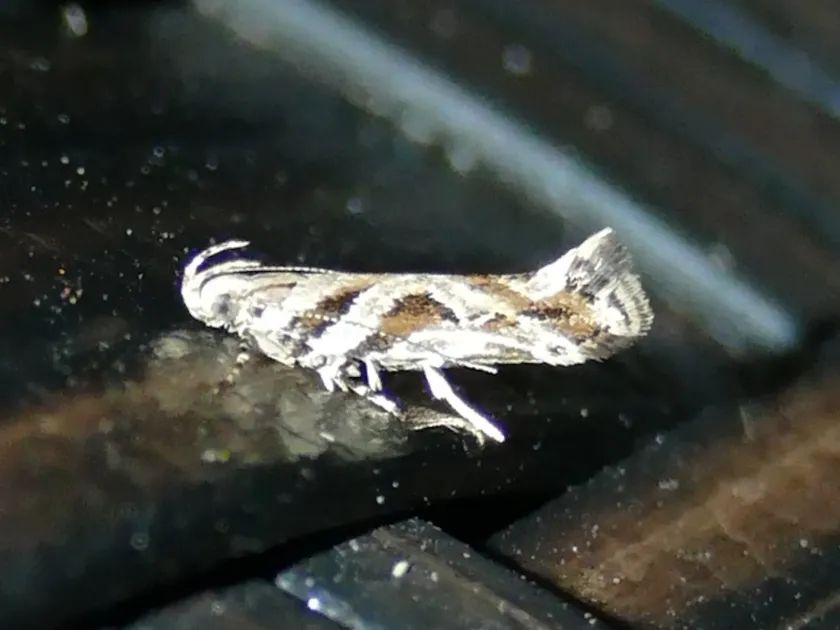
Description
How to identify
The willow aristotelia (Aristotelia ivae) is a small moth belonging to the family Gelechiidae, often referred to as twirler moths. They are recognized by the characteristic notch on the hindwings.
The larvae are typically slender with a light, sometimes greenish coloration that provides excellent camouflage against willow foliage and budding tissues.
As a member of the order Lepidoptera, this species undergoes complete metamorphosis, including egg, larva, pupa, and adult stages.
Identification of the adult moth requires specialized entomological knowledge, often relying on microscopic examination of wing venation and genital structures.
The species is highly specialized, maintaining a close ecological and biological bond with its host plants in the family Salicaceae.
What it damages
The primary host plants for this pest are willow trees (Salix spp.). Larvae target the buds and emerging leaves, causing significant localized damage.
Feeding activities often result in stunted shoot growth and deformation, which can reduce the aesthetic value of ornamental willow varieties.
Extensive defoliation by high populations of larvae leads to reduced photosynthetic capacity, weakening the tree's overall vigor.
In nursery settings, repeated damage to terminal buds can lead to branching irregularities and reduced plant quality.
While mature trees can usually withstand light infestations, young or stressed saplings are particularly vulnerable to secondary infections through feeding wounds.
When it appears
Adult moths are typically active in the spring, which aligns with the bud-break phase of host trees, providing immediate food sources for the larvae.
The larval stage is the most active feeding period, occurring as leaves and buds expand throughout the early growing season.
The life cycle is generally univoltine, though climatic factors such as unusually warm springs can occasionally accelerate development cycles.
Overwintering usually occurs in the pupal stage, hidden deep within bark crevices or sheltered areas on the host plant.
Monitoring for the pest should begin in early spring to coincide with the emergence of larvae from their overwintering sites.
Signs of infestation
The most visible sign of an infestation is the presence of silk webbing used by larvae to tie leaves together into small, protective shelters.
Feeding damage is characterized by hollowed-out buds and irregular holes in the leaf tissue, often surrounded by larval excrement.
Curled, shriveled, or skeletonized leaves are strong indicators of larval presence within the canopy of the willow tree.
Visible decline in the health of young twigs, including stunted growth or premature discoloration, suggests internal or external feeding damage.
Detection is most effectively confirmed by manually inspecting the webbed leaf clusters during the peak feeding season.
Control measures
Sanitation practices, such as pruning and destroying heavily infested branches, help significantly in reducing the localized pest population.
Biological control options, including the application of Bacillus thuringiensis, offer a targeted approach against younger larval stages.
Chemical control measures should be applied using selective insecticides if monitoring indicates that threshold levels are exceeded.
Proper timing is critical for chemical interventions to ensure contact with the larvae before they create protective webbing.
- Regular monitoring of tree health.
- Encouraging natural predators and parasitoids.
- Judicious use of systemic insecticides.
Taxonomy
- Latin name
- Aristotelia ivae
- Order
- Lepidoptera (butterflies)
- Family
- Gelechiidae
- EPPO code
- ARISIV
Discussion
No discussions yet — be the first.