
Ardices
Ardices
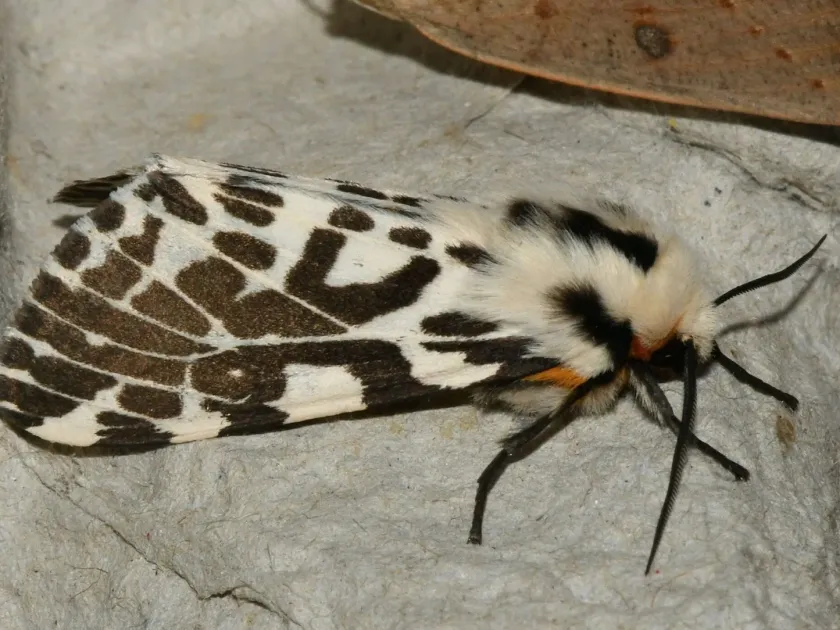
Description
How to identify
The genus Ardices belongs to the order Lepidoptera, family Erebidae (subfamily Arctiinae). These are medium-sized insects with a characteristic hairy coating on the larvae, typical of many species in this family.
Adults (imagos) have a robust body structure and often feature bright or contrasting wing patterns. Adult insects are primarily crepuscular or nocturnal, which makes them difficult to detect during early stages of infestation.
The larvae are characterized by dense tufts of setae on their bodies, which can cause skin irritation upon contact. The coloration of the larvae varies from dark brown to almost black, aiding in camouflage against plant debris.
The life cycle includes complete metamorphosis: egg, larva, pupa, and adult. Pupae are typically formed in dense cocoons spun from silken threads interlaced with larval hairs.
Identification of specific species within the genus requires examination of the adult genitalia, as the external features of both adults and larvae can resemble other members of the subfamily Arctiinae.
What it damages
This pest is polyphagous, meaning it feeds on a wide range of herbaceous plants. In agroecosystems, it is the larvae that cause damage due to their high appetite.
The main crops susceptible to damage include various vegetables, legumes, and weeds, which often serve as initial reservoirs for pest reproduction before they migrate to cultivated fields.
The greatest damage is recorded during years with favorable weather conditions for mass reproduction, where larvae are capable of destroying a significant portion of the leaf surface, reducing photosynthesis rates.
Damage manifests not only through direct consumption of leaves but also by weakening the plant's immune system, making it more susceptible to secondary fungal and bacterial infections.
In cases of mass outbreaks, the pest can cause significant economic losses regarding the market quality of vegetable and fruit products, necessitating timely intervention by the agronomist.
When it appears
The peak activity of the larvae occurs in the second half of the growing season when sufficient plant biomass is accumulated. Depending on the climatic zone, one or more generations per year are possible.
Adults begin flight in warm spring months, followed by egg-laying on the undersides of leaves or on the soil surface. This process is often protracted, which complicates the scheduling of control treatments.
Larval development proceeds through several instars, with maximum damage to plants occurring in the final larval stages when food consumption increases exponentially.
Overwintering usually occurs at the pupal stage in protected areas: in the topsoil, under plant debris, or in tree bark crevices, which ensures high population survival rates.
Monitoring development phenology allows agronomists to predict population peaks accurately and plan measures to limit the spread of the pest across the field.
Signs of infestation
The first visual sign of infestation is the presence of eaten leaf blades, starting from the edges and gradually moving to the veins. In some cases, larvae skeletonize the leaf, leaving only the rigid framework.
The presence of excrement in the form of small granules on leaf surfaces and under plants is a reliable indicator of active larval feeding.
Detecting the larvae themselves is difficult due to their nocturnal or secretive daytime behavior; however, their presence is often betrayed by damage to buds and ovaries, which may also be consumed.
The presence of silken threads, which larvae use for movement or refuge, indicates a high population density in a particular area.
- Irregular holes in leaves
- Skeletonization of leaf blades
- Presence of granular excrement
- Damage to reproductive organs (buds)
Control measures
The primary control method is integrated crop management aimed at destroying overwintering sites: deep autumn plowing and cleaning fields of plant debris where pupae spend the winter.
Biological control involves using preparations based on Bacillus thuringiensis, which are effective against young larvae and safe for beneficial entomophages.
Chemical control is applied when the economic threshold of damage is exceeded. It is recommended to use insecticides with stomach-contact action that show selectivity toward Lepidoptera.
Maintaining populations of natural enemies, such as ichneumonid wasps and predatory bugs, plays an important role in significantly limiting Ardices populations in natural conditions without the use of toxic substances.
Monitoring population density using pheromone or light traps allows for precise determination of adult flight initiation, enabling treatment application during the most vulnerable period of the pest's development.
Taxonomy
- Latin name
- Ardices
- Order
- Lepidoptera (butterflies)
- Family
- Erebidae
- EPPO code
- ARDISP
Discussion
No discussions yet — be the first.