
Aptesis
Aptesis
Description
How to identify
The genus Aptesis belongs to the order Hymenoptera, within the diverse family Ichneumonidae. These insects are recognized as specialized parasitoids that inhabit various terrestrial ecosystems.
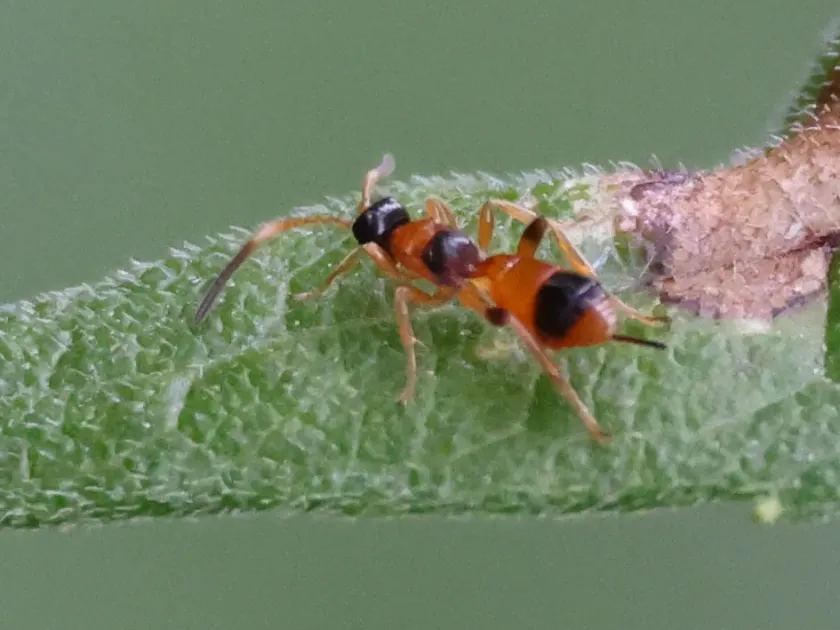
Adult specimens typically possess a slender body structure, dark pigmentation, and distinctive wing venation patterns characteristic of ichneumonids. Their size and morphology facilitate efficient movement within complex vegetation.
A notable morphological feature is the elongated ovipositor found in females, which allows them to deposit eggs inside host larvae or pupae hidden within protective cocoons or stems.
The larval stage of Aptesis develops as a parasitoid, feeding on the host organism. This development is often internal, slowly depleting the host before pupation occurs.
Accurate identification requires microscopic examination of the clypeus, wing venation, and tarsal structures, as many species are morphologically similar and highly host-specific.
What it damages
Aptesis species do not directly cause damage to crops by feeding on plant tissues. Their impact is exclusively ecological, occurring through complex host-parasitoid interactions.
The primary concern regarding this genus is their role as secondary parasitoids or hyperparasitoids, which can negatively affect the biological control of agricultural pests.
By parasitizing beneficial primary parasitoids, Aptesis can inadvertently increase the density of primary pests on crops, necessitating careful population monitoring.
This dynamic is particularly significant in integrated pest management (IPM) programs where the preservation of natural predators and parasitoids is a primary goal for farmers.
While they are natural components of the ecosystem, their uncontrolled proliferation in specific agro-environments can diminish the efficacy of sustainable pest management strategies.
When it appears
The phenology of Aptesis is highly synchronized with the life cycles of their hosts, ensuring that larvae have access to food resources during their critical developmental phases.
Emergence typically begins in early spring, matching the reactivation of wintering host populations in the field and orchard environments.
Multiple generations may occur throughout the growing season, provided there is a continuous supply of suitable hosts and favorable microclimatic conditions like humidity and moderate temperature.
They overwinter primarily as prepupae or pupae inside the host's protected structures, remaining dormant until seasonal cues trigger the next emergence cycle.
Field monitoring involves the use of sticky traps and periodic host sampling to determine the activity levels of both the parasitoids and the target pest populations.
Control measures
Management of Aptesis in an agricultural context focuses on maintaining ecological balance rather than total eradication, as they are part of the natural community.
Selective pesticide application is crucial; growers should avoid broad-spectrum insecticides that kill beneficial parasitoids and disturb the natural regulatory balance.
Enhancing habitat diversity through hedgerows or border strips of flowering plants provides refuge and nectar sources for beneficial insects, stabilizing their populations.
Cultural practices such as crop rotation and the removal of contaminated plant debris help to disrupt the lifecycles of insects that utilize these materials for overwintering.
Integrated Pest Management strategies should prioritize biological thresholds, applying control measures only when pest density threatens crop viability and outweighs the benefits of natural parasitism.
Taxonomy
- Latin name
- Aptesis
- Order
- Hymenoptera
- Family
- Ichneumonidae
- EPPO code
- APTSSP
Discussion
No discussions yet — be the first.