
Groundnut leaf miner
Aproaerema modicella
Description
How to identify
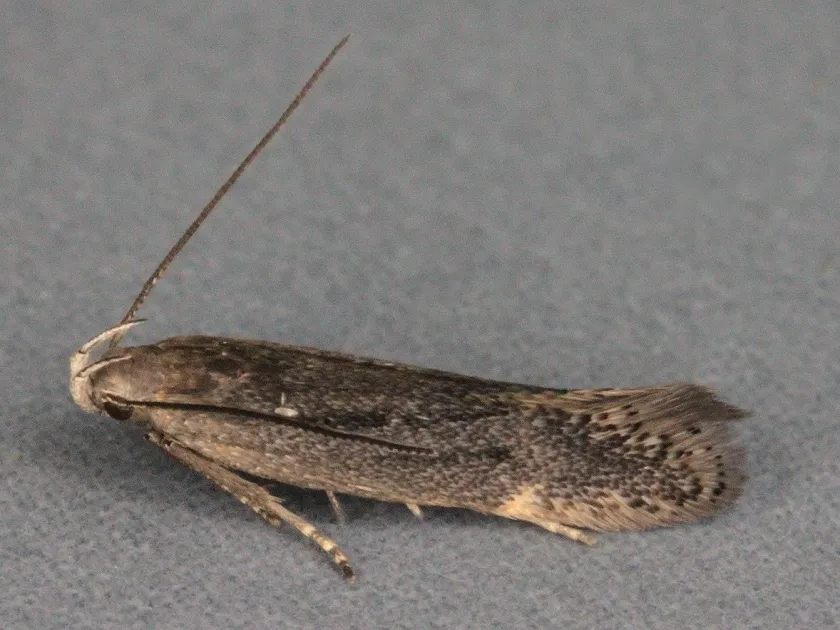
The groundnut leaf miner (Aproaerema modicella) is a significant pest belonging to the order Lepidoptera and the family Gelechiidae. The adult moth is small, with a wingspan of about 10-12 mm, featuring a dark brown to greyish appearance that allows it to blend into the foliage.
The life cycle begins with eggs deposited individually on the underside of leaves. Larvae hatch and pass through several instars, with the mature larvae reaching approximately 6-8 mm in length, often appearing pale green or light brown.
Pupation primarily occurs within the mined leaves, protected by silk webbing, though it can sometimes happen in the soil debris. The pupal stage is crucial for understanding the pest's overwintering strategy in various agricultural environments.
The reproductive cycle is fast, allowing multiple generations to occur within a single cropping season. This rapid turnover is one of the main factors contributing to sudden outbreaks in groundnut fields.
Adult moths are nocturnal and are attracted to light, which makes pheromone traps an essential tool for monitoring population dynamics in fields. Effective identification at the adult stage is key to forecasting potential larval pressure.
What it damages
The primary host for Aproaerema modicella is groundnut (Arachis hypogaea). The larvae consume the chlorophyll-bearing parenchyma, which is vital for the plant's photosynthetic efficiency and overall growth.
Beyond peanuts, this pest has a broad host range, including soybeans, beans, chickpeas, and other leguminous plants. Its ability to survive on alternative hosts makes crop rotation a complex challenge for farmers.
Severe infestations cause significant defoliation, which stunts the plant's growth and reduces its ability to produce pods. When leaves are lost prematurely, the plant loses its energy reserves, resulting in diminished seed weight and quality.
In high-pressure situations, the leaf miner can lead to yield losses exceeding 70%. The damage not only affects current yields but can also leave plants susceptible to further stress and disease, compromising the overall stand density.
Economic impact is significant, particularly in tropical and subtropical regions where groundnuts are a staple cash crop. Managing this pest is vital to maintaining agricultural profitability and food security.
Signs of infestation
The first sign of infestation is the appearance of small, light-colored blotches on the leaves, known as mines. These are created by larvae mining into the leaf tissue, leaving the upper and lower epidermis intact.
As larvae continue feeding, these mines expand and turn brown, often causing the leaf to roll or fold. The web-like structures created by the larvae, which pull the leaf edges together, are a classic indicator of the pest's presence.
Within the rolled leaflets, you can often find small black granules, which are the larval frass. These indicate active feeding areas and the presence of healthy larvae within the plant tissue.
At the late stage of infestation, the whole plant might look scorched due to the massive loss of chlorophyll. The leaves wither and fall off, causing the field to appear significantly damaged even from a distance.
- Transparent leaf spots or blotches (mines).
- Rolled or folded leaflets tied with silk.
- Presence of black frass pellets inside folded leaves.
- Premature yellowing and leaf shedding.
Control measures
An effective management strategy for the groundnut leaf miner relies on Integrated Pest Management (IPM) practices. Combining cultural, biological, and chemical methods is essential for long-term success.
Cultural practices include deep ploughing after harvest to expose pupae to predators and sun, effectively reducing the overwintering population. It is also crucial to remove alternate host weeds from the vicinity of the field.
Biological control involves the conservation and release of natural enemies such as parasitic wasps that target larval stages. The use of biopesticides like Bacillus thuringiensis can also provide selective control without harming beneficial insects.
Chemical intervention should be strategically timed based on pheromone trap monitoring. Systemic insecticides are generally most effective when applied at the onset of egg hatching, before the larvae become protected within the leaf tissue.
Farmers are encouraged to rotate pesticide classes to delay the development of resistance. Monitoring weather conditions is also important, as high humidity and temperature can accelerate the pest's reproductive cycle.
Taxonomy
- Latin name
- Aproaerema modicella
- Order
- Lepidoptera (butterflies)
- Family
- Gelechiidae
- EPPO code
- STOPSU
Discussion
No discussions yet — be the first.