
Aphytis proclia
Aphytis proclia
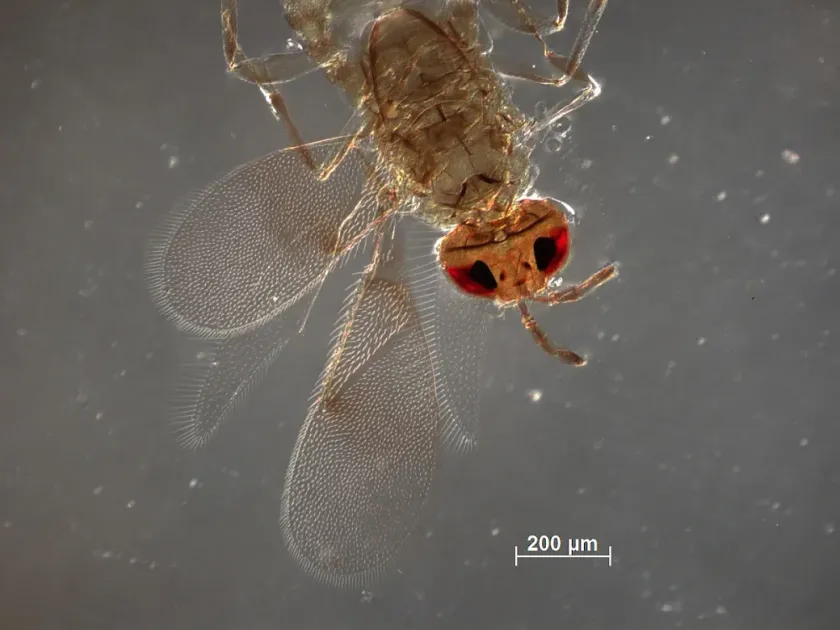
Description
How to identify
Aphytis proclia is a minute parasitoid wasp belonging to the Aphelinidae family. It is a highly specialized natural enemy, recognized as a primary regulator of scale insect populations in horticultural ecosystems.
Adults are tiny, typically measuring less than 1 mm in length. Their body coloration ranges from pale yellow to light brown, serving as an effective camouflage within the foliage and bark of trees.
The life cycle consists of egg, larval, prepupal, and pupal stages, all of which take place underneath the protective shield of the host scale insect. This unique strategy protects the larvae from desiccation and environmental stress.
The female utilizes a sharp ovipositor to pierce the scale's cover and deposit an egg on the host's body. The emerging larva then feeds on the scale, ultimately killing it before reaching the adult stage.
Due to its high reproductive potential and ability to complete multiple generations within one growing season, Aphytis proclia serves as a critical biological tool for managing scale infestations.
What it damages
It is crucial to state that Aphytis proclia is not a pest but a beneficial biological agent. Its existence is entirely dependent on the presence of harmful scale insects, which serve as its mandatory hosts.
The species primarily targets San Jose scale and various species of soft scales that cause significant economic damage to fruit trees, ornamentals, and other perennial crops.
The wasp does not inflict any damage on plant tissues. It remains strictly within the ecological niche of a parasitoid, providing essential ecosystem services by suppressing harmful populations.
By effectively controlling scale insect outbreaks, Aphytis proclia reduces the need for broad-spectrum chemical interventions, which in turn leads to higher biodiversity in the orchard environment.
The agricultural value of this insect is immense, as it contributes to sustainable crop production and maintains the long-term health of the orchard ecosystem.
When it appears
The activity of Aphytis proclia begins in early spring as temperatures rise. Adult wasps emerge from their overwintering sites to locate new host colonies, aligning their peak activity with the host's life cycle.
During the warm summer months, the wasp experiences rapid development, allowing for several successive generations. This density-dependent growth is key to suppressing scale insects during their most damaging phases.
As autumn approaches and temperatures decline, the population growth slows. The final generation of the season enters diapause under the host scale, preparing to survive the winter conditions.
Climate factors such as humidity and extreme temperature fluctuations can influence the parasitoid's success, though it is generally well-adapted to the environments of its host species.
Monitoring seasonal patterns is a standard practice for agronomists, ensuring that any necessary spray programs do not coincide with the peak population density of this valuable parasitoid.
Control measures
The primary control strategy is the preservation of the existing population through Integrated Pest Management (IPM) practices. Minimizing the use of harsh, non-selective insecticides is the most effective way to protect these wasps.
When chemical treatment is absolutely required, using target-specific, low-toxicity products is essential. These allow the control of pests while sparing the beneficial populations of Aphytis proclia.
Maintaining floral strips or hedgerows within or adjacent to the orchard provides vital nectar sources for adult wasps, increasing their lifespan and overall efficiency in locating hosts.
In cases of severe infestations where natural populations are insufficient, augmentation programs involving the release of laboratory-reared wasps can be implemented to suppress scale outbreaks.
Education on recognizing and protecting this species is vital for orchard managers, as the presence of Aphytis proclia represents a self-sustaining and cost-effective form of pest suppression.
Taxonomy
- Latin name
- Aphytis proclia
- Order
- Hymenoptera
- Family
- Aphelinidae
- EPPO code
- APYTPR
Discussion
No discussions yet — be the first.