
Aphytis paramaculicornis
Aphytis paramaculicornis
Description
How to identify
Aphytis paramaculicornis is a small Hymenopteran insect belonging to the family Aphelinidae. It is widely recognized in professional agriculture as a highly effective parasitoid wasp that targets specific scale insects.
The adult insect is microscopic, with a body length typically under one millimeter. Its coloration is usually pale yellow or light brown, which helps it blend in with its environment while foraging for hosts on tree bark or foliage.
Taxonomically, it belongs to a complex group of species within the genus Aphytis. Accurate identification often requires expert examination under high-magnification microscopy, focusing on the morphological details of the antennae and wing venation.
These wasps are known for their exceptional searching ability, allowing them to locate host populations even when the density of the pest is relatively low. This trait makes them an ideal candidate for biological control programs.
The biology of this species is focused on host detection and successful oviposition. Once the female finds a suitable scale insect, it deposits an egg, initiating the development of the next generation of beneficial wasps.
What it damages
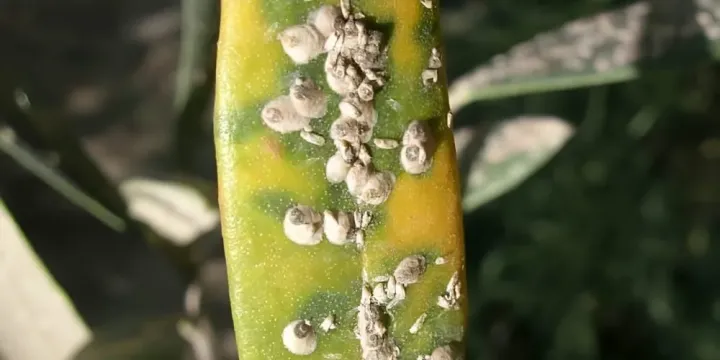
This species primarily parasitizes various scale insects, such as the oleander scale. It acts as an ectoparasitoid, meaning the larvae develop underneath the protective shield of the host, consuming it from the outside.
The direct impact of Aphytis paramaculicornis is the significant reduction of scale insect populations in orchards and citrus groves. By limiting the number of pests, it prevents damage to fruit, leaves, and young twigs.
Unlike chemical pesticides, this parasitoid is highly selective. It poses no threat to the environment or other beneficial species, making it a sustainable tool for managing pest outbreaks without ecological disruption.
When present in sufficient numbers, the wasp can effectively keep scale infestations below economic thresholds. This biological control action is vital for preserving the vigor and overall health of fruit-bearing trees.
The efficiency of this species has been documented in various agricultural regions where it successfully replaced or complemented chemical interventions, leading to better orchard management outcomes.
When it appears
The activity period of Aphytis paramaculicornis is strongly dictated by ambient temperatures. In temperate and warm climates, the wasps are active from spring through autumn, mirroring the activity cycles of their scale insect hosts.
The insect is multivoltine, meaning it produces several generations throughout the growing season. This rapid turnover is critical for its ability to suppress fast-breeding pest populations in commercial orchards.
Overwintering occurs in the larval stage beneath the cover of the host. The wasp remains dormant until the return of warmer weather, at which point it resumes development and emerges to begin the new season.
Optimal development depends on steady temperature ranges, typically between 20°C and 28°C. Extreme weather conditions, such as severe cold or excessive humidity, may temporarily impede the population growth of the wasps.
Strategic timing is essential for biological control implementation. Farmers monitor the emergence of adult wasps to ensure that interventions align with the most vulnerable developmental stages of the target scale insects.
Control measures
Conservation biological control is the primary method for protecting and encouraging this species. This involves managing the orchard environment to ensure the survival and multiplication of existing populations of the parasitoid.
A crucial management practice is the avoidance of broad-spectrum insecticides that are toxic to parasitoid wasps. When pest pressure necessitates treatment, growers should favor soft, selective chemicals that preserve natural enemies.
Integrating nectar-producing flora within or around the orchard serves as a food source for adult wasps, increasing their lifespan and reproductive output. This simple ecological boost significantly improves biological control efficacy.
For high-intensity infestations, augmentative releases of lab-reared wasps are employed. These releases must be timed carefully, considering the current density of the host and the developmental cycle of the parasitoid.
Monitoring programs focusing on scale infestation levels and parasitism rates are essential. By keeping detailed records, agricultural managers can optimize their reliance on Aphytis paramaculicornis for sustainable plant protection.
Taxonomy
- Latin name
- Aphytis paramaculicornis
- Order
- Hymenoptera
- Family
- Aphelinidae
- EPPO code
- APYTPA
Discussion
No discussions yet — be the first.