
Aphytis lepidosaphes
Aphytis lepidosaphes
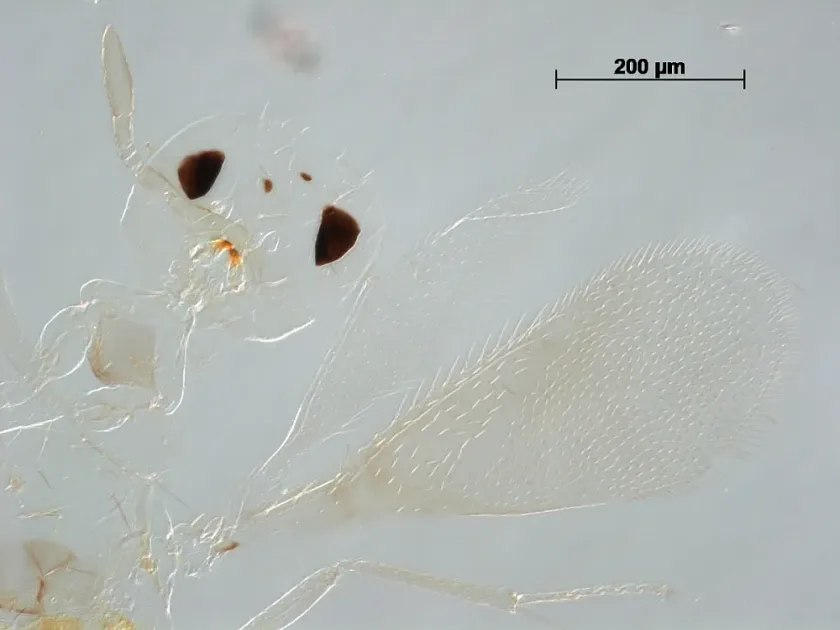
Description
How to identify
Aphytis lepidosaphes is a species of parasitic wasp belonging to the family Aphelinidae. These insects are well-known natural enemies of various scale insects, particularly those affecting fruit trees.
The adult wasp is minute, typically measuring less than 1 mm in length. Its body color usually ranges from pale yellow to light brown, aiding in camouflage against tree bark.
The wings are clear and possess a specific vein pattern characteristic of the Aphelinidae family. Sensory antennae play a crucial role in locating hosts within dense orchard foliage.
The larval stage develops entirely underneath the shield of the scale insect. The larva itself is cylindrical, pale, and relatively immobile, focusing its energy on consuming the host.
Females are equipped with a specialized ovipositor designed to penetrate the tough protective shield of the scale, allowing them to place eggs directly into the host's body.
What it damages
It is crucial to clarify that Aphytis lepidosaphes is not a plant pest; rather, it is a highly beneficial parasitoid. It plays a vital role in biological control programs.
The wasp targets destructive scale species that suck sap from citrus trees, which can otherwise lead to stunted growth, leaf yellowing, and significant yield losses.
By consuming the internal tissues of the scale insect, the larvae effectively kill the pest before it can reproduce or cause extensive physical damage to the plant.
Agricultural experts highly value this insect because it provides a sustainable alternative to the overuse of synthetic chemical pesticides in large-scale orchards.
Therefore, Aphytis lepidosaphes is categorized as a biological control agent that protects the overall health and productivity of the agricultural ecosystem.
When it appears
The life cycle and activity of this wasp are heavily influenced by temperature and humidity levels in the orchard environment. Peak activity often coincides with warm summer months.
In warm, temperate, or subtropical climates, the wasp can complete several generations within a single growing season, allowing its population to track pest outbreaks.
Overwintering typically occurs as a larva or pupa inside the host scale. This provides essential shelter against the cold and harsh environmental conditions of winter.
In the spring, as temperatures rise, adults emerge to begin their search for new host colonies. This emergence often aligns with the seasonal activity of the target scale species.
Optimal conditions for high parasitization rates include moderate humidity levels and an environment free from significant fluctuations in daily temperature.
Signs of infestation
The primary sign of Aphytis lepidosaphes presence is the appearance of tiny, circular exit holes on the shells of scale insects. These holes are created by adults exiting their hosts.
A high density of these "perforated" shells throughout a colony indicates that the parasitoids are successfully managing the pest population in the orchard.
Upon closer inspection with a magnifying glass or microscope, one may observe mummified scale remains, which are remnants of the successful parasitization process.
While adults are difficult to see due to their size, their movement across the bark can occasionally be observed during warm periods when they actively seek hosts.
- Circular emergence holes on scale shields.
- Mummified or empty scale insect shells.
- Observed reduction in the density of live scale insects on branches.
Control measures
The best way to protect Aphytis lepidosaphes is to avoid the application of broad-spectrum, persistent chemical insecticides that are toxic to beneficial insects.
Implementing Integrated Pest Management (IPM) strategies is essential. This includes selecting selective pesticides that are harmless to the parasitoid population.
Maintaining a diverse orchard environment, such as incorporating nectar-producing plants, provides necessary food sources for adult wasps, thereby increasing their longevity.
In cases of severe pest infestations, commercial biological control involves releasing lab-reared Aphytis populations directly into the field to suppress scale outbreaks.
By preserving these natural allies, growers can achieve long-term pest suppression, reduce input costs, and promote healthier, more environmentally sustainable orchards.
Taxonomy
- Latin name
- Aphytis lepidosaphes
- Order
- Hymenoptera
- Family
- Aphelinidae
- EPPO code
- APYTLE
Discussion
No discussions yet — be the first.