
Aphytis chilensis
Aphytis chilensis
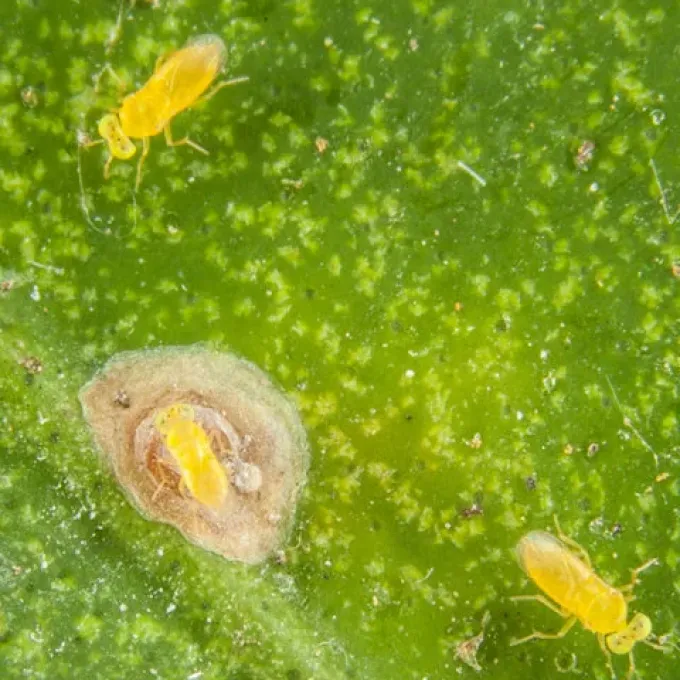
Description
How to identify
Aphytis chilensis is a species of parasitic wasp belonging to the family Aphelinidae. Despite being often misidentified due to its minute size, this insect is a crucial beneficial organism in agricultural ecosystems.
Adult wasps are typically 0.5–1 mm long, characterized by a pale yellow to light brown body. They possess clear, delicate wings and specific morphological features in their genitalia that allow entomologists to distinguish them from other Aphytis species.
These wasps are specialized parasitoids. Their systematic position places them among the primary biological control agents for various species of scale insects (coccids) that damage crops.
Detection in the field requires specialized entomological knowledge and the use of hand lenses or microscopes to identify the characteristic signs of their presence on host insects.
Recognizing this species is vital for modern agronomy, as it supports the shift toward integrated pest management and reduced reliance on synthetic chemical insecticides.
What it damages
Aphytis chilensis does not cause any damage to plants. It is exclusively an entomophagous insect, meaning its diet and lifecycle are focused entirely on preying upon scale insects.
The host species primarily include those that infest citrus, ornamental trees, and shrubs. By parasitizing these harmful pests, the wasp effectively reduces the population pressure on the host plants.
There are no reports of these wasps feeding on plant tissues, sucking plant sap, or transmitting plant viruses. Therefore, they are considered purely beneficial insects rather than pests.
In fact, the presence of these wasps indicates a healthy, self-regulating agroecosystem where natural enemies are actively suppressing pest populations.
Farmers and orchard managers should view the presence of this insect as a sign of success in their biological control efforts, rather than a threat to their harvest.
When it appears
The seasonal activity of Aphytis chilensis is tightly coupled with the phenology of its hosts. They are most active during the warmer months when scale insects are reproducing.
In optimal conditions, with temperatures ranging between 20°C and 30°C, the lifecycle is accelerated, allowing the wasp to produce multiple generations throughout the growing season.
Overwintering typically occurs in the larval stage, residing securely beneath the protective scale of the host. This strategy ensures survival during colder periods until the next season begins.
The emergence of adults in spring is usually synchronized with the availability of vulnerable stages of scale insects, ensuring that the wasps find hosts to oviposit almost immediately.
In greenhouse environments, where temperatures are stable, these wasps can remain active year-round, providing consistent biological control in protected cultivation.
Signs of infestation
The most visible sign of Aphytis chilensis activity is the appearance of small, circular exit holes on the dorsal surface of the scale insect covers.
Once parasitized, the scale insects stop feeding and their bodies wither. They often become detached or loosely attached to the plant surface, indicating that the inner tissues have been consumed.
Close inspection of a colony of scales under a microscope may reveal the presence of wasp pupae or the remains of the parasitoid larva within the empty scale shell.
A sudden decline in the vigor and reproductive output of a scale insect population is a strong indicator of successful parasitization by this wasp.
- Characteristic exit holes on the dorsal side of scale covers.
- Presence of desiccated or shriveled scale insect bodies.
- Absence of viable eggs or nymphs beneath the scale cover.
Control measures
As a beneficial insect, there is no need to control Aphytis chilensis. On the contrary, agronomic practices should focus on protecting and promoting their populations.
The use of broad-spectrum insecticides should be minimized or completely avoided, particularly during the peak flight period of the wasps, to prevent non-target mortality.
Creating floral refugia—strips of flowering plants near orchards—provides adult wasps with essential nectar sources, significantly increasing their lifespan and fecundity.
In cases where chemical control of other pests is necessary, selective, target-specific pesticides should be preferred to preserve the existing populations of natural enemies.
Integrated Pest Management (IPM) strategies utilize the natural activity of Aphytis chilensis as a cornerstone for maintaining sustainable production and healthy yields.
Taxonomy
- Latin name
- Aphytis chilensis
- Order
- Hymenoptera
- Family
- Aphelinidae
- EPPO code
- APYTCL
Discussion
No discussions yet — be the first.