
Aphytis aonidiae
Aphytis aonidiae
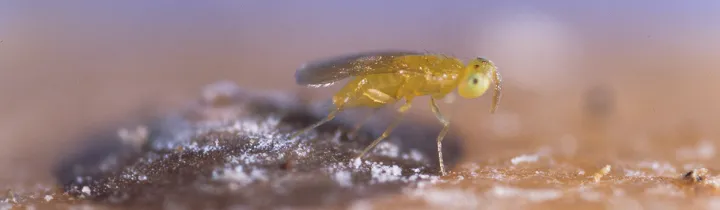
Description
How to identify
Aphytis aonidiae is a minute parasitic wasp belonging to the family Aphelinidae within the order Hymenoptera. This species is widely recognized in agriculture as a beneficial parasitoid that specializes in hunting scale insects.
The adult wasps are very small, typically measuring between 0.8 and 1.2 mm in length. They generally exhibit a pale yellow to light orange coloration, which allows them to blend in with the leaf surface or the bark of host plants where they actively search for prey.
The biological cycle of this insect is strictly endoparasitic. The female wasp searches for a suitable host, such as a scale insect, and deposits an egg underneath the protective scale. This placement ensures that the developing larva is protected from environmental hazards and predators.
Once the larva hatches, it begins feeding on the fluids and tissues of the scale insect, effectively killing the host. The wasp progresses through three larval stages before pupating beneath the remains of the scale.
The adult wasp eventually emerges by chewing a characteristic small circular exit hole through the scale's protective armor, which is a clear diagnostic sign of the presence of this beneficial insect in the orchard.
What it damages
Aphytis aonidiae does not damage plants. It is a strictly beneficial organism that acts as a natural enemy to various species of armored scale insects (family Diaspididae), which are known to cause severe damage to fruit trees and ornamental shrubs.
The primary target of this parasitoid is the scale insect, which, if left uncontrolled, can cause leaf drop, dieback of twigs, and fruit deformation due to sap extraction. By consuming the scale population, the wasp mitigates these harmful effects.
The economic value of this species lies in its high efficiency as a biocontrol agent. In many horticultural systems, natural populations of Aphytis are sufficient to maintain scale populations well below the economic injury level.
The wasp's ability to find hosts even at low population densities makes it an essential component of Integrated Pest Management (IPM) programs, helping to reduce the reliance on hazardous synthetic insecticides.
There are no known negative impacts of this wasp on crops, making it a highly valued partner in sustainable agriculture and organic orchard management practices.
Control measures
In terms of managing Aphytis aonidiae, the priority is to conserve and promote its presence rather than control it. Growers should avoid the application of broad-spectrum insecticides, especially organophosphates, which are lethal to these wasps.
Implementing a selective pest control strategy is crucial. When chemical intervention is necessary for other pests, growers should select compounds that have minimal impact on Hymenopteran parasitoids to preserve the natural predator-prey balance.
Maintaining biological corridors and flower strips within or around the orchard provides nectar sources for adult wasps, which can significantly increase their longevity and fecundity, leading to better pest suppression.
Regular scouting using magnifying tools to identify the characteristic exit holes on scale insects allows farmers to assess the level of biological control being achieved and helps in making informed decisions about necessary interventions.
- Prioritize selective insecticides over broad-spectrum ones.
- Enhance biodiversity to support parasitoid populations.
- Monitor parasitism rates before scheduling spray programs.
Taxonomy
- Latin name
- Aphytis aonidiae
- Order
- Hymenoptera
- Family
- Aphelinidae
- EPPO code
- APYTAO
Discussion
No discussions yet — be the first.