
Aphytis
Aphytis
Description
How to identify
The genus Aphytis belongs to the order Hymenoptera and the family Aphelinidae. These insects are world-renowned as highly effective parasitoid wasps, specialized in controlling various scale insects.
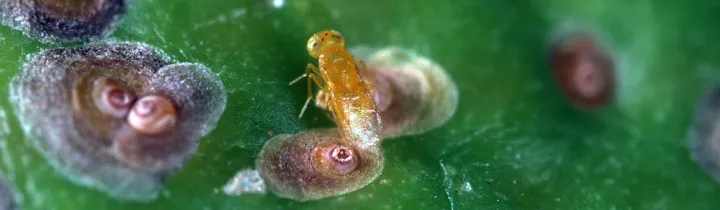
Adult Aphytis wasps are minute insects, typically measuring 1–2 mm in length. They are characterized by a yellowish to brownish body color and transparent, delicate wings with reduced venation.
Their anatomy is perfectly adapted for their niche; they possess sensitive antennae to detect the chemical cues emitted by scale insect nymphs on plant surfaces.
Because they spend their larval stages entirely under the shield of their host, they remain hidden from the typical garden scout, acting as stealthy protectors of the plants.
It is crucial for agronomists to identify these as beneficial allies rather than pests, ensuring they are not mistaken for harmful species during crop inspections.
What it damages
Aphytis wasps do not cause damage to agricultural crops; they are strictly entomophagous. They are primary regulators of scale insect populations, including San Jose scale and citrus scale.
They inhabit a wide range of environments, including commercial orchards (apples, pears, citrus), vineyards, and ornamental garden plantings where scale insects thrive.
By parasitizing scale insects, Aphytis prevents the sap-sucking damage that leads to limb dieback, leaf chlorosis, and potential tree death caused by high infestations of coccids.
Their role is so significant that in many integrated pest management (IPM) programs, they are considered the primary defense mechanism against scale outbreaks.
Their presence reduces the need for heavy chemical intervention, contributing to more sustainable and environmentally friendly agricultural practices.
When it appears
The seasonal activity of Aphytis is synchronized with the development of its host. Activity typically begins in the spring when temperatures rise above 15°C.
These wasps are multivoltine, meaning they produce multiple generations per season, which allows them to effectively track and suppress the rising population of scale insects throughout the summer.
Peak activity is usually observed during mid-summer, providing natural pressure against the most damaging generations of the pests.
As autumn progresses and temperatures drop, Aphytis populations transition toward dormancy, overwintering within the shells of the last scale insect generation of the year.
In greenhouse settings, their activity can be year-round, provided the temperature remains consistent and host availability is sufficient for continuous reproduction.
Signs of infestation
The most reliable sign of Aphytis activity is the presence of small, circular exit holes on the shields of the scale insects, indicating a successful emergence of the wasp.
A high density of dried, shriveled scale shields on the branches, which easily flake off, often indicates that a significant percentage of the colony has been parasitized.
A gradual decline in the scale insect infestation over several weeks in a neglected orchard is a hallmark of successful establishment and activity of these beneficial wasps.
The lack of honeydew and black sooty mold on leaves, which usually results from unchecked scale feeding, acts as a secondary indicator of the wasp's effectiveness.
Visual observation of tiny, yellow, active insects fluttering near infested branches during calm, sunny days confirms their presence in the canopy.
Control measures
Preservation of Aphytis populations is a key goal in modern orchard management, as they provide free and effective biological control services.
- Avoid the use of broad-spectrum insecticides that are known to be toxic to beneficial Hymenoptera.
- Adopt selective pest control strategies that target the scale insects without harming their natural enemies.
- Maintain floral biodiversity nearby to provide nectar and pollen sources for adult wasps, which increases their longevity and fecundity.
- Monitor the ratio of parasitized scale to healthy scale before deciding on any pesticide applications.
- Reduce the intensity of dormant oil applications if biological control is already providing sufficient suppression of the target pests.
Taxonomy
- Latin name
- Aphytis
- Order
- Hymenoptera
- Family
- Aphelinidae
- EPPO code
- APYTSP
Discussion
No discussions yet — be the first.