
Aphelinus semiflavus
Aphelinus semiflavus
Description
How to identify
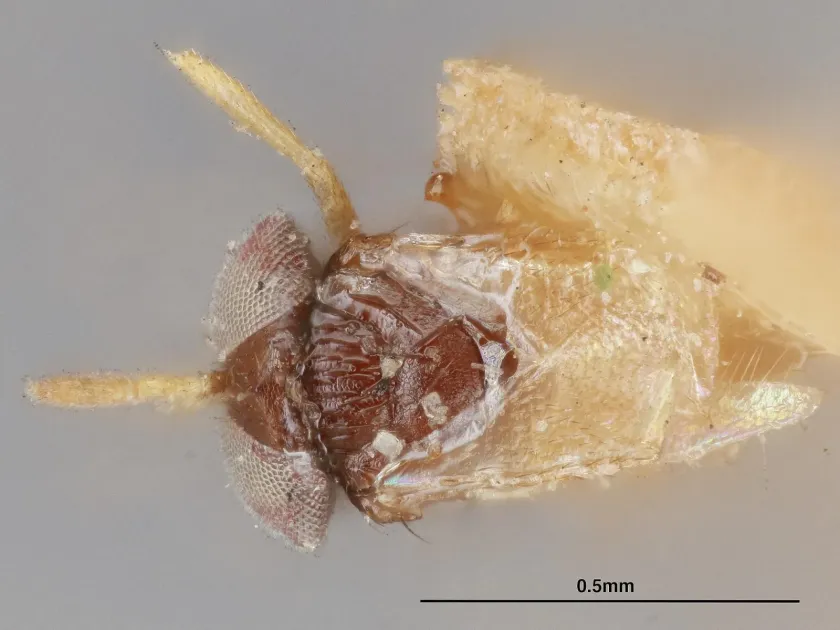
Aphelinus semiflavus is a minute parasitic wasp belonging to the family Aphelinidae. Measuring between 1 to 1.5 mm in length, these wasps are typically yellowish-brown in color, which is a key identifying morphological feature.
As a specialist parasitoid, this insect spends its larval stage developing inside the body of an aphid. It acts as a powerful natural regulator of aphid populations in various agricultural settings.
Adult females demonstrate an exceptional ability to locate aphid colonies, even when the population density of the host is relatively low. This makes them highly effective in suppressing potential pest outbreaks early in the season.
The life cycle involves the female wasp inserting an egg directly into the host's body. The developing larva consumes the internal contents of the aphid, eventually leading to its death and the formation of a hardened shell.
Identification in the field is usually confirmed by looking for parasitized hosts (mummies) rather than attempting to spot the tiny, active adult wasps themselves.
What it damages
Aphelinus semiflavus is not a plant pest; instead, it is a highly beneficial insect that serves as a biological control agent. It specifically targets aphids that damage various crops, including cereals and vegetables.
Its primary hosts are species within the family Aphididae. By parasitizing these aphids, the wasp prevents them from feeding on plant sap, which otherwise leads to stunted growth, leaf curling, and the transmission of viral diseases.
In cereal production, it is effective against species like the grain aphid and the bird cherry-oat aphid. Its presence significantly reduces the stress on the crop caused by heavy aphid infestations.
Because it provides natural pest control, the reliance on chemical insecticides can be greatly reduced, supporting more sustainable farming practices and healthier crop development.
The overall impact of this insect is highly positive, acting as a natural protector of crops without any direct negative effect on the plants or the environment.
When it appears
The activity of Aphelinus semiflavus typically begins in the early spring, coinciding with the first seasonal migration of aphids onto young, actively growing crop plants.
Warm temperatures and moderate humidity are ideal for its development. During the summer, multiple generations can occur, allowing the wasp population to mirror the growth cycles of the aphid hosts.
The speed of the life cycle depends heavily on the ambient temperature. In warmer weather, the development from egg to adult is rapid, ensuring that the wasps can quickly respond to emerging aphid colonies.
As the season progresses toward autumn, the wasps may enter a state of diapause or continue to survive in surviving aphid mummies found on weeds or crop residues until the next season.
Maintaining the population over time requires providing diverse habitats nearby, such as field margins or hedgerows, where these beneficial insects can overwinter safely.
Signs of infestation
The most visible sign of Aphelinus semiflavus activity is the presence of aphid mummies. A parasitized aphid becomes immobile, rigid, and typically turns a darker, brownish-black color.
If you examine an aphid mummy closely, you may see a small, circular exit hole on the dorsal side. This hole indicates that the adult wasp has successfully completed its metamorphosis and emerged.
High rates of mummification within a colony are a strong indicator that the natural biological control system is functioning well and effectively suppressing the pest population.
If aphids are disappearing while many empty, hardened shells remain, it confirms that the wasp has been actively parasitizing the colony.
- Presence of darkened, hardened aphid mummies.
- Small, circular exit holes on the backs of dead aphids.
- Gradual decline in the overall aphid colony size.
- Presence of tiny, active, yellow-brown wasps among aphids.
- Reduced plant damage symptoms, such as less leaf curling.
Control measures
To effectively manage crops using this beneficial wasp, the primary goal is to protect its population. Avoiding broad-spectrum insecticides is crucial for maintaining the wasp's presence in the field.
If chemical intervention for other pests is necessary, choose selective products that are non-toxic or have low impact on parasitic wasps to ensure the continued biological control of aphids.
Promoting biodiversity around the fields by planting nectar-rich flowers provides necessary supplemental food for adult wasps, increasing their lifespan and reproductive success.
Strategic weed management helps prevent the buildup of pest populations while ensuring that natural habitats for beneficial insects are preserved near the crop area.
In greenhouse environments, producers can release lab-reared Aphelinus semiflavus to rapidly address and neutralize localized aphid outbreaks before they reach damaging levels.
Taxonomy
- Latin name
- Aphelinus semiflavus
- Order
- Hymenoptera
- Family
- Aphelinidae
- EPPO code
- APHESE
Discussion
No discussions yet — be the first.