
Aphelinus marlatti
Aphelinus marlatti
Description
How to identify
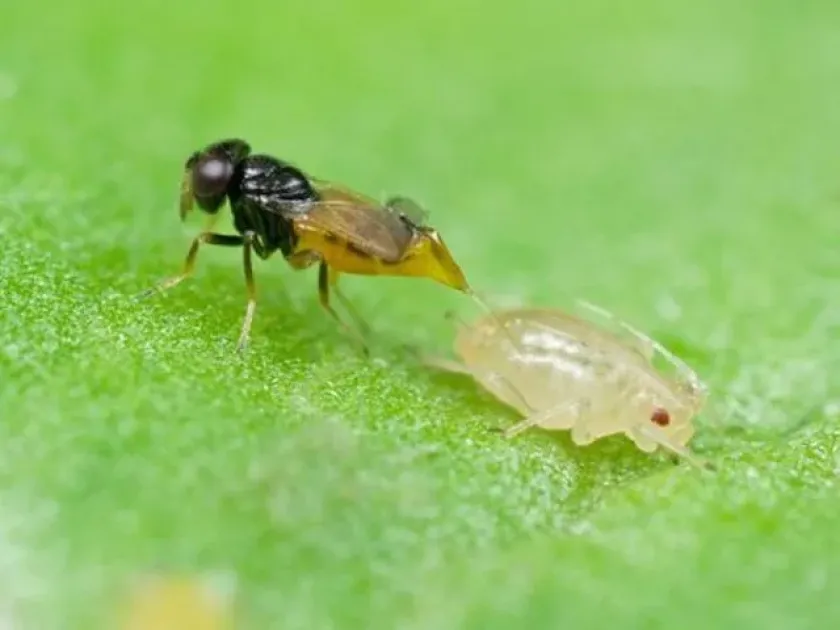
Aphelinus marlatti is a tiny parasitoid wasp belonging to the family Aphelinidae within the order Hymenoptera. These insects are essential natural regulators of aphid populations in many agricultural and horticultural ecosystems.
The adult wasp is extremely small, typically measuring less than 1 mm in length. Its body is usually dark-colored, which allows it to camouflage effectively while searching for prey on the foliage of host trees and shrubs.
They possess specialized sensory organs that enable females to detect the chemical cues emitted by aphid colonies. Their wings exhibit a characteristic venation pattern that serves as a diagnostic feature for identification under microscopic inspection.
The biological cycle is strictly endoparasitic. The female deposits eggs inside the host aphid, and the developing larva consumes the host's internal tissues, ultimately leading to the death of the aphid.
The most recognizable sign of Aphelinus marlatti activity is the presence of "mummies." These are dead, blackened, and hardened shells of aphids from which the adult wasp will eventually emerge after completing its pupal stage inside.
What it damages
Aphelinus marlatti is not a plant pest; rather, it is a beneficial insect. However, it is often documented in agricultural databases because farmers must distinguish it from actual harmful pests to avoid accidental killing of beneficial species.
The primary "damage" associated with this wasp is actually a consequence of human error. When pesticides are applied indiscriminately to control aphids, these beneficial wasps are often eliminated, causing the aphid population to rebound even more aggressively.
A lack of parasitoid wasps leads to unchecked aphid growth, resulting in leaf curling, stunted shoot growth, and fruit deformation. The honeydew secreted by aphids also attracts sooty mold, further damaging the aesthetic and physiological health of the plant.
Additionally, aphids serve as vectors for various plant viruses. By failing to protect or encourage the presence of Aphelinus marlatti, growers inadvertently increase the risk of widespread viral transmission throughout the orchard.
Understanding the ecological role of this parasitoid is crucial. Recognizing them as allies rather than threats allows for a reduction in chemical inputs and fosters a more resilient and sustainable agricultural production system.
When it appears
The activity of Aphelinus marlatti typically begins in early spring, synchronized with the emergence of the first spring generations of aphids as temperatures rise above the development threshold.
The peak period of wasp activity coincides with the mid-summer aphid population surge. During this time, the wasps are most visible and active, frequently patrolling leaves to parasitize new host individuals.
Depending on the climatic zone and temperature conditions, this species can undergo several generations within a single season. The duration of the life cycle is highly dependent on ambient warmth and food availability.
As autumn approaches and photoperiods shorten, the wasps prepare for overwintering. They typically enter diapause while in the larval or pupal stage inside the dried, mummified remains of their aphid hosts.
They overwinter in sheltered locations, such as tree bark crevices, leaf litter, or other protected plant debris. Maintaining a balanced level of ground cover in orchards can help ensure the survival of overwintering populations.
Control measures
Integrated Pest Management (IPM) is the best approach for maintaining Aphelinus marlatti populations. Focus on preserving natural enemies by avoiding the use of broad-spectrum insecticides, especially during peak wasp activity.
When aphid control is deemed necessary, select biorational or selective pesticides that have minimal impact on parasitoid wasps. Always consider the potential impact of any chemical treatment on the existing beneficial insect community.
Regular field monitoring for parasitized aphids (the blackened mummies) is essential. If a high percentage of mummified aphids is detected, it is often a sign that natural control is functioning, and chemical spraying may not be required.
Enhance the orchard habitat by planting flowering strips or refugia. These provide alternative food sources like nectar for adult wasps, which significantly increases their longevity and search efficiency within the crop.
Educate orchard staff on distinguishing between beneficial parasitoids and true pests. Proper identification ensures that management decisions are based on data, preventing unnecessary damage to the ecosystem's natural resilience.
Taxonomy
- Latin name
- Aphelinus marlatti
- Order
- Hymenoptera
- Family
- Aphelinidae
- EPPO code
- APHEMR
Discussion
No discussions yet — be the first.