
Aphelinus mali
Aphelinus mali
Description
How to identify
Aphelinus mali is a tiny parasitic wasp belonging to the order Hymenoptera and the family Aphelinidae. It is a highly specialized natural enemy, measuring less than 1 millimeter in length.
The adult wasp is characterized by a dark body and transparent wings. The female uses its specialized ovipositor to insert eggs into the bodies of living host aphids, primarily the woolly apple aphid.
This insect is known for its remarkable ability to locate its host even when aphid populations are very low, making it an essential component of biological pest management.
The development of the wasp occurs entirely inside the host aphid. As the larvae grow, they consume the internal organs of the aphid, leading to the host's death before the adult wasp emerges.
Its effectiveness as a biocontrol agent makes it a preferred alternative to chemical interventions in intensive fruit production, helping to maintain ecological balance in the orchard.
What it damages
Aphelinus mali is considered a beneficial insect, not a pest. It specifically targets the woolly apple aphid (Eriosoma lanigerum), which is a serious threat to apple trees globally.
The woolly aphid infests the bark, twigs, and roots of trees, producing a white, cottony wax that protects the colony. These aphids suck the sap, leading to stunted growth and the formation of galls.
By parasitizing the aphids, Aphelinus mali significantly reduces the aphid population, preventing the extensive damage that would otherwise occur to the bark and overall tree health.
The presence of this wasp helps mitigate the harmful effects of aphid infestations, ensuring the trees remain vigorous and productive throughout the growing season.
Using this natural predator promotes sustainable agriculture by reducing the reliance on toxic pesticides that can negatively impact the orchard's biodiversity and environmental footprint.
When it appears
The activity of Aphelinus mali is closely synchronized with the life cycle of the woolly aphid and the phenology of the apple trees, beginning in early spring as temperatures rise.
During the warmer months, the wasp completes multiple generations, allowing for rapid multiplication and effective suppression of aphid colonies during their peak activity period.
As autumn arrives and temperatures decrease, the development slows down. The larvae often overwinter inside the mummified bodies of the aphids, which remain attached to the tree bark.
The duration of the wasp's life cycle is highly dependent on ambient temperature, meaning that warmer seasons typically result in more effective control of the aphid population.
Monitoring seasonal trends helps orchard managers understand the population dynamics of this parasitoid and make informed decisions regarding orchard health management.
Signs of infestation
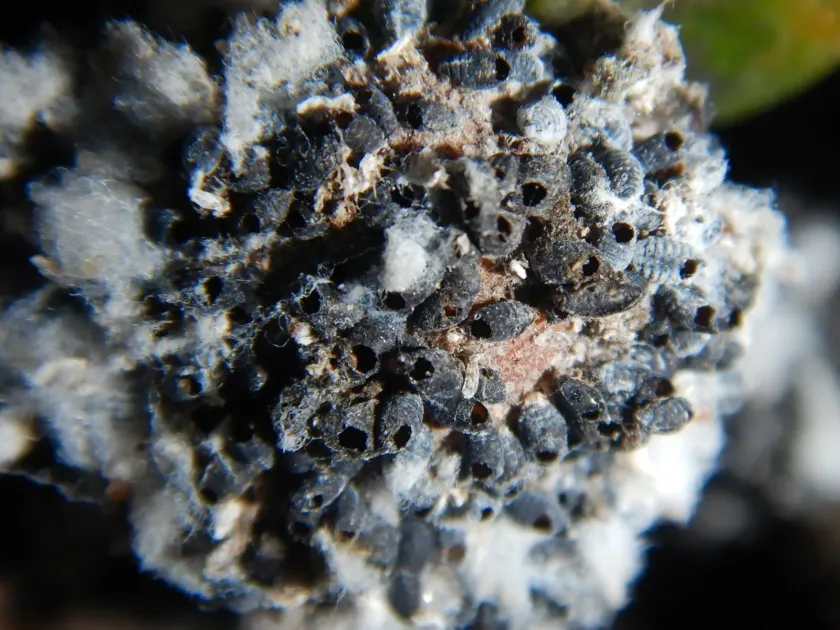
The most reliable sign of Aphelinus mali activity is the presence of "mummified" aphids. These are the dead, swollen bodies of the woolly aphid that turn a distinct black color.
Upon close inspection, small, perfectly circular holes can be found on these mummies. These are the exit holes through which the adult wasps have emerged after completing their development.
A significant number of black mummies within an aphid colony indicates that the biological control agent is actively working and effectively suppressing the pest population.
In well-managed orchards, the reduction of the characteristic white, waxy "wool" produced by the aphids is another visual indicator of successful parasitism by the wasp.
Identifying these signs allows growers to assess whether the natural enemy population is sufficient or if additional interventions might be required for optimal orchard protection.
Control measures
The primary control strategy is to conserve the natural populations of Aphelinus mali by avoiding the use of broad-spectrum insecticides that are toxic to this beneficial species.
When chemical treatments are absolutely necessary, growers should choose selective pesticides that are compatible with integrated pest management (IPM) and safe for beneficial insects.
Artificial distribution is a common practice: branches infested with mummified aphids are moved from areas with high parasite populations to new sites within the orchard where aphids are active.
Maintaining a diverse orchard environment and avoiding excessive cleaning of bark tissues can help provide necessary shelter for overwintering wasps, ensuring their survival for the next season.
- Minimize the use of non-selective pesticides.
- Implement relocation of mummified branches to new infestation zones.
- Selectively use biorational products during peak activity.
- Monitor mummified aphid density as a primary indicator of biocontrol success.
Taxonomy
- Latin name
- Aphelinus mali
- Order
- Hymenoptera
- Family
- Aphelinidae
- EPPO code
- APHEMA
Discussion
No discussions yet — be the first.