
Aphelinus
Aphelinus jucundus
Description
How to identify
Aphelinus jucundus belongs to the Aphelinidae family within the order Hymenoptera. This tiny insect is widely recognized in agronomy as a specialized parasitoid rather than a primary crop pest.
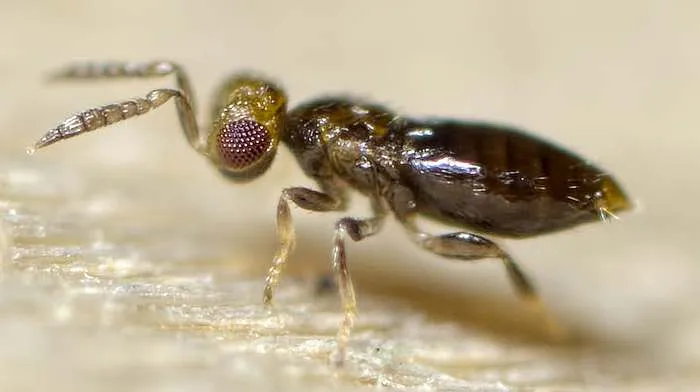
Adult individuals are extremely small, typically measuring between 1 and 2 millimeters. Their bodies often feature dark, yellowish-black patterns, aiding in camouflage against leaf surfaces.
The wings are transparent with a specific venation pattern characteristic of this family. Short antennae are a key diagnostic feature for distinguishing this species from other parasitic wasps.
The life cycle is closely linked to specific aphid hosts. Adult insects supplement their nutrition by feeding on nectar, which extends their reproductive lifespan significantly.
Identification in the field is difficult due to their minute size. Specialists commonly utilize yellow sticky traps to monitor population levels and track the presence of adults.
What it damages
While Aphelinus jucundus is a beneficial insect, its presence is sometimes correlated with heavy aphid infestations, as these pests are the primary food source for their larvae.
The parasitoid damages aphids by laying a single egg inside the host's body. As the larva develops, it consumes the internal organs of the aphid, leading to its death.
In uncontrolled agricultural environments, the absence of these parasitoids leads to rapid aphid population growth, which causes severe damage to vegetables and flowers.
However, misuse of non-selective insecticides can eliminate the Aphelinus population, inadvertently triggering a massive resurgence of aphid colonies due to the loss of natural control.
Crops suffer secondary damage from aphids, such as honeydew accumulation and stunted growth, which the parasitoid aims to mitigate through biological regulation.
When it appears
Aphelinus activity typically begins in late spring and continues throughout the summer, aligning with the reproductive cycles of their aphid hosts.
The optimal temperature range for development is between 20 and 25 degrees Celsius. Activity decreases significantly if temperatures drop below these levels.
The overwintering stage occurs inside the mummified remains of the aphid host, providing protection from harsh environmental conditions on plant debris.
In greenhouses, where climate conditions are strictly controlled, the parasitoid can complete multiple generations annually, providing continuous protection.
Mass emergence of adults usually occurs during the early morning hours, which helps them avoid the heat of the day and improves mating success.
Signs of infestation
The primary sign of Aphelinus presence is the appearance of mummified aphids on the undersides of leaves. These aphids appear hardened, bloated, and darkly colored.
Upon close inspection, one can see a perfectly circular exit hole on the back of the mummified aphid, left by the adult wasp upon emerging after completing metamorphosis.
The presence of adult parasitoids can be observed by carefully watching aphid colonies; adults move slowly across the leaf surface searching for suitable hosts to parasitize.
Leaves hosting these parasites may show signs of aphid damage, such as curling or yellowing, even if the primary aphid population is being reduced by the parasitoid.
A lack of mummified individuals in a large aphid colony indicates an ineffective biological control system and an urgent need for agricultural intervention.
Control measures
Effective management requires an integrated pest management (IPM) approach that prioritizes the preservation of these beneficial wasps.
The use of broad-spectrum insecticides, especially organophosphates and pyrethroids, must be avoided to prevent mass mortality of the Aphelinus population.
Maintaining floral borders and avoiding premature harvesting of crop debris can help sustain the parasitoid population throughout the growing season.
- Prioritize selective insecticides that are safe for Hymenoptera species.
- Implement biological releases of mass-reared Aphelinus during initial aphid detection.
- Regular field monitoring to assess the ratio of mummified to live aphids.
By fostering a balanced ecosystem, growers can utilize Aphelinus jucundus as a cost-effective and environmentally friendly tool for aphid population suppression.
Taxonomy
- Latin name
- Aphelinus jucundus
- Order
- Hymenoptera
- Family
- Aphelinidae
- EPPO code
- APHEJU
Discussion
No discussions yet — be the first.