
Aphelinus hordei
Aphelinus hordei
Description
How to identify
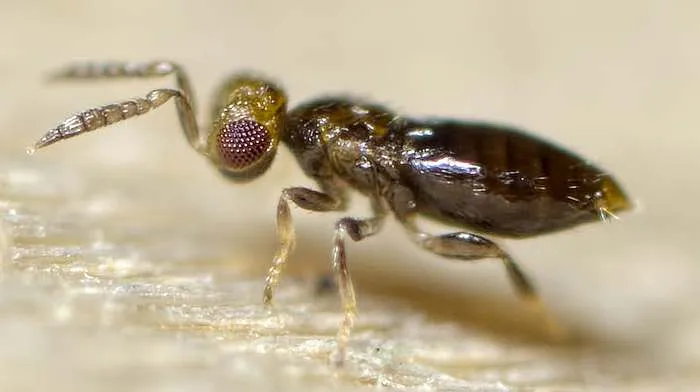
Aphelinus hordei is a species of parasitic wasp belonging to the family Aphelinidae. These insects are critical components of the ecosystem in cereal fields, primarily acting as specialized parasitoids of aphids.
Adult wasps are extremely small, typically measuring between 1 to 2 millimeters in length. Their bodies are predominantly dark or black, often displaying a subtle metallic luster that aids in their recognition.
They possess transparent wings with specific venation patterns, which are diagnostic features used by entomologists to distinguish them from other similar hymenopteran species found in the same habitats.
The larval stage is internal and completely dependent on the host. The larvae are legless and yellowish-white, adapted to live and feed within the aphid's body cavity, effectively consuming it from the inside out.
Identification of this species in the field is rarely done with the naked eye; it usually involves observing the characteristic symptoms of aphid infestation and conducting microscopic examination of collected samples.
What it damages
Aphelinus hordei targets various aphid species that infest essential crops such as barley, wheat, and oats. While the wasp itself does not feed on plants, its presence is a direct indicator of aphid colonization.
Aphids cause significant physical damage to cereal crops by sucking sap, which leads to leaf curling, stunted growth, and yellowing (chlorosis) of the foliage. The parasitoid works to limit these aphid populations.
In certain agricultural scenarios, high levels of aphid pressure can overwhelm the natural regulatory capacity of these parasitoids, leading to visible crop damage despite the presence of beneficial insects.
Understanding the interaction between the parasitoid and the host is crucial for crop management, as it helps determine whether the current aphid population requires chemical intervention or if the parasitoid can handle the outbreak.
There is no direct damage to the crop caused by Aphelinus hordei; rather, it plays a complex role in the ecological balance of the field, influencing the survival and reproductive rates of plant-damaging aphids.
When it appears
The activity of Aphelinus hordei is temperature-dependent and aligns with the growing season of host cereals. Adults typically emerge in the spring, coinciding with the tillering stage of barley.
The peak population density of these parasitoids usually occurs between the stem elongation and heading stages of the cereal crops, mirroring the growth cycles of their aphid hosts.
Multiple generations can occur throughout the growing season, with the number of generations largely dictated by local climatic conditions and the availability of aphid colonies as food sources.
As temperatures drop and winter approaches, the wasps enter diapause. They successfully overwinter in sheltered areas, including soil cracks and the base of crop residues, ensuring their survival for the next season.
Monitoring for this species is most effective during warmer parts of the day when adult wasps are actively searching for new aphid colonies to parasitize.
Signs of infestation
The most distinct sign of Aphelinus hordei presence is the formation of aphid "mummies." These are aphid cadavers that have turned black or dark brown, becoming firm and immobile.
A small, perfectly round hole on the dorsal side of the mummy serves as an exit portal, indicating that a fully developed adult wasp has recently emerged from the host's body.
Infested aphid colonies appear atypical; individual aphids are often lethargic, stationary, and show signs of structural decay compared to healthy, active members of the colony.
A lack of expansion in an aphid colony, even when environmental conditions are suitable for the aphids, often suggests that internal parasitism by Aphelinus hordei is effectively suppressing the population.
Field inspectors often use systematic counts of these mummified aphids to estimate the level of parasitism and the potential for natural biological control in a given field.
Control measures
Management strategies focus on preserving natural populations of these parasitoids. Reducing the use of broad-spectrum insecticides is the most critical step in maintaining their effectiveness in the field.
Integrated Pest Management (IPM) practices should prioritize selective pesticides that minimize harm to beneficial hymenopterans, ensuring that biological control agents remain viable.
Improving the landscape by preserving field margins and hedgerows provides essential refuges and resources for adult wasps, thereby promoting their survival and reproductive success.
Agronomic practices, such as controlling volunteer cereals and weeds, help manage initial aphid outbreaks, indirectly supporting the stability of the parasitoid population by preventing massive imbalances.
- Regular monitoring of aphid infestation levels.
- Avoidance of prophylactic insecticide applications.
- Integration of ecological focus areas to support beneficial insects.
Taxonomy
- Latin name
- Aphelinus hordei
- Order
- Hymenoptera
- Family
- Aphelinidae
- EPPO code
- APHEHO
Discussion
No discussions yet — be the first.