
Apechthis quadridentatus
Apechthis quadridentatus
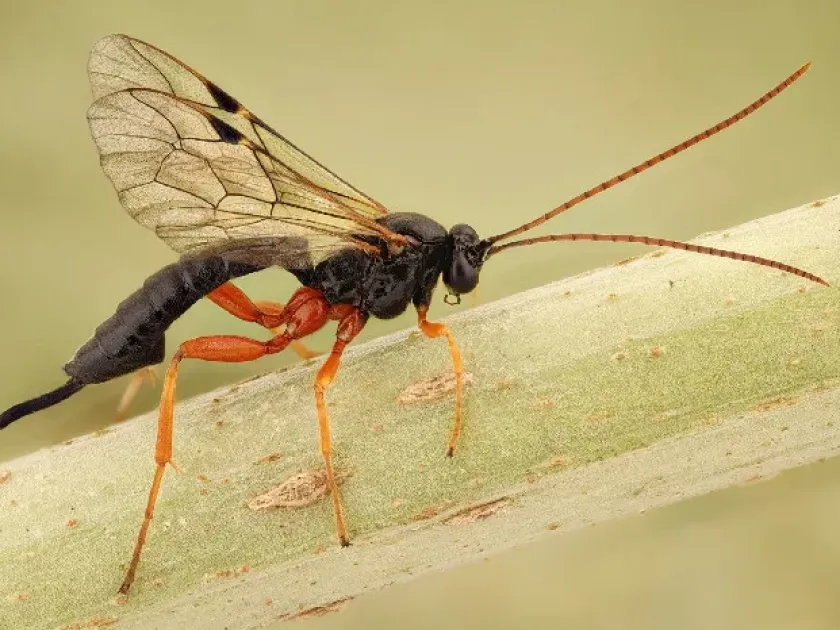
Description
How to identify
Apechthis quadridentatus is a species of parasitic wasp belonging to the order Hymenoptera and the family Ichneumonidae. These insects are known for their slender morphology and specialized ovipositor used for egg-laying.
The adult wasp measures approximately 10–12 mm in length. Its body is primarily black, often featuring yellow markings on the legs and abdominal tergites. The wings are transparent with typical ichneumonid venation patterns.
Females possess a well-developed, sharp ovipositor adapted for piercing the pupal cases of their hosts. This organ is crucial for accurately locating host larvae or pupae hidden within plant tissue.
The larvae are whitish and grub-like, developing as endoparasites. They consume the internal organs of their host, eventually causing its death before completing their own development.
Males are generally distinguishable by their more slender abdomens and antenna structure. They are highly mobile and elusive, making them difficult to spot in dense vegetation.
What it damages
While Apechthis quadridentatus acts as a natural biological control agent, it is classified as a pest in contexts where it interferes with beneficial insect populations. Its primary hosts are lepidopteran pupae found in forests and orchards.
Common hosts include various species of loopers and owlet moths that feed on deciduous and coniferous trees. The wasp targets the pupal stage, effectively terminating the development of the host.
Damage to crops can occur indirectly. By suppressing beneficial entomophagous populations or being overly aggressive, the wasp can disrupt the natural balance, potentially leading to outbreaks of other pests.
When mass proliferation occurs, this species may exploit a wider range of hosts, which can negatively affect the biodiversity of the orchard or forest ecosystem.
The host pupa is damaged through the piercing of its protective shell. After the wasp larva consumes the interior, the host remains as an empty casing, rendering it incapable of continuing its lifecycle.
When it appears
Adult activity of Apechthis quadridentatus typically begins in late spring when temperatures are consistently warm enough for flight and foraging.
The peak activity and reproduction period occur in mid-summer, coinciding perfectly with the pupation phase of most host lepidopteran species.
As summer draws to a close, the wasps begin preparing for winter. Overwintering occurs in sheltered locations, often as adults or pupae in leaf litter or bark crevices.
The number of generations per year is highly dependent on regional climate conditions. In warmer areas, the species may complete two cycles if food sources are abundant.
The synchronization of the wasp’s lifecycle with its hosts is critical. Without a steady supply of pupae during the reproductive phase, the population cannot be sustained.
Signs of infestation
The primary indicators of this wasp's presence are the remnants of parasitized pupae found on trees or within the foliage.
- Small, clean-cut exit holes on the surface of host pupae.
- Empty or hollowed-out pupal casings left behind after the wasp emerges.
- A noticeable decline in leaf-feeding caterpillars in specific plantation areas.
- Adult wasps frequently observed visiting flowering plants near the host habitats.
A decline in the overall population of moth pests without chemical intervention is a strong indicator of successful parasitic activity.
Control measures
Specific chemical control is rarely directed at Apechthis quadridentatus because it is recognized as a vital natural regulator of harmful insects.
Management focuses on preserving these beneficial wasps by avoiding the use of broad-spectrum insecticides during their peak flight periods.
Biological control strategies should prioritize the use of selective products that spare natural enemies while targeting only the intended herbivorous pests.
Agricultural practices, such as the removal of plant debris, should be managed cautiously to ensure that overwintering sites for beneficial insects are not destroyed.
Regular monitoring of pest levels using pheromone traps ensures that interventions occur only when necessary, preventing collateral damage to the wasp populations.
Taxonomy
- Latin name
- Apechthis quadridentatus
- Order
- Hymenoptera
- Family
- Ichneumonidae
- EPPO code
- APECQU
Discussion
No discussions yet — be the first.