
Antichloris viridis
Antichloris viridis
Description
How to identify
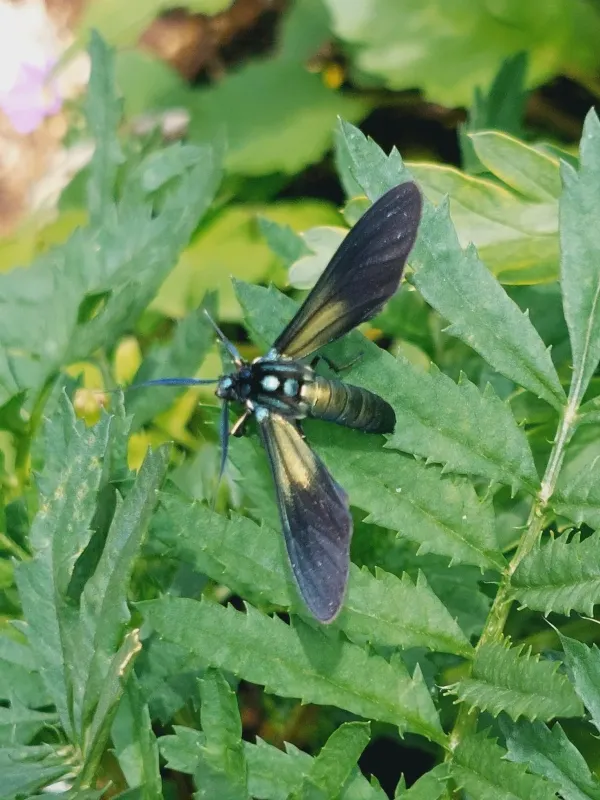
Antichloris viridis is a moth species belonging to the order Lepidoptera and the family Erebidae. Unlike many other moths that are nocturnal, this species is primarily active during the daylight hours.
The adult moth is characterized by dark, almost black wings with a distinct metallic or greenish sheen. The wingspan is relatively modest, and the body exhibits a robust structure typical of tropical members of this family.
The larvae, or caterpillars, undergo several developmental stages. While they are often difficult to spot during early instars, they grow into more distinct larvae that utilize camouflage to blend in with the foliage of their host plants.
The biology of Antichloris viridis is closely tied to the tropical and subtropical environments where its host plants thrive. In suitable climates, the insect can complete multiple generations within a single year.
The life cycle encompasses egg, larval stages, pupation within a protective cocoon, and the adult moth stage. Reproductive rates are highly dependent on ambient temperatures and humidity levels in the region.
What it damages
The primary food source for Antichloris viridis is plants of the family Musaceae. This pest poses a significant economic threat to commercial banana plantations, particularly throughout Latin America.
While bananas are the main host, the larvae can occasionally feed on other tropical flora, but banana plantations suffer the most severe economic losses from the activities of this insect.
The damage is caused exclusively by the larval stage. These caterpillars are voracious feeders, capable of skeletonizing large areas of leaf tissue in a very short amount of time.
Extensive leaf damage reduces the plant's photosynthetic capacity, which directly negatively impacts fruit development, total yield weight, and overall market quality.
Under heavy infestation pressure, plants may lose over 50% of their leaf surface, leading to severe physiological stress and potentially plant death if the infestation is not managed.
Signs of infestation
The first sign of an Antichloris viridis infestation is the presence of irregular holes on young banana leaves, as larvae chew along the edges or consume the center of the leaf lamina.
Clusters of eggs can often be found on the underside of leaves. These egg masses are a critical diagnostic marker that allows growers to detect a developing infestation early.
The presence of caterpillar frass on leaf surfaces and trapped within the plant whorls is a clear indicator that a colony is actively feeding in the immediate vicinity.
During daylight, careful inspection of the foliage often reveals the caterpillars themselves, which frequently rest along the midrib of the leaf to remain protected while they feed.
Gradual yellowing and premature drying of the affected leaves are symptoms of an advanced infestation, where the accumulated damage has surpassed the plant's ability to recover.
Control measures
Biological control programs are highly effective against Antichloris viridis, often utilizing natural parasitoids and predators that target the eggs and larvae of the moth.
Chemical insecticides with contact and stomach action are successful when applied during the early larval stages. Proper application protocols are essential to protect beneficial insects and pollinators.
Agrotechnical practices, such as the routine removal and destruction of infested plant debris, help reduce the population by eliminating sites where larvae can pupate safely.
Pheromone traps are excellent tools for monitoring adult moth populations, allowing growers to predict population spikes and initiate control measures before crop damage reaches a critical threshold.
- Regular monitoring using light and pheromone traps to track adult activity.
- Manual removal of egg masses on smaller plots.
- Application of bio-insecticides containing Bacillus thuringiensis.
- Strict quarantine regulations for the movement of banana planting material.
Taxonomy
- Latin name
- Antichloris viridis
- Order
- Lepidoptera (butterflies)
- Family
- Erebidae
- EPPO code
- CEMDVI
Discussion
No discussions yet — be the first.