
Antichloris
Antichloris
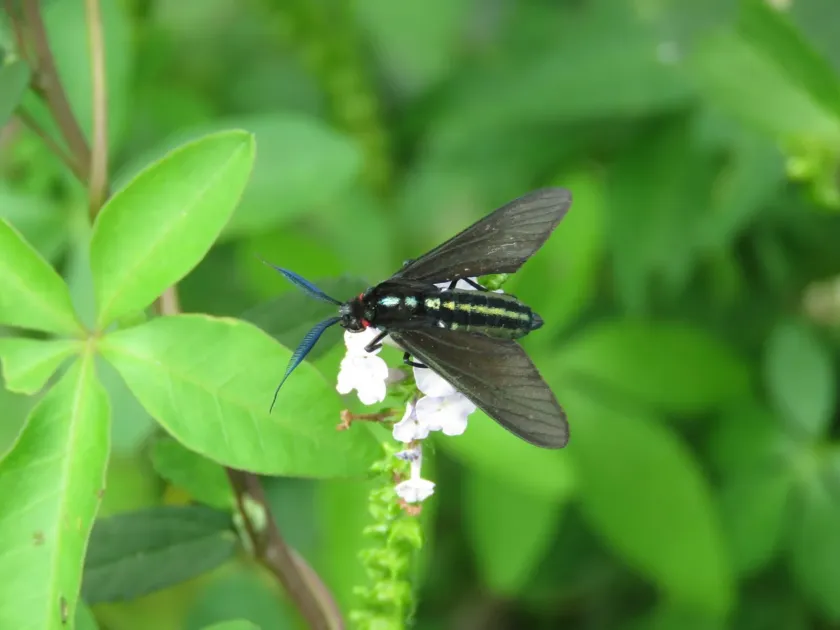
Description
How to identify
Antichloris belongs to the Erebidae family, which is part of the order Lepidoptera. Adult specimens are small moths with dark wings, often displaying a characteristic metallic sheen or transparent areas.
The life cycle of this pest includes four classic stages: egg, larva (caterpillar), pupa, and imago. Caterpillars possess an active metabolism and a strong appetite, making them the primary damaging form of the species.
The insect's biology is closely tied to tropical and subtropical climate zones. Reproduction occurs year-round, provided there are favorable temperature conditions and a food base.
Females lay eggs primarily on the lower or upper surface of the leaves of host plants. The eggs are usually grouped together, which ensures a high density of larval populations in the early stages of development.
The species diversity of the genus Antichloris includes several representatives, the most well-known being Antichloris eriphia, which specializes in banana crops.
What it damages
The main food source for Antichloris is plants of the Musaceae family. Primarily, the insect causes damage to commercial banana plantations, leading to significant losses in vegetative mass.
In addition to bananas, caterpillars can be found on several weeds of the Marantaceae or Heliconiaceae families, which serve as reservoirs for the pest during the off-season.
Damage is caused specifically by the larvae, which have a chewing mouthpart. During feeding, they skeletonize or completely consume the leaf blades, leaving only the coarse veins.
Mass reproduction of the pest can lead to total defoliation of the plants, which critically reduces the intensity of photosynthesis and slows down fruit growth.
In young seedlings, damage to the growth point or young leaves can result in the death of the entire plant, causing serious economic losses to the plantation.
Signs of infestation
The first visual sign of Antichloris presence is the occurrence of characteristic irregular-shaped holes on the banana leaf blade.
The presence of frass in the form of small dark granules on the leaf surface or in the leaf axils directly indicates active feeding by the caterpillars.
Upon inspecting the underside of the leaf, one can find clusters of larvae, which often react with active movement or falling downward when approached or disturbed by vibration.
In later stages of infestation, progressive drying and destruction of the leaf surface occur, giving it a "lacy" appearance due to the remaining veins.
The presence of large amounts of silk webbing or leaves rolled into tubes, where caterpillars often pupate, is another important indicator of infestation.
Control measures
A primary protection measure is regular monitoring of plantations to identify egg masses and young caterpillars for mechanical removal.
The biological method of control includes the use of preparations based on Bacillus thuringiensis, which effectively suppress larval development without harming beneficial entomofauna.
The application of systemic and contact insecticides is justified only when the economic threshold of damage is reached under conditions of high population density.
Agronomic control plays an important role: timely cleaning of aisles from weeds prevents the migration of caterpillars to cultivated plants.
Attracting natural enemies, such as predatory wasps and entomopathogenic fungi, is a promising direction within the framework of an integrated plant protection strategy.
Taxonomy
- Latin name
- Antichloris
- Order
- Lepidoptera (butterflies)
- Family
- Erebidae
- EPPO code
- ATCHSP
Discussion
No discussions yet — be the first.