
Anoplocnemis tristator
Anoplocnemis tristator
Description
How to identify
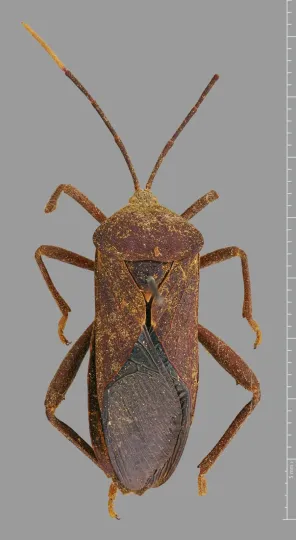
Anoplocnemis tristator is a species of leaf-footed bug belonging to the Coreidae family. These insects are easily recognized by their robust build and the characteristic morphology of the male hind legs, which are swollen and spiked.
Adults typically measure between 20 and 25 mm in length and exhibit a dark brown or matte black coloration, providing effective camouflage against soil and plant debris.
The nymphs go through several developmental stages (instars) and, while they lack fully developed wings in early stages, they share similar anatomical features with the adults.
These bugs are predominantly diurnal, favoring sunny environments where they can feed and reproduce efficiently on host plants.
Like many other coreids, A. tristator possesses scent glands that emit a strong, unpleasant odor when the insect is disturbed or threatened by potential predators.
What it damages
This species is a known polyphagous pest, with a strong preference for leguminous crops such as soybeans, cowpeas, beans, and chickpeas, causing significant losses.
The insects use their piercing-sucking mouthparts to penetrate young pods and developing seeds, extracting essential plant nutrients and water.
Feeding activities often lead to the abortion of flowers and pods, as well as the stunting of growth in the remaining seeds within the pod.
The punctures made by the bugs create entry points for various bacterial and fungal pathogens, which can cause secondary decay and ruin the quality of the grain.
In high-density infestations, the cumulative damage can lead to a drastic reduction in yield, affecting both the quantity and the commercial value of the harvested produce.
When it appears
The life cycle of Anoplocnemis tristator is closely synchronized with the phenology of its host plants, particularly the pod-filling stages of legume development.
Adults overwinter in protected areas, including plant residues and soil crevices, emerging as temperatures rise to initiate the new generation's lifecycle.
Eggs are typically laid in clusters on leaves or stems, and upon hatching, the nymphs begin their development by feeding on the sap of the host plant.
Multiple generations can occur within a single growing season, provided that climate conditions are favorable and food resources remain abundant throughout the period.
Population surges are often observed during periods of drought, which stress the host plants and make them more susceptible to the feeding pressure of these bugs.
Signs of infestation
Visible symptoms of an infestation include small dark spots on the surface of pods, which indicate the exact locations where the bugs have fed.
Affected pods often appear withered or show signs of localized necrosis, which may result in the premature drop of the pod from the plant stem.
When opened, damaged seeds often appear shriveled, discolored, or deformed, lacking the standard development required for high-quality grain.
Field observation often reveals the presence of adult bugs resting on the stems or pods during the cooler hours of the morning or late afternoon.
An indirect sign of the presence of this pest is the increased prevalence of pod decay and mold, resulting from the secondary infections following initial feeding damage.
Control measures
Effective management begins with strict field hygiene, including the removal of weeds and crop residues that serve as overwintering sites for the bugs.
Chemical control via systemic insecticides may be necessary during the critical pod-setting phase if the population exceeds economic injury levels.
Biological control strategies focus on encouraging natural predators and parasitoids, such as egg-parasitic wasps, which can significantly reduce population density.
Regular scouting using pheromone traps is recommended to detect early migration of adults into the field, allowing for timely and localized intervention.
Crop rotation and the maintenance of diverse planting schedules can help disrupt the pest's life cycle and reduce the likelihood of heavy infestations in a single area.
Taxonomy
- Latin name
- Anoplocnemis tristator
- Order
- Hemiptera (bugs, aphids, leafhoppers)
- Family
- Coreidae
- EPPO code
- ANONTR
Discussion
No discussions yet — be the first.