
Anoplocnemis castanea
Anoplocnemis castanea
Description
How to identify
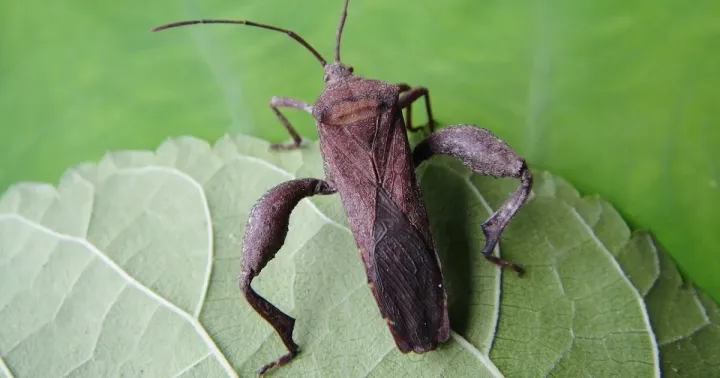
Anoplocnemis castanea is a species of leaf-footed bug belonging to the family Coreidae. These insects are characterized by a robust, elongated body with a distinctive chestnut-brown coloration that aids in camouflage among dry stalks and bark.
The most notable morphological feature of this species is the thickened hind legs, which are particularly pronounced in males. They possess a piercing-sucking mouthpart designed for extracting plant sap.
The life cycle encompasses several stages: egg, nymphal instars, and adult. Females typically deposit their eggs in rows on the leaf surfaces or stems of host plants.
Nymphs undergo several molting phases, gradually increasing in size and developing colors that closely mimic the mature adults as they progress towards adulthood.
These insects thrive in warm, humid climates, which allows them to sustain multiple generations throughout the year in regions suitable for tropical or subtropical agriculture.
What it damages
This pest is highly polyphagous, targeting a wide range of plants, but it is particularly destructive to legumes such as soybeans, beans, peas, and cowpeas. It can also infest various fruit and ornamental species.
By feeding on sap, these bugs weaken young shoots, buds, and developing pods. The plant tissues at the site of the feeding puncture often wither, leading to growth stunting or complete flower drop.
When feeding on legumes, the bugs pierce the pod wall to reach the seeds. This causes significant deformation, reduced grain quality, and can result in completely shriveled or unmarketable produce.
Beyond physical damage, the feeding process introduces wounds that act as entry points for various bacterial and fungal pathogens, potentially causing systemic diseases in the crop.
In cases of severe infestation, the yield loss can be catastrophic, as the cumulative damage to reproductive structures leaves the plant unable to complete its natural life cycle.
When it appears
The appearance of Anoplocnemis castanea is synchronized with the growing season of its host plants, with activity levels significantly rising during warmer months.
Adults overwinter in sheltered locations and emerge as soon as temperatures become favorable, beginning their search for suitable host plants to feed and lay eggs.
Multiple generations can occur within a single season, with the development speed heavily dependent on the local temperature and moisture levels of the environment.
The peak population density is typically recorded during the flowering and pod-filling stages, as these periods offer the highest nutritional value for the developing nymphs and active adults.
As temperatures begin to drop, the bugs seek protected areas such as leaf litter or tree crevices to enter diapause, surviving until the next favorable season arrives.
Signs of infestation
The primary sign of infestation is the presence of adult bugs congregating on the upper stems, flowers, or pods during the cooler hours of the day when they are most active.
Close inspection of stems and pods often reveals small, dark, necrotic spots, which are the residual marks left by the bug’s rostrum after sap extraction.
Affected plants exhibit symptoms of leaf yellowing, wilting of the shoots, and a sudden, mass shedding of buds and immature pods, which often turn black or dry out prematurely.
Deformed or pitted seeds inside the pods are a hallmark of this pest's damage, significantly degrading the quality of the harvested crop and reducing overall yield.
The presence of shed nymphal skins and insect waste on the leaf surfaces serves as a clear indication that a colony has established itself and is actively feeding on the crop.
Control measures
Effective management of this pest requires an integrated approach that focuses on monitoring, physical removal, and judicious chemical intervention to protect the harvest.
- Sanitation: Removing crop residues and host weeds that provide overwintering sites for the bugs.
- Crop rotation: Disrupting the life cycle by alternating host plants with non-host species.
- Biological control: Encouraging natural predators and parasitoids that target the egg and nymphal stages.
- Chemical control: Applying systemic insecticides during critical development stages when the population exceeds economic thresholds.
Careful timing of insecticide applications, preferably in the late afternoon, is essential to maximize efficacy and minimize the impact on beneficial insect populations.
Regular monitoring of field edges is highly recommended, as populations often migrate from surrounding vegetation before moving deeper into the primary crop fields.
Taxonomy
- Latin name
- Anoplocnemis castanea
- Order
- Hemiptera (bugs, aphids, leafhoppers)
- Family
- Coreidae
- EPPO code
- ANONCA
Discussion
No discussions yet — be the first.