
Anoplocnemis
Anoplocnemis
Description
How to identify
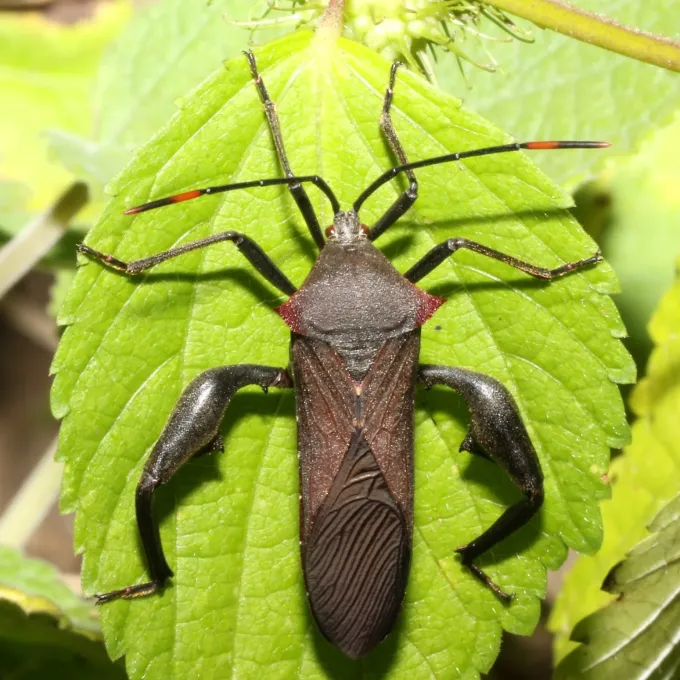
Anoplocnemis is a genus of large bugs belonging to the family Coreidae (leaf-footed bugs) within the order Hemiptera. These insects are easily recognized by their robust bodies, which typically range from 20 to 30 millimeters in length.
The most distinctive feature of the genus, particularly in males, is the presence of enlarged, thickened hind femora, often armed with prominent spines or tubercles. Their body coloration is generally dark brown or black.
The antennae are segmented and prominent, playing a vital role in their sensory perception. Like all members of the order, they possess a needle-like proboscis used for piercing and sucking fluids.
The life cycle undergoes incomplete metamorphosis, consisting of eggs, five nymphal instars, and the adult stage. The nymphs often exhibit different coloration compared to the mature adults.
Anoplocnemis species are well-adapted to warm, humid environments. Their ability to fly enables them to colonize new fields effectively, often migrating from wild hosts to commercial crops.
What it damages
Anoplocnemis acts as a significant polyphagous pest, causing economic damage to a variety of crops, most notably legumes like soybeans, cowpeas, and beans, as well as various fruit trees.
They damage plants by piercing tissues with their proboscis and injecting saliva, which causes systemic necrosis in the affected area. This feeding method leads to wilting, stunted growth, and death of shoots.
When feeding on reproductive structures, such as flower buds and developing pods, the bugs cause severe yield losses. Buds often abort and drop, while pods become deformed or fail to produce viable seeds.
Fruit crops are also susceptible; the bugs puncture young fruits, creating entry points for secondary pathogens and causing internal fruit rot or disfigurement.
Large infestations can devastate a harvest within a short period, as both adults and nymphs contribute to the cumulative damage of the plant's vascular system.
Signs of infestation
Early symptoms of an infestation include the appearance of dark, sunken spots on leaves, stems, and pods. These spots are the direct result of the bug's probing and feeding activities.
Visible deformation of fruit or pods is a key sign of significant bug activity. Often, the pods look shriveled or display patchy development due to localized tissue destruction.
Sudden flower drop or premature senescence of young vegetative parts often indicates the presence of these pests, as they specifically target high-nutrient tissues.
The insects themselves are relatively easy to spot due to their large size and dark color. They are often found in clusters on the upper parts of the plant during the early morning hours.
A foul, pungent odor is often released by the bugs when they feel threatened or when disturbed, which can serve as an olfactory clue for their presence in a field.
Control measures
Managing Anoplocnemis requires a combination of strategies, with integrated pest management (IPM) being the most effective approach for long-term control.
Chemical control using registered insecticides is often necessary when pest populations exceed economic thresholds. Applications should be timed carefully, targeting younger nymphal stages which are more vulnerable.
Cultural control practices, such as removing alternative host weeds from field margins, are essential. This reduces the population reservoir between crop cycles.
Biological control, by encouraging natural predators such as egg parasitoids, can help suppress populations in areas where chemical use is restricted or undesirable.
- Regular field scouting to monitor population densities.
- Removal of infected plant debris to break the pest cycle.
- Application of selective insecticides during the peak activity hours.
Taxonomy
- Latin name
- Anoplocnemis
- Order
- Hemiptera (bugs, aphids, leafhoppers)
- Family
- Coreidae
- EPPO code
- ANONSP
Discussion
No discussions yet — be the first.