
Hawthorn fruit fly
Anomoia purmunda
Description
How to identify
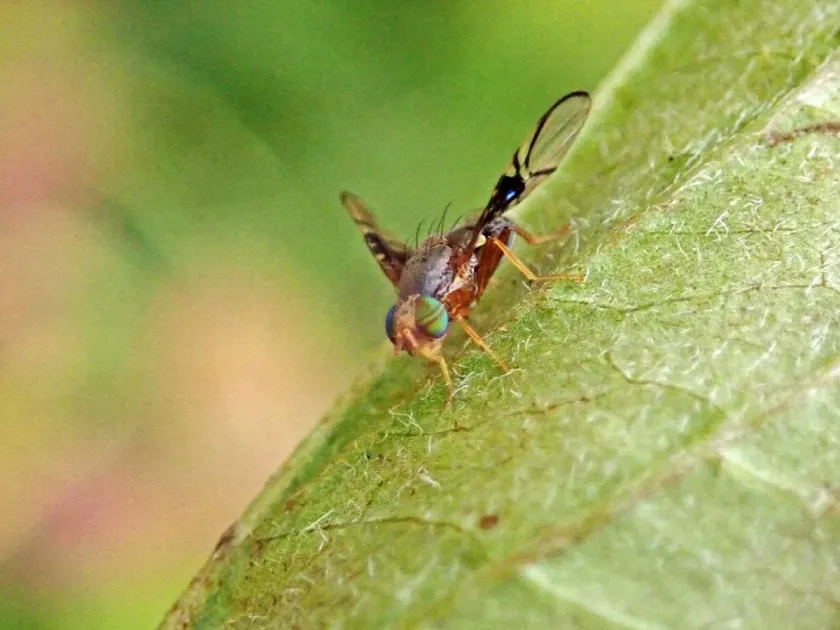
The hawthorn fruit fly (Anomoia purmunda) is a member of the Tephritidae family, also known as fruit flies. It is easily identified by the distinct, intricate dark patterning on its wings.
The adult fly is small, usually measuring between 4 to 5 mm in length. Its body has a yellowish-brown coloration, which allows it to blend into the woody environment of its host plants.
The larval stage is a typical dipteran maggot, pale in color and legless. It spends its entire growth period within the fruit, protected from external predators and environmental stressors.
The life cycle is synchronized with the fruiting period of its host plants. Overwintering occurs in the soil as a puparium, buried a few centimeters beneath the tree canopy.
Adult emergence occurs in the spring when temperatures rise sufficiently. Adults rely on plant nectar and aphid honeydew to reach sexual maturity before mating and oviposition.
What it damages
This pest primarily targets plants in the Rosaceae family. The hawthorn (Crataegus) is the most common host, though it can also infest rowan, apples, and pears.
Damage is caused when the female punctures the skin of the developing fruit to deposit eggs. The hatching larva consumes the internal pulp, creating galleries as it feeds.
Infested fruits frequently experience premature ripening and drop. The feeding tunnels disrupt the vascular system and structural integrity of the fruit, leading to decay.
Secondary infections, such as mold and rot, often follow the initial larval damage, rendering the fruit completely unsuitable for any use.
In high infestation years, the loss of harvest can be devastating, making this insect a significant concern for both ornamental hawthorn growers and home orchardists.
Signs of infestation
Small surface punctures or discolored spots on the fruit are the first signs that a female fly has deposited eggs. These marks may be difficult to see without close inspection.
Deformed, bumpy, or lumpy fruit surfaces are clear indicators of internal larval development. The fruit often ceases normal growth due to internal tissue damage.
Upon splitting a suspicious fruit, one will find internal cavities filled with larval frass. The fruit flesh typically turns dark and soft, losing its firmness.
The premature drop of unripe fruit is a classic warning sign. If a high number of small, under-developed fruits are found under a tree, they should be inspected for maggots.
Small, round exit holes on the fruit skin signify that the larva has finished its development and has dropped to the soil to pupate.
Control measures
Rigorous sanitation is the primary control strategy. Collecting and destroying fallen fruits before the larvae exit prevents the population from successfully pupating in the soil.
Cultivating the soil beneath the trees in the late autumn exposes the puparia to harsh weather and avian predators, significantly reducing the survival rate for the next season.
Yellow sticky traps or pheromone-based traps can be used to monitor the presence of adults and provide a timing cue for further control actions.
Chemical control, if necessary, involves the use of approved insecticides during the early flight phase, targeting adults before they can lay eggs.
- Pruning trees to improve air circulation and sunlight.
- Encouraging natural predators such as ground beetles and birds.
- Using row covers for small trees during the flight period.
- Maintaining a clean orchard floor free of fruit debris.
Taxonomy
- Latin name
- Anomoia purmunda
- Order
- Diptera (flies)
- Family
- Tephritidae
- EPPO code
- ANOOPE
Discussion
No discussions yet — be the first.