
Fruit fly Anomoia
Anomoia
Description
How to identify
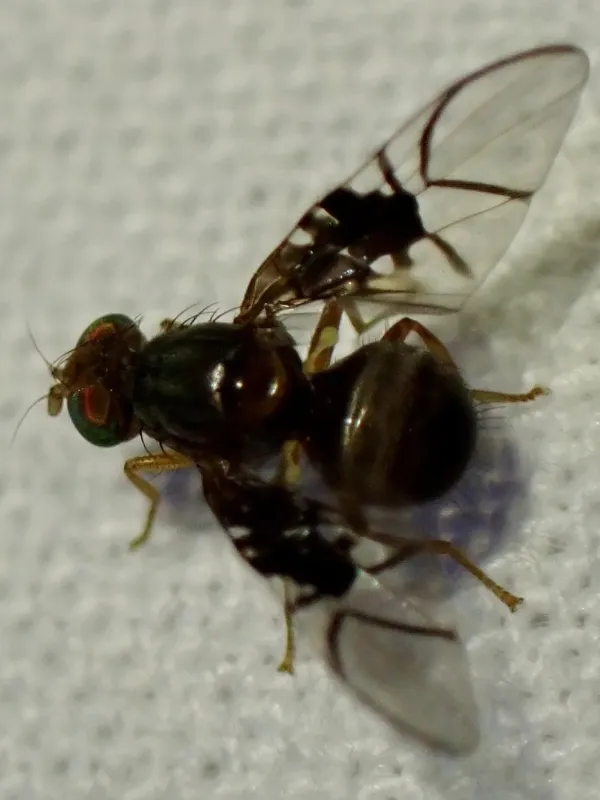
Anomoia is a genus of tephritid fruit flies (family Tephritidae). These flies are characterized by their distinct, often patterned wings and specific morphology that sets them apart from common vinegar flies.
Adult flies are typically small, measuring between 4 to 6 millimeters in length. Their bodies often possess bright colors, providing camouflage on the bark or foliage of host plants.
The larvae are legless, conical in shape, and typically cream-colored. They reside and feed entirely within the fruit tissue of host plants throughout their development.
Pupation primarily occurs in the soil beneath the host tree, making the subterranean phase a critical point in their biological cycle.
Accurate species identification often requires specialized entomological study, as the physical appearance of various Anomoia species can be quite similar at first glance.
What it damages
These flies primarily target Rosaceae plants, including apples, pears, and several stone fruits. The damage is caused by larvae mining through the flesh of the fruit.
As the larvae feed, they create tunnels within the fruit, leading to rapid decay and breakdown of the plant tissues. This renders the fruit completely inedible and unsalable.
The tunnels created by the larvae serve as entry points for secondary fungal and bacterial pathogens, which often result in widespread fruit rot across the orchard.
Heavy infestations lead to premature fruit drop, causing significant yield losses for commercial growers and home gardeners alike.
The internal damage caused by the larvae is often not visible until the fruit is cut open or starts to collapse from the inside out.
When it appears
Adult emergence typically begins in the spring, synchronized with the development of young fruitlets. The flies feed on nectar and honeydew during this period.
Females lay eggs by piercing the skin of the developing fruit. A single female can infest numerous fruits during her active lifespan.
The larval stage begins shortly after egg hatching, with the larvae boring immediately into the pulp of the fruit, where they remain protected from external conditions.
Depending on local climate conditions and available hosts, there may be one or more generations per growing season.
By autumn, the larvae exit the fruit and drop to the ground to pupate. The pupae overwinter in the soil until the next spring, when the cycle begins anew.
Signs of infestation
The initial sign of infestation is the presence of tiny, dark puncture marks on the fruit skin, which are the sites where the female deposited her eggs.
Over time, these areas may become discolored, depressed, or soft as the larvae begin feeding and destroying the internal structure of the fruit.
Cutting into a suspect fruit will reveal internal tunneling and the presence of larvae or their excrement, often accompanied by an unpleasant, fermenting odor.
Widespread premature fruit drop is a strong indicator of an active pest population, requiring immediate orchard sanitation protocols.
- Dark puncture marks on fruit surfaces.
- Soft spots and premature fruit rot.
- Internal tunneling and larval presence.
Control measures
Rigorous orchard sanitation is the most effective control method. This involves the frequent collection and proper disposal of all dropped fruit to prevent larvae from entering the soil.
Cultivating or turning the soil under the tree canopy in late autumn or early spring can disrupt the pupation cycle and reduce the emergence of the next generation.
Using pheromone traps or sticky yellow cards helps monitor fly activity and timing for targeted insecticide applications if necessary.
Chemical treatments, if deemed necessary, must be applied before the larvae penetrate the fruit to ensure effectiveness and safety for consumption.
Promoting a healthy orchard environment, including the preservation of natural predators and regular pruning, helps maintain low pest populations naturally.
Taxonomy
- Latin name
- Anomoia
- Order
- Diptera (flies)
- Family
- Tephritidae
- EPPO code
- ANOOSP
Discussion
No discussions yet — be the first.