
Anomis erosa
Anomis erosa
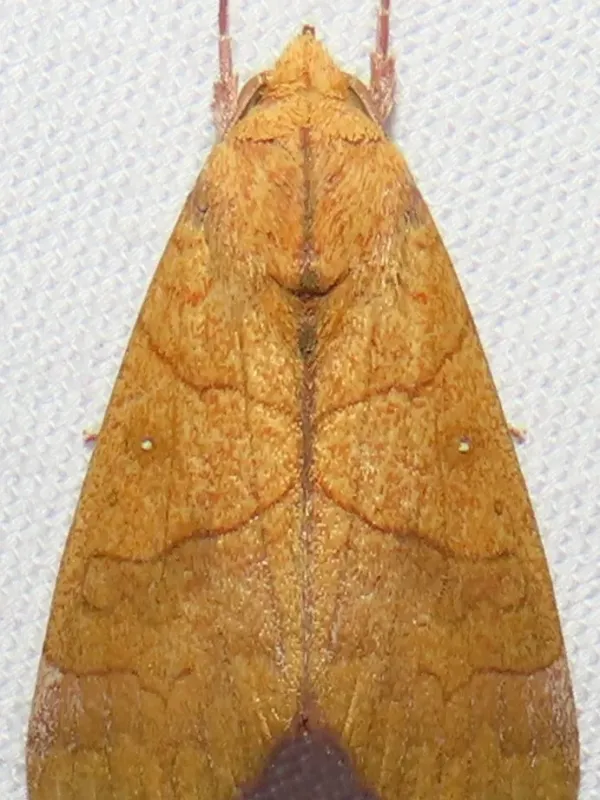
Description
How to identify
Anomis erosa is a moth species belonging to the Erebidae family, known for its cryptic appearance that allows it to blend seamlessly into its environment.
The adult moth has a mottled brown wing pattern, which is crucial for its camouflage against dried plant material during the daylight hours.
Larvae, commonly known as leafworms, undergo several instars, varying in color from light green to brown, matching the plant foliage they consume.
The wings exhibit a jagged or eroded edge, which is the defining characteristic that gives the species its specific name erosa.
Due to their nocturnal behavior, moths are best identified in the field using light traps or pheromone baits, which are effective in monitoring flight activity.
##damage##The primary hosts of Anomis erosa are plants within the Malvaceae family, with cotton being the most economically significant crop impacted.
The larvae possess strong mandibles designed for leaf consumption, leading to severe defoliation of the host plants if left unmonitored.
In addition to feeding on leaves, the caterpillars can consume developing buds and flowers, directly reducing the plant's reproductive potential.
Feeding patterns often start as small circular holes but quickly progress to skeletonizing the entire leaf, leaving only the primary veins intact.
High infestation levels weaken the plant's physiological structure, making it more susceptible to environmental stresses and secondary plant pathogens.
##season##The life cycle of Anomis erosa is heavily influenced by warm and humid conditions, which facilitate rapid development from egg to adult.
In temperate to tropical climates, the species can complete multiple generations within a single growing season, leading to overlapping populations.
The activity typically peaks during the mid-vegetative stage of the crop, when the canopy provides both food and protection for larval development.
Pupation occurs either within folded leaves or in the soil, allowing the insect to survive through periods of unfavorable environmental conditions.
Regular scouting throughout the growing season is essential to detect the onset of infestation and prevent rapid population explosions in the field.
##signs##Small, irregular holes on the leaf lamina are the first visible signs that larvae have begun feeding on the lower canopy levels.
Clusters of larvae, particularly in the younger stages, may be found feeding in groups, which often results in localized damage patches.
The presence of frass (larval excrement) on the leaves or the ground beneath the plant is a clear indication of a significant larval population.
Leaf curling, often caused by the larvae using silk to draw edges together for protection, is a distinct sign of their presence on the plant.
Damaged flower buds that fail to open or shed prematurely serve as an indicator that the infestation has reached the reproductive organs.
##control##Cultural control methods such as crop rotation and the destruction of wild Malvaceae weeds are effective in reducing the overwintering population.
Deep plowing after the harvest is recommended to disrupt the pupation cycle and physically destroy pupae residing in the soil.
Biological control using Bacillus thuringiensis sprays has shown high efficacy against early larval stages while remaining safe for beneficial insects.
Chemical intervention should be reserved for periods when the pest population exceeds the economic threshold, using targeted, low-toxicity insecticides.
- Regular field monitoring with pheromone traps.
- Encouraging natural predator populations like parasitic wasps.
- Selective use of biorational pesticides.
Taxonomy
- Latin name
- Anomis erosa
- Order
- Lepidoptera (butterflies)
- Family
- Erebidae
- EPPO code
- COSPER
Discussion
No discussions yet — be the first.