
Anomis editrix
Anomis editrix
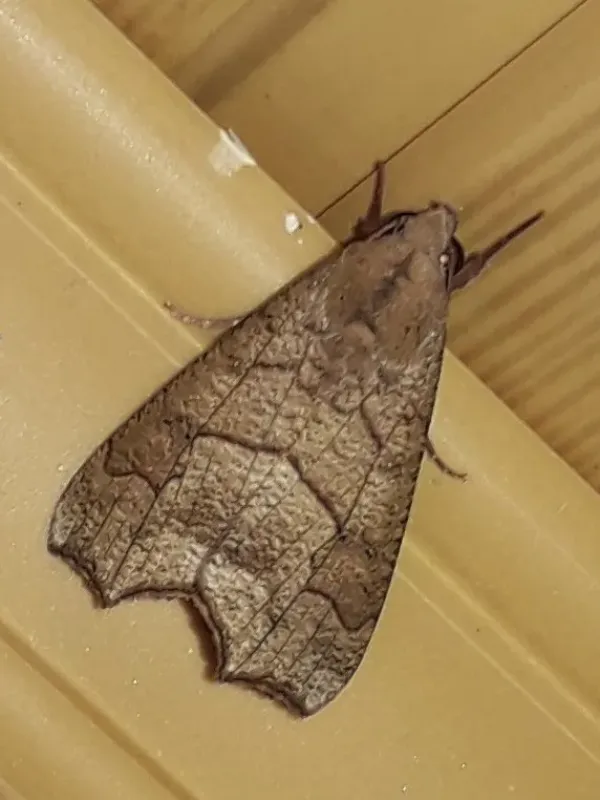
Description
How to identify
Anomis editrix belongs to the family Erebidae, order Lepidoptera. The adult insect is a nocturnal moth with a wingspan of approximately 30-40 mm.
The forewings have a brownish-brown color with a characteristic pattern of dark transverse lines and spots, providing excellent camouflage against bark or dry foliage.
The larvae (caterpillars) go through several instars, during which their color can vary from light green to brownish-olive, helping them remain undetected on host plants.
A distinctive feature of the pupae of this species is the presence of a protective cocoon, often woven from fragments of host plant leaves held together by silky threads.
The development follows a complete metamorphosis, including egg, larva, pupa, and imago stages, which is typical for members of this moth family.
What it damages
The primary food source for Anomis editrix larvae are plants of the Malvaceae family, with cotton being the most economically significant host.
The pest actively consumes the leaf blade, which can lead to significant defoliation of crops during periods of high population density.
In addition to leaves, when the population density is high, the caterpillars may damage the reproductive organs of the plant, including ovaries and young buds, directly reducing overall yields.
Crops weakened by larval activity become more susceptible to secondary infections, as the damaged tissues serve as entry points for fungal and bacterial pathogens.
- Cotton (Gossypium)
- Mallow (Malva)
- Other wild Malvaceae species
When it appears
Adult activity occurs during the warm season, primarily in summer months, when the temperature regime favors rapid development of consecutive generations.
The lifecycle of one generation from egg to moth under optimal temperatures can take between 3 to 5 weeks, allowing the species to complete multiple generations per season.
The pest typically overwinters in the pupal stage in the soil or within plant debris, which necessitates thorough field tillage during the autumn period.
Mass emergence of moths and subsequent oviposition often coincide with the active vegetation phase of cotton, making the plant highly vulnerable during intensive growth.
Climatic conditions, such as humidity levels and the absence of sudden nocturnal temperature drops, significantly influence the survival rate of early-instar larvae.
Signs of infestation
The first sign of the pest's presence is the occurrence of skeletonized leaves or foliage with irregular, ragged-edged holes.
On the undersides of leaf blades, one may discover egg clutches, which appear as small, light-colored, semi-spherical objects either singly or in groups.
The presence of larval frass (excrement) on lower canopy leaves is a clear indicator of active feeding by older-instar caterpillars hidden deep within the foliage.
The rolling of young leaves using silk webs, inside which larvae often hide, serves as a diagnostic indicator of their presence during early stages of infestation.
General growth retardation, yellowing, and premature leaf drop are symptomatic of heavy infestation levels within the crop stand.
Control measures
Deep autumn plowing is a crucial agrotechnical measure that helps destroy pupae overwintering in the topsoil layers.
Strict crop rotation and the removal of weeds from the Malvaceae family, which serve as reservoirs for the pest during the off-season, are essential.
The biological control method involves the use of entomophages, such as Trichogramma, which effectively destroys the pest's egg clutches.
Upon reaching the economic threshold of damage, contact-stomach insecticides approved for use on specific crops should be applied.
Regular field monitoring using pheromone traps allows for the precise determination of the onset of mass moth flight, enabling the most effective timing of protective interventions.
Taxonomy
- Latin name
- Anomis editrix
- Order
- Lepidoptera (butterflies)
- Family
- Erebidae
- EPPO code
- ANOMED
Discussion
No discussions yet — be the first.