
Anomis
Anomis
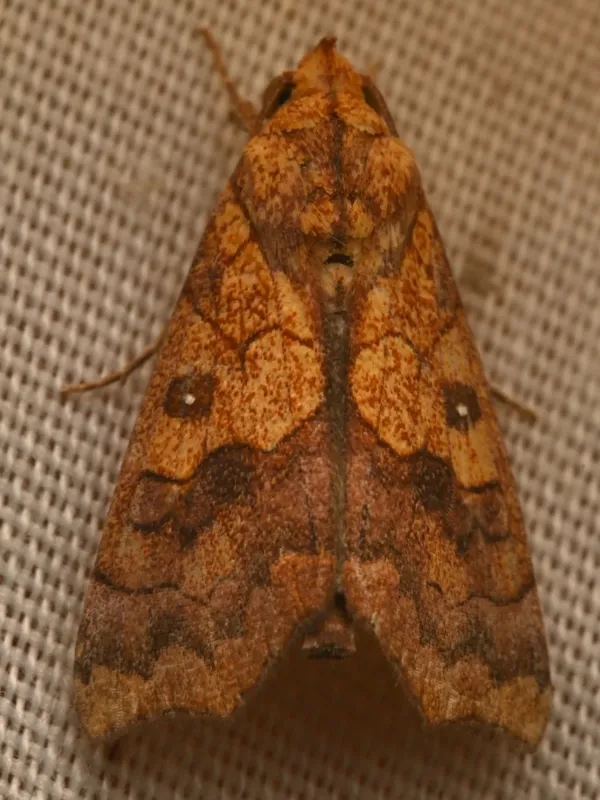
Description
How to identify
Anomis is a genus of moths belonging to the Erebidae family (formerly classified as Noctuidae). Adult moths are medium-sized, typically having a wingspan of 30–40 mm, with ochre-brown to brownish coloration featuring distinct patterns on the forewings.
The larvae, or caterpillars, have a typical noctuid body shape but show a noticeable reduction in some prolegs, causing them to move in a looping, inchworm-like fashion. Their bodies are generally green or yellowish-green with light longitudinal stripes.
Females deposit eggs singly or in small clusters on the underside of the host plant leaves. The eggs have a fine surface texture, which serves as a diagnostic feature for laboratory identification.
The pupa is typically dark brown and is housed within a loose cocoon formed by folding a leaf edge or utilizing debris in the soil.
In field conditions, identification is based on observing the larvae's morphology and the specific pattern of leaf consumption, which distinguishes them from other noctuid species.
What it damages
The primary host for Anomis is cotton, where the larvae can cause significant damage to the leaf tissue throughout the growing season.
Besides cotton, these larvae can feed on various species of the Malvaceae family, including wild relatives that serve as reservoirs for the pest population.
While reports of damage to other vegetable and technical crops exist, the primary economic impact is observed in regions of intensive cotton cultivation.
The larvae actively consume leaf mesophyll while leaving the larger veins intact, leading to a skeletonized appearance of the leaf surface in severe infestations.
Extensive defoliation disrupts photosynthesis, weakens the plant, and ultimately results in reduced fiber yield and degraded seed quality.
When it appears
The development cycle of Anomis is closely tied to regional climate conditions, with the most active population growth occurring during hot, humid summer months.
The first moths emerge in the spring once air temperatures become sufficient for their activity and the soil warms up enough for the overwintering pupae to complete their development.
One generation takes approximately 3 to 5 weeks to complete, depending on ambient temperature, allowing the species to produce several generations per season.
Population peaks are typically recorded in the second half of summer, coinciding with the phase of rapid vegetative growth of the cotton crop.
Overwintering occurs primarily in the pupal stage within the upper layer of the soil or in accumulated plant debris, necessitating thorough soil cultivation practices.
Signs of infestation
Initial signs of infestation appear as small, scattered holes in young leaves, which expand as the larvae continue to grow and feed.
A characteristic sign is the presence of frass (larval excrement) on the leaf surfaces below the feeding sites, which allows for rapid detection of the colony.
When inspecting plants, one should check for curled leaf edges, inside which larvae often hide to avoid direct sunlight and predation.
Massive formation of "window-like" patches on leaves occurs, as younger larvae often consume only the lower epidermis without boring through the entire leaf.
- Yellowing and premature leaf drop during severe infestations.
- Stunted growth of side shoots and branches.
- Fine silk threads used by larvae to bind parts of leaves together.
Control measures
Effective management begins with agrotechnical practices, among which deep autumn plowing is vital for the destruction of overwintering pupae.
Timely removal of weeds belonging to the Malvaceae family from the vicinity of fields is a crucial practice to eliminate alternative hosts early in the season.
Biological control involves the use of beneficial insects, such as Trichogramma wasps, which parasitize the pest's eggs and significantly lower the population before the larval stage.
Chemical control is applied when the economic injury threshold is exceeded, utilizing systemic or contact-stomach insecticides.
Monitoring population density with pheromone traps allows for precise timing of pesticide applications, minimizing chemical usage and protecting local biodiversity.
Taxonomy
- Latin name
- Anomis
- Order
- Lepidoptera (butterflies)
- Family
- Erebidae
- EPPO code
- ANOMSP
Discussion
No discussions yet — be the first.