
Wheat seed gall nematode
Anguina tritici
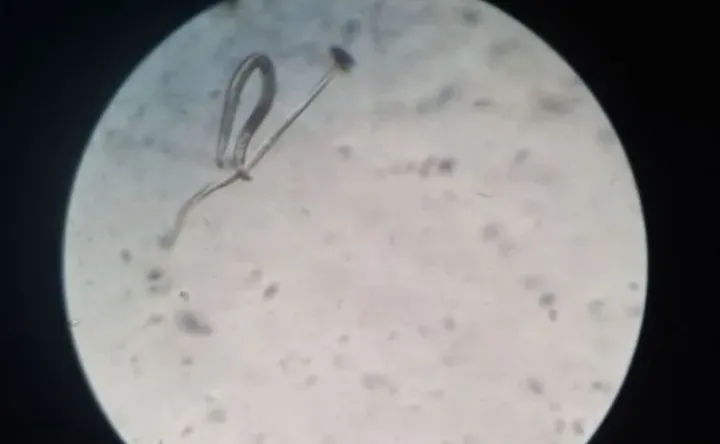
Description
How to identify
The wheat seed gall nematode (Anguina tritici) is a plant-parasitic nematode within the Anguinidae family. It is a highly specialized pest that completes its entire life cycle in direct association with the wheat plant.
Adult nematodes are microscopic and slender, inhabiting the developing grain structures. Their ability to induce the formation of galls, which replace normal seeds with masses of juveniles, is the defining characteristic of this species.
Nematode larvae possess a remarkable ability to survive in an anhydrobiotic state. Encased within dry galls, they can withstand extreme temperatures and drought for several years, waiting for moisture to resume their activity.
Infestation occurs primarily through the dissemination of contaminated seed lots. When these seeds are planted, moisture allows the juveniles to emerge from the galls and migrate to the seedlings.
The biological success of this parasite relies on the synchrony between the nematode life cycle and the development stages of the host plant, particularly during germination and tiller formation.
What it damages
The primary host for this nematode is common wheat, although it also frequently attacks rye. It poses a significant threat to cereal production globally, particularly in regions where traditional farming practices persist.
The damage is caused by the larvae colonizing the developing floral primordia. Instead of normal grain, the plant produces hard, dark, gall-like structures, which significantly reduce the harvest volume and grain quality.
Infected plants may exhibit stunted growth, reduced tillering, and an overall loss in vigor. The energy diverted to the parasite prevents the plant from developing proper inflorescences, often leading to total yield loss on infected tillers.
Beyond the direct yield reduction, the presence of galls in the harvested grain is a major quality issue. These galls are difficult to remove completely and are strictly regulated in many grain trade markets.
The infestation also facilitates secondary infection by fungi and bacteria, which often colonize the damaged heads, leading to complex disease profiles in the affected fields.
Signs of infestation
Initial symptoms are often visible at the seedling stage. Infested plants may show leaf curling, twisting, and general distortion, which can be mistaken for other nutritional deficiencies or viral infections.
As the plant progresses to the heading stage, the most diagnostic sign becomes apparent: the shape and appearance of the wheat heads are noticeably distorted, shorter than normal, and often abnormally green or discolored.
Opening the affected glumes reveals the presence of dark-brown or black galls instead of well-filled wheat kernels. These galls are much harder and more compact than healthy seeds.
In field conditions, localized patches of infected plants may remain standing upright while healthy ears bow under the weight of ripening grain. This difference in habit makes the infestation easier to spot during grain filling.
Laboratory analysis of grain samples or visual inspection during cleaning remains the most definitive method to confirm the presence of Anguina tritici in a specific crop field.
Control measures
The primary strategy for controlling the wheat seed gall nematode is the use of nematode-free, certified seeds. Rigorous seed cleaning is essential to remove galls before planting.
Salt-water flotation is a highly effective, low-cost method. Since galls have a lower density than healthy seeds, they float in a brine solution, allowing farmers to skim off the contaminants easily.
Implementing a robust crop rotation plan is crucial. By rotating wheat with non-host crops for two to three years, the population of nematodes in the soil can be naturally eradicated due to the absence of a host.
Deep plowing of field debris after harvest ensures that galls are buried deep enough to prevent emerging juveniles from reaching the surface to infest the next season's wheat crop.
- Utilize certified, clean planting seeds.
- Implement a 3-year crop rotation cycle.
- Employ salt-water flotation for seed sorting.
- Maintain effective weed control for grassy weeds.
Taxonomy
- Latin name
- Anguina tritici
- Order
- Nematodes
- Family
- Anguinidae
- EPPO code
- ANGUTR
Discussion
No discussions yet — be the first.