
Pacific nematode
Anguina pacificae
Description
How to identify
The Pacific nematode (Anguina pacificae) belongs to the order Tylenchida, family Anguinidae. It is a microscopic phytoparasite that specializes in infesting the vegetative organs of plants, causing the formation of specific galls.
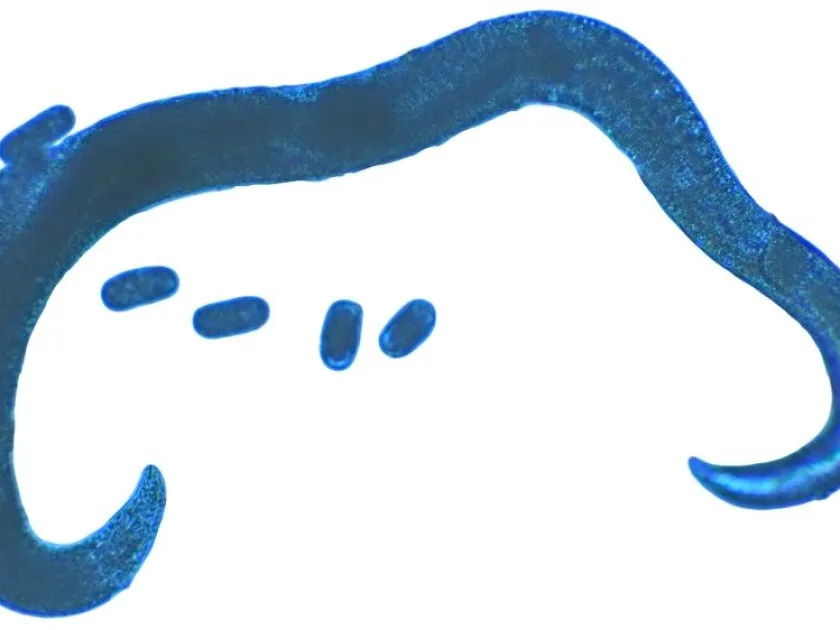
Adult specimens have a worm-like body shape typical of anguinids. Their life cycle is closely linked to the host plant, where nematodes progress through all developmental stages: from eggs to infectious larvae and adults.
Identification of this pest in field conditions is challenging due to its small size, therefore, laboratory microscopy of affected tissues is required for precise diagnosis.
The biology of this species is characterized by the ability to survive in adverse conditions inside dry galls, where larvae enter a state of anhydrobiosis, remaining viable for several years.
The spread of the nematode occurs mainly through passive means: via contaminated seed material, plant debris, or soil infested with pest galls.
What it damages
The main hosts of Anguina pacificae are members of the grass family (Poaceae). Significant damage is observed on wild and forage grasses, where the parasite forms its colonies.
The pest infests the above-ground parts of plants, causing deformation of leaves, stems, and inflorescences. This leads to overall plant weakening and a substantial reduction in biomass.
As a result of the nematode's activity, characteristic tissue swellings called galls form on the affected organs, within which the parasites feed and reproduce.
Severe infestation of crops can lead to a total loss of the crop's economic value due to the inability to form reproductive organs properly.
In addition to direct tissue damage, nematodes often facilitate the entry of secondary infections, such as fungal or bacterial pathogens, which further worsen the plant's health.
Signs of infestation
The first noticeable sign of infestation is the appearance of atypical deformations on stems and leaves, which look like swellings or tissue curling.
On the inflorescences of infested plants, dense galls filled with masses of nematode larvae can form instead of normal spikelets, which is easily detected upon visual inspection.
Plants colonized by this pest show signs of suppression, manifested by stunted growth and yellowing of the leaf blade at the site of parasite localization.
During the growing season, it is possible to notice that infected specimens have an abnormal shape, which contrasts with the general appearance of healthy grass or crops.
When galls are opened under magnification, the tissue texture is revealed to be loose or dense, containing numerous nematode individuals at various stages of development.
Control measures
The primary control measure is strict phytosanitary inspection, which prevents the introduction of contaminated seed material from affected regions.
Crop rotation plays an important role, as excluding susceptible grass crops from rotation helps break the parasite's life cycle in the soil.
When infestation foci are detected, it is recommended to destroy affected plants and perform deep plowing to bury plant debris, which limits the spread of the pest.
Agronomic measures aimed at improving soil health and increasing crop immunity contribute to reducing the harm caused by these nematodes.
Chemical control methods are largely ineffective for Anguina pacificae in field conditions, so the emphasis is placed on preventive and prophylactic measures.
Taxonomy
- Latin name
- Anguina pacificae
- Order
- Nematodes
- Family
- Anguinidae
- EPPO code
- ANGUPC
Discussion
No discussions yet — be the first.