
Apple casebearer moth
Angitia armillata
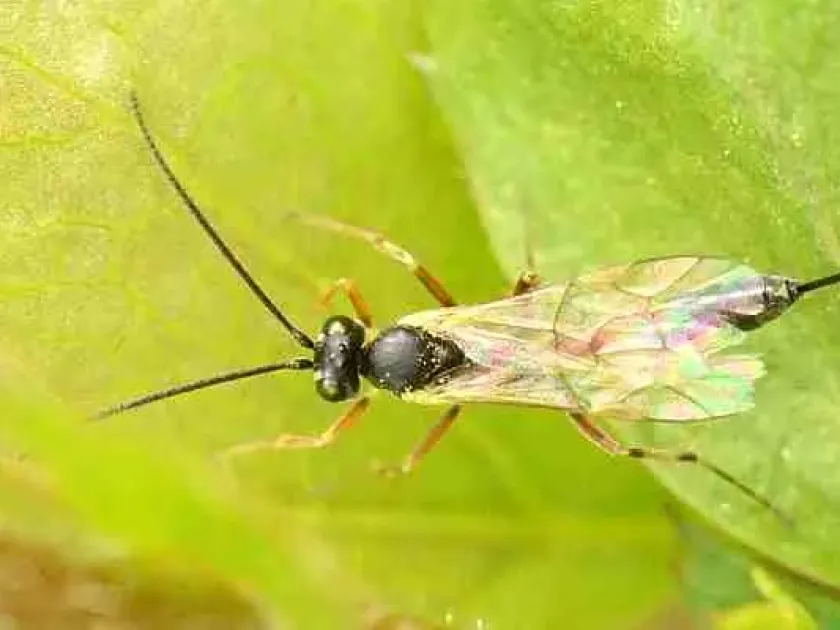
Description
How to identify
The apple casebearer moth (scientific name: Angitia armillata) is a member of the order Lepidoptera and the family Coleophoridae. These are small moths characterized by their narrow wings, often featuring a fringe of long scales, which provides them with agility during flight.
The most distinctive biological feature of this pest is the larval stage, during which caterpillars construct portable protective cases, known as "cases." These structures are expertly crafted from leaf tissue and silk, serving as a mobile shelter that protects the larvae from environmental stressors and predators.
Adult moths are typically inconspicuous, with gray or brownish patterns that offer perfect camouflage against tree bark. The caterpillars possess a dark thoracic shield and their bodies often change color according to the specific leaves they are feeding upon, making them difficult to spot during routine inspections.
The life cycle follows a complete metamorphosis pattern: egg, larva (caterpillar), pupa, and adult. The overwintering stage occurs as a caterpillar, which remains stationary in its protective case attached to branches, cracks, or crevices in the tree bark until early spring.
The species generally completes one generation per year. Its ability to survive through the winter in a protected state allows it to persist in orchards across various climates, provided that sufficient host plant material is available in the spring.
What it damages
The apple tree (Malus domestica) is the primary host for this pest, although it may occasionally infest other pome and stone fruit species. The damage is primarily caused by the larvae during their active feeding phase in the spring and early summer.
Feeding behavior involves the larvae mining the leaf tissue. By anchoring their case to the leaf, they consume the parenchyma layer while leaving the upper and lower cuticle intact, resulting in the appearance of translucent, window-like spots across the leaf surface.
Heavy infestations lead to widespread leaf damage, which significantly hinders the photosynthetic capacity of the tree. This reduction in energy production can stress the tree, leading to weaker growth, reduced fruit quality, and increased susceptibility to other environmental pressures.
The lesions caused by feeding are not only detrimental to the leaf's health but also create entry points for secondary pathogens. Fungi and bacteria can easily invade the weakened tissue, potentially leading to localized tissue necrosis or further decline in tree vigor.
In nursery settings, the damage is particularly severe. High densities of larvae can defoliate entire young trees, stunted growth and forcing a delay in orchard development. This makes consistent monitoring essential for protecting young plant stocks.
Signs of infestation
The first sign of infestation in early spring is the presence of small, motionless cases attached to branches. These look like tiny, natural growths or debris on the bark, but they exhibit movement once temperatures rise and the larvae become active.
Visible damage on leaves appears as small, circular or irregular "windows" where the internal leaf tissues have been hollowed out. These spots often start small and expand as the caterpillar moves its case and feeds on surrounding areas of the leaf.
Stunted leaves, discoloration, or premature wilting can also indicate the presence of the moth. If an affected leaf is inspected closely, the small, characteristic case of the caterpillar is usually found on the underside, serving as a diagnostic proof of the infestation.
While adult moths are rarely seen due to their nocturnal habits and camouflage, they can be monitored using pheromone lures. These traps are a vital tool for detecting the start of the mating season and the emergence of the next generation of pests.
- Small cases found overwintering on twigs and branches;
- "Window-like" translucent patches on leaf surfaces;
- Premature browning or curling of the leaves;
- General decline in the growth rate of tree shoots;
- Presence of larvae within protective cases attached to foliage.
Control measures
Integrated Pest Management (IPM) for this species begins with cultural controls. Keeping the orchard clean, including the removal of old bark debris and fallen leaves, significantly reduces the overwintering sites for the larvae, lowering the overall population for the next season.
Insecticide applications are most effective when timed during the period of bud burst or early leaf development. Systemic insecticides are preferred as they penetrate the leaf tissue, ensuring that larvae are controlled as they begin their mining activities.
Biological control options involve the use of bio-rational products, such as Bacillus thuringiensis (Bt) or entomopathogenic viruses. These agents provide targeted control of the moth larvae while preserving the populations of beneficial insects and pollinators in the orchard.
Encouraging the presence of natural enemies is a sustainable way to keep populations in check. Parasitoid wasps are known to prey upon casebearer larvae; therefore, maintaining biodiversity in the orchard, such as through wildflower strips, supports these beneficial predators.
Regular monitoring using pheromone traps allows growers to assess population density and timing. By mapping the lifecycle phases, interventions can be scheduled to hit the most vulnerable stages, ensuring maximum efficacy while minimizing unnecessary chemical exposure.
Taxonomy
- Latin name
- Angitia armillata
- Order
- Hymenoptera
- Family
- Ichneumonidae
- EPPO code
- ANGIAR
Discussion
No discussions yet — be the first.