
Andrena armata
Andrena armata
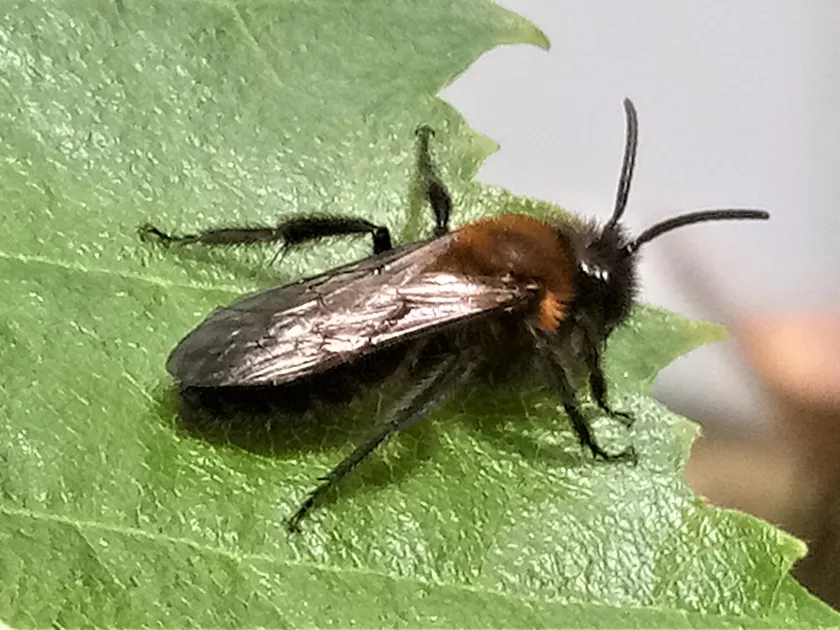
Description
How to identify
Andrena armata is a species of solitary bee belonging to the Andrenidae family. These insects are typically medium-sized, measuring around 10–12 millimeters in length.
Their bodies are covered in dense, dark brown or black hair, which gives them a somewhat robust appearance. Males possess distinct mandibular structures, which inspired the specific epithet "armata."
Unlike social honeybees, these insects live individually. Each female digs her own nest tunnel in the ground, usually choosing patches of bare, friable soil.
While they are essential pollinators in many natural ecosystems, their localized nesting habits can create issues in dense agricultural settings.
The life cycle involves a single generation per year, with the insects spending most of their time developing within subterranean brood cells.
What it damages
The damage caused by Andrena armata is primarily mechanical, occurring when females excavate nest tunnels in the rhizosphere of young plants.
Nursery stock and newly planted fruit trees or shrubs are most vulnerable to this activity, especially when situated in sandy, loose soil types.
The digging process can disrupt the contact between plant roots and the soil, potentially affecting nutrient uptake and leading to stunted plant growth.
In high-density nesting areas, the root collar area of the plant may be compromised, creating entry points for secondary soil-borne pathogens or pests.
Though not direct feeders on plant tissues, their presence can stress vulnerable young plants, particularly during the critical spring growth period.
When it appears
Adult activity of Andrena armata is restricted to the spring season, typically appearing in April and May to coincide with peak flowering periods.
They become active once soil temperatures reach a threshold that allows for efficient tunneling, which is vital for their reproductive strategy.
As a univoltine species, they complete only one lifecycle iteration per year, making the spring flight period the most critical window for observation.
The active flight season is relatively short, lasting only as long as the females are establishing nests and provisioning them with pollen and nectar.
After the spring cycle concludes, the insects remain below ground as larvae, developing throughout the summer before reaching maturity.
Signs of infestation
The most visible sign of an Andrena armata infestation is the appearance of numerous small, circular holes in the soil around the base of the plant.
Small mounds of loose soil, often resembling miniature volcanoes, are typically found surrounding the entrance of each nest tunnel.
Plants affected by significant burrowing may exhibit temporary wilting or a decrease in vigor compared to nearby, unaffected specimens.
Visual observations during sunny spring mornings often reveal adult bees hovering near the ground in areas where they have established their nests.
- Small, circular entrance holes in the soil.
- Volcanic-like mounds of loose dirt.
- Increased insect activity around the soil surface.
- Reduced vigor or slow spring growth of young plants.
Control measures
Regular mechanical cultivation of the soil surface in the root zone is the most effective way to disrupt nesting activity and discourage colonization.
By breaking up the soil structure, you prevent the bees from successfully establishing stable brood chambers, forcing them to relocate.
Applying organic mulch or weed-suppressing fabrics can limit the areas of exposed soil, making the site unattractive for nesting females.
Chemical control should be avoided during the blooming season to protect beneficial pollinators and should only be considered as a last resort.
Maintaining strong plant health through proper irrigation and fertilization helps crops withstand the minor stressors caused by soil-nesting insects.
Taxonomy
- Latin name
- Andrena armata
- Order
- Hymenoptera
- Family
- Andrenidae
- EPPO code
- ANDEAR
Discussion
No discussions yet — be the first.