
Andrena
Andrena
Description
How to identify
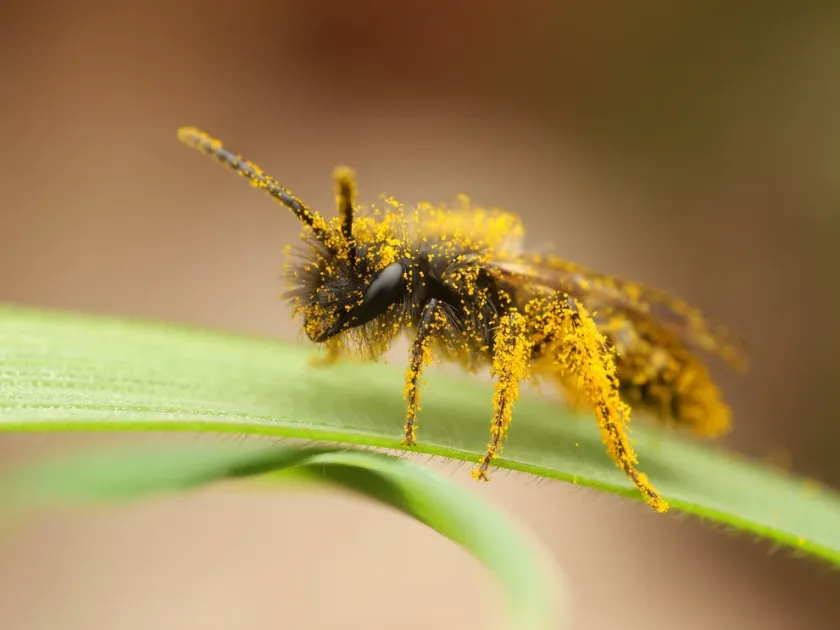
Andrena is a genus of solitary bees belonging to the family Andrenidae within the order Hymenoptera. Visually, they resemble common honeybees but are generally smaller and characterized by dense hair on their bodies, which aids in pollen collection.
These insects are typical soil dwellers, constructing their nests as deep tunnels in the ground. Adult specimens exhibit a diverse color palette, ranging from black to reddish-brown, which can make accurate field identification difficult for non-specialists.
The specialized structure of their hind legs, featuring well-developed brushes, allows them to efficiently gather pollen from a wide variety of flowering plants. While they are primarily considered beneficial pollinators, they may become problematic under conditions of mass infestation.
Distinguishing Andrena from other wild bees is important, as their presence often indicates high soil quality and a lack of intensive pesticide use. Nevertheless, monitoring their population density is necessary to prevent potential damage in high-value crop areas.
The life cycle of Andrena is closely synchronized with the flowering phenology of plants. They are most active in the early spring, coinciding with the establishment of nesting sites and the provisioning of pollen balls for the next generation.
What it damages
The primary damage caused by Andrena is not related to consumption of plant tissues, but rather to the disturbance of soil structure and root systems caused by their burrowing activity. This is particularly problematic in greenhouses and nurseries with loose, friable soil.
By compromising the integrity of the topsoil, these bees can affect the development of young root hairs in delicate crops. In some instances, they may damage young seedlings by creating tunnels directly within the root zone, leading to desiccation.
Mass nesting can complicate field operations that require a perfectly prepared seedbed. The disruption of capillary moisture movement due to numerous burrow openings can negatively impact the soil's water balance during critical growth phases.
Despite their role as pollinators, Andrena may compete with managed honeybee colonies for foraging space. This can sometimes lead to reduced pollination efficiency for commercial crops due to changes in foraging behavior caused by interspecific competition.
Damage is typically localized and occurs in sites with favorable soil conditions for nesting, such as well-drained, sun-exposed slopes or sandy soils lacking a thick vegetative cover.
When it appears
Andrena activity begins in early spring as soon as soil temperatures allow emerged adults to become active. This period is synchronized with the blooming of early spring wildflowers and fruit trees.
The peak activity period for females, who are busy constructing nests and gathering provisions, occurs during April and May. This is the time when flight activity over bare or sparsely vegetated soil is most noticeable.
The summer generation of certain species may be less visible, as larvae develop within deep underground chambers protected from external environmental factors. By mid-summer, the activity of surface-dwelling adults gradually declines.
The total duration of the active season depends heavily on regional climatic conditions and the rate at which the soil warms up. In southern regions, the season starts earlier and is characterized by more intense flight activity than in northern latitudes.
The completion of the development cycle occurs deep within the soil, where larvae pupate and remain dormant throughout the autumn and winter, ensuring the survival of the population through unfavorable seasonal periods.
Signs of infestation
A primary indicator of Andrena presence is the appearance of small, neat holes in the ground, often surrounded by small, cone-shaped piles of excavated soil.
The presence of large numbers of insects flying low over the ground and entering these tunnels is a clear sign of high colony density. The flight of Andrena is frequently accompanied by a characteristic low-pitched humming sound.
Soil structure damage manifests as small depressions or inconsistencies on the surface where nesting density is high. In nurseries, these areas may appear as zones of stunted or stressed plant growth due to root zone desiccation.
During an inspection of the root zone, one might encounter voids or damaged soil areas caused by the construction activities of the bees. Affected plants may display signs of water stress despite consistent irrigation practices.
- Presence of 3-5 mm diameter holes in the soil surface.
- Mass flight activity observed over specific field plots.
- Visual changes to soil surface structure, including small mounds and depressions.
- Delayed growth or wilting of seedlings in high-density nesting zones.
Control measures
The primary approach to control is agronomic: maintaining a dense ground cover or using mulching techniques significantly reduces the attractiveness of the site for Andrena nesting.
Regular cultivation and tilling of the topsoil layer at the beginning of the season can disrupt incomplete nests, forcing bees to migrate to more suitable locations. This is an effective strategy in horticultural nurseries.
The use of moisture-retaining materials and physical barriers can help protect sensitive crops from the impact of nesting activities. In most cases, total eradication is not advised, as these bees provide valuable pollination services.
Chemical control measures should be employed only in extreme cases and where risks to other beneficial insect species are minimized. The application of soil insecticides must be strictly managed to avoid the degradation of soil biodiversity.
For long-term management, crop rotation and the establishment of natural field margins are recommended. This helps balance the ecosystem, promotes natural enemies, and reduces anthropogenic pressure on the habitat.
Taxonomy
- Latin name
- Andrena
- Order
- Hymenoptera
- Family
- Andrenidae
- EPPO code
- ANDESP
Discussion
No discussions yet — be the first.