
Caribbean fruit fly
Anastrepha suspensa
Description
How to identify
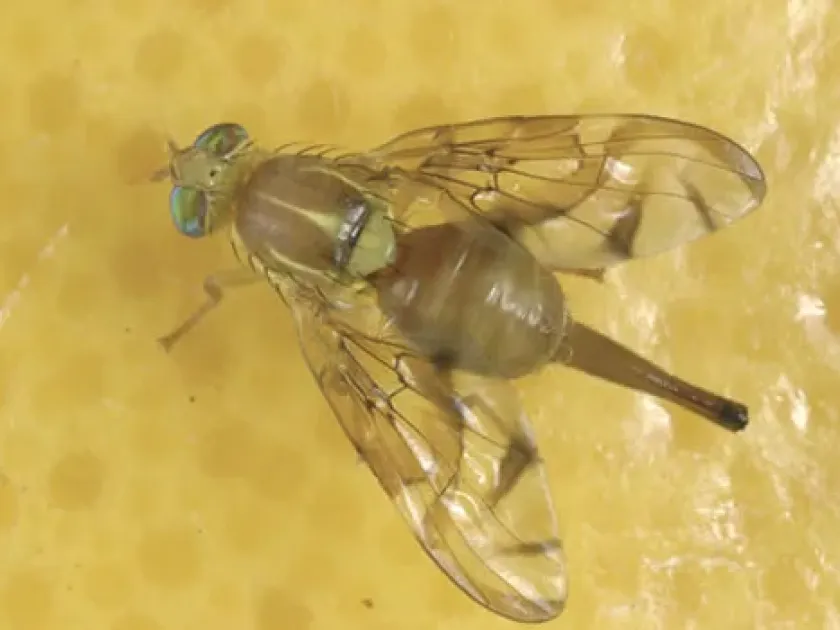
The Caribbean fruit fly (Anastrepha suspensa) is a significant pest within the order Diptera and the Tephritidae family. The adult fly is typically yellow-brown, featuring distinct dark bands across its wings that serve as a diagnostic feature.
Adult flies measure approximately 6 to 8 millimeters in length. Females are equipped with a specialized ovipositor, which they use to penetrate the skin of ripening fruits to deposit eggs directly into the pulp.
The life cycle encompasses four distinct stages: egg, larva, pupa, and adult. The duration of this cycle is highly dependent on environmental variables, primarily temperature and humidity, usually lasting between 30 and 45 days.
Pupation primarily occurs in the soil beneath the host plant. Mature larvae emerge from infested fruit, drop to the ground, and burrow into the soil to undergo metamorphosis, making soil management a critical control factor.
This species is highly adaptable to tropical and subtropical climates, allowing it to establish populations quickly in new regions when host fruits are available throughout the year.
What it damages
The pest attacks a wide array of host plants, including guava, mango, citrus, peaches, and various tropical berries. Over 80 distinct fruit species serve as suitable hosts for its development.
Economic damage is most severe as fruits approach maturity, as this is the period when they become most attractive to females seeking sites for oviposition.
Larvae consume the fruit pulp, creating extensive tunnels that compromise the internal integrity of the fruit. This infestation leads to rapid decay, fermentation, and premature fruit drop.
In addition to direct consumption, larval activity introduces secondary pathogens, such as bacteria and fungi, which cause the fruit to spoil entirely, rendering it useless for market or consumption.
In regions where the Caribbean fruit fly is established, it can cause catastrophic yield losses, sometimes exceeding 80% if effective orchard management and protective measures are not implemented.
Signs of infestation
The earliest signs of infestation are minute puncture wounds on the fruit surface, created by the female ovipositor. These spots may show slight discoloration or localized hardening of the skin.
As the infestation progresses, affected areas often become soft, discolored, or sunken. Pressure on these spots may cause juices to leak from the oviposition sites.
Internal examination of infested fruit reveals tunnels filled with larval frass and decaying plant tissue. The cream-colored larvae can usually be found feeding within these cavities.
Premature fruit abscission is a hallmark sign; growers often notice an unusual amount of fruit dropping to the ground while it is still technically or visually immature.
Monitoring programs use specialized traps containing protein-based lures or pheromones to detect the presence of adult flies before they reach the density required to cause widespread crop damage.
Control measures
Managing the Caribbean fruit fly requires an integrated pest management (IPM) approach that combines cultural, chemical, and biological control techniques to suppress population levels effectively.
Cultural control is vital: growers must regularly remove and destroy all fallen or cull fruit. This sanitation step prevents larvae from completing their life cycle in the soil.
Chemical control usually focuses on targeting adult flies using bait sprays, which combine a protein-based attractant with an insecticide to reduce the necessity for full-cover canopy spraying.
Biological control efforts include the release of parasitic wasps, which act as natural predators to regulate fly numbers in both managed orchards and wild areas.
- Strategic use of pheromone and bait traps for early detection.
- Installation of exclusion netting for sensitive or small-scale fruit crops.
- Enforcement of strict quarantine regulations for the movement of fruit.
- Soil cultivation or application of beneficial nematodes under tree canopies.
Taxonomy
- Latin name
- Anastrepha suspensa
- Order
- Diptera (flies)
- Family
- Tephritidae
- EPPO code
- ANSTSU
Discussion
No discussions yet — be the first.