
Anastrepha sororcula
Anastrepha sororcula
Description
How to identify
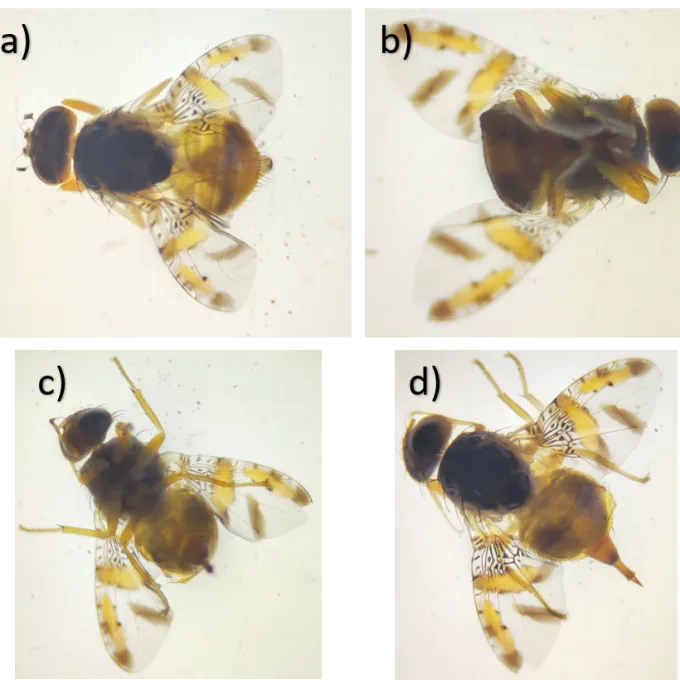
Anastrepha sororcula is a dangerous fruit fly species belonging to the family Tephritidae, order Diptera. Adults are characterized by a yellow-brown body color with dark wing markings that form a specific pattern typical of the genus Anastrepha.
This species is closely related to the Mediterranean fruit fly. Morphological identification of adults requires microscopic examination of the female ovipositor and wing venation, as many species within this genus appear very similar to the naked eye.
The larvae are creamy white, legless maggots that feed on fruit pulp. They reach lengths of 8–10 mm in their final instar, making them difficult to detect inside infested fruit until significant damage has occurred.
The eggs are elliptical, white or yellowish, and are deposited by females directly beneath the skin of ripening or mature fruits using a sharp, needle-like ovipositor.
Pupation occurs in the soil, where larvae migrate after completing their development inside the fruit. The puparia are typically barrel-shaped and brown, allowing them to survive adverse conditions in the upper soil layers.
What it damages
This pest attacks a wide range of fruit and vegetable crops, primarily in tropical and subtropical regions. Myrtaceous plants, especially species of the genus Psidium, such as guava, are at high risk of infestation.
Damage has also been documented on various citrus species, mango, carambola, and numerous other fruit crops. The pest exhibits high polyphagy, making it a serious threat to diverse horticultural plantings.
Inside the fruit, larvae create numerous tunnels while feeding on the pulp. This leads to the rapid breakdown of the fruit's internal structure, premature fruit drop, and total loss of commercial value.
Infested fruits become unsuitable for fresh consumption or processing. Often, secondary fungal and bacterial infections develop at the oviposition sites and larval exit points, causing rapid rot and decay.
The economic impact involves not only direct yield loss but also strict quarantine restrictions on the export of produce from regions where this species is present. Infested shipments are often subject to mandatory disposal or expensive fumigation treatments.
When it appears
The life cycle of Anastrepha sororcula is directly dependent on environmental temperature. Optimal breeding conditions occur during the warm season, when mean daily temperatures consistently exceed 20–25 degrees Celsius.
In tropical climates, reproduction can occur year-round if host fruits are continuously available. In cooler zones, population development slows down, and the pest can overwinter in the pupal stage within the soil.
Adult emergence correlates with the fruit ripening phase of host plants. Adult flies move actively throughout the orchard in search of ripe fruit for egg-laying and nectar or insect excretions for nourishment.
A single generation can develop in several weeks to a month, allowing the pest to produce multiple generations per season. Its high reproductive capacity leads to rapid population explosions if control measures are not implemented.
Peak activity is usually observed during the mass ripening period of susceptible crops, necessitating preventative protection measures before the fruit reaches full maturity.
Signs of infestation
The primary sign of infestation is the presence of small puncture marks on the fruit skin left by the female's ovipositor. Often, the epidermis around these spots may show discoloration or slight depressions.
When an infested fruit is cut open, winding tunnels filled with larval excrement and debris are visible. The surrounding pulp is typically softened, discolored, and emits an unpleasant odor.
Premature fruit drop, even in fruits that appear healthy externally, is a warning sign. Fallen fruit often contains active larvae preparing to exit the fruit to pupate in the soil.
The presence of adults in the orchard can be confirmed using specialized traps. The use of pheromone or protein-based attractants allows for early detection and estimation of population density.
At later stages of infestation, fruits become soft, deformed, and rot quickly due to secondary pathogens entering through the larval damage sites.
Control measures
The main protection strategy is based on strict phytosanitary controls to prevent the spread of the insect to new areas. Quarantine measures include thorough inspection of imported plant produce.
Cultural methods include the regular collection, deep burial, or destruction of fallen fruit. This breaks the pest's life cycle by preventing larvae from completing pupation in the soil.
For monitoring and reducing adult populations, traps containing food attractants or pheromones are highly effective. These tools help localize infestations and reduce pressure on the harvest.
If population levels are high, the use of insecticides may be justified; however, treatments must be applied well before fruit ripening to avoid leaving toxic residues on the harvest.
Biological control methods include the use of entomophagous parasitoid wasps that attack the larvae and pupae of the fly. Some countries implement sterile insect technique (SIT) programs to reduce the reproductive potential of the population.
Taxonomy
- Latin name
- Anastrepha sororcula
- Order
- Diptera (flies)
- Family
- Tephritidae
- EPPO code
- ANSTSO
Discussion
No discussions yet — be the first.