
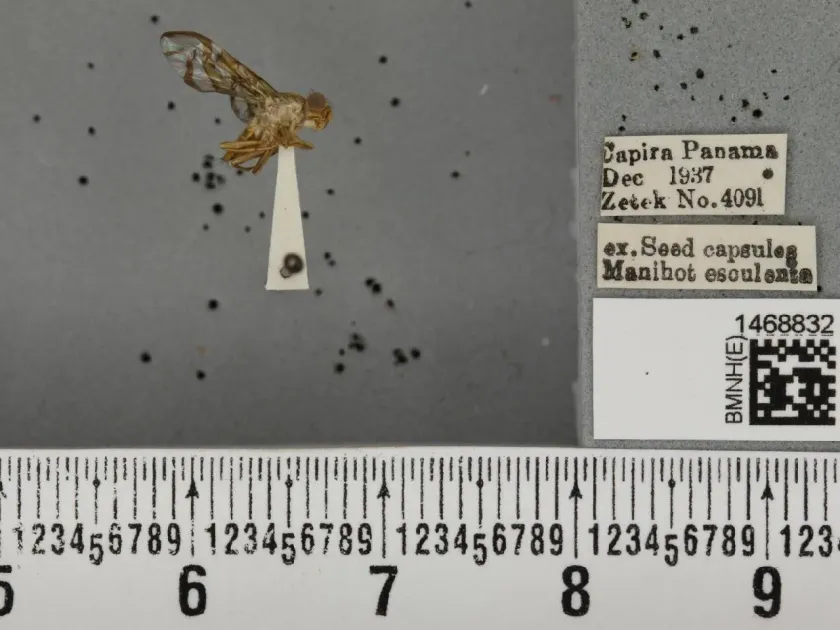
Anastrepha pickeli
Anastrepha pickeli
Description
How to identify
Anastrepha pickeli is a species of fruit fly belonging to the family Tephritidae. Adults are easily recognized by their yellowish-brown bodies and complex, patterned wings typical of the genus.
The life cycle of this pest progresses through four distinct stages: egg, larva, pupa, and adult. Each stage is adapted to survive specific conditions associated with the cassava plant.
Females are equipped with a long, specialized ovipositor. This biological tool enables them to penetrate the tough epidermis of cassava stems to deposit eggs, an unusual trait compared to fruit-infesting species.
The larvae are cream-colored, legless maggots that burrow into the stem tissues immediately after hatching. Their feeding activity is primarily hidden from external view during the development phase.
Once the larvae reach maturity, they exit the stem and fall into the soil to pupate. This transition is a critical point in their development where they are vulnerable to soil management practices.
What it damages
The primary host for Anastrepha pickeli is the cassava plant (Manihot esculenta). The insect is categorized as a stem borer, significantly impacting the structural integrity of the plant.
By consuming the internal tissues of the stem, the larvae disrupt the vascular system responsible for transporting nutrients. This directly limits the energy available for tuber formation and development.
The galleries created by the larvae serve as entry points for secondary pathogens, including various species of fungi and bacteria, which cause rotting and eventual stem collapse.
High infestation rates result in severe yield losses, as weakened stems cannot support the foliage, leading to premature plant death or reduced starch accumulation in the roots.
While the pest does not consume the tubers, its effect on the above-ground part of the plant indirectly compromises the overall harvest quality and quantity.
Signs of infestation
The most prominent sign of an Anastrepha pickeli infestation is the presence of small, circular exit holes in the cassava stem, through which mature larvae emerge.
Discoloration of the stem is a classic symptom. As the larvae feed internally, the bark often turns brown or necrotic, indicating that the internal structure is being destroyed.
Wilting of the terminal leaves is often observed, which occurs because the damaged stem can no longer supply enough water and nutrients to the upper parts of the plant.
Splitting open an affected stem reveals complex tunnels and debris inside. The presence of these galleries is a definitive indicator of the pest's activity within the field.
- Premature yellowing of leaves.
- Visible swelling or gall-like formations on stems.
- Reduced overall height and stunted plant growth.
- Detection of adult flies near the plantation site.
Control measures
The most effective strategy for managing this pest is the removal and destruction of infested stems. This prevents the life cycle from continuing by eliminating the larvae before they reach the soil.
Monitoring the adult population using sticky traps or bait stations allows for timely interventions, preventing the females from laying eggs on healthy plants.
Crop rotation and proper field hygiene are essential practices. By leaving fields fallow or rotating with non-host crops, farmers can disrupt the pest's development cycle in the soil.
Chemical control may be necessary during peak fly activity. Using systemic insecticides that penetrate the outer layer of the stem can help target the internal larvae more effectively.
Integrated Pest Management (IPM) programs emphasizing biological control agents, such as predatory wasps or fungi that target larvae, are being researched to provide sustainable alternatives.
Taxonomy
- Latin name
- Anastrepha pickeli
- Order
- Diptera (flies)
- Family
- Tephritidae
- EPPO code
- ANSTPI
Discussion
No discussions yet — be the first.