
West Indian fruit fly
Anastrepha obliqua
Description
How to identify
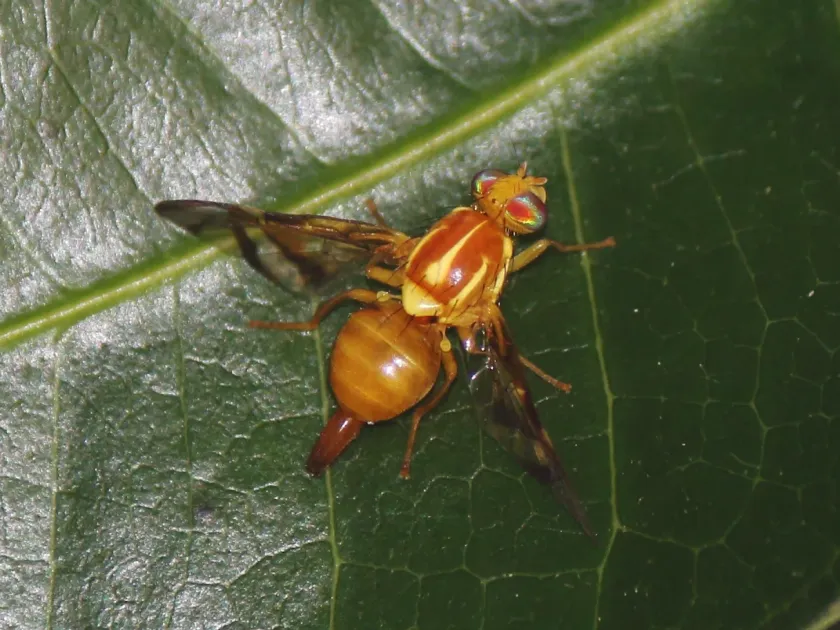
The West Indian fruit fly is a small insect belonging to the Tephritidae family. The adult has a characteristic yellowish-brown body with distinct dark bands on the wings that form a specific pattern, allowing it to be distinguished from other Anastrepha species.
Females possess an elongated ovipositor, which enables them to penetrate deep into fruit tissues for egg deposition. The size of an adult insect typically ranges from 5 to 8 millimeters, making them difficult to spot within tree canopies.
The larvae are white or cream-colored and have a typical legless maggot form. During development, the larva undergoes three instars, actively feeding on the fruit pulp, which leads to rapid decay and premature fruit drop.
Identification of the species is often conducted through laboratory analysis of morphological characteristics or molecular genetic methods to ensure accurate classification.
Due to its economic impact, this pest is included in quarantine lists in many countries worldwide where tropical and subtropical crops are cultivated.
What it damages
The primary hosts of this fly are fruit crops from the Anacardiaceae and Myrtaceae families. Mango fruits are the most preferred substrate for larval development and suffer the most severe damage.
The pest also successfully attacks hog plum (mombin), various species of guava, and several other tropical crops. Damage is inflicted exclusively during the larval stage by internal feeding.
Crops at risk also include certain varieties of peaches and citrus fruits, although the fly shows a strong preference for juicy fruits with soft skin.
Failure to control the population can result in losses of 80-100% of the harvest in specific orchards, rendering the fruit unsuitable for fresh market or processing.
Beyond direct pulp consumption, larval tunnels provide entry points for secondary infections, including fungal diseases and bacterial rots, accelerating the spoilage of the entire harvest.
When it appears
The biology of the pest is closely tied to the ripening season of host fruits, ensuring a continuous supply of food for the larvae in tropical climates.
Depending on the region, the development of one generation can take between 3 and 5 weeks, allowing the insect to produce multiple generations per year under favorable conditions.
The optimal temperature for active reproduction and development ranges from 22 to 30 degrees Celsius, combined with the high humidity characteristic of its natural habitat.
Overwintering stages may consist of pupae residing in the soil beneath the tree canopy, where they survive through unfavorable dry periods until the next rainy season begins.
Mass emergence of adults usually coincides with the start of flowering and fruit set on primary host trees, creating ideal conditions for the onset of the infestation cycle.
Signs of infestation
The first visual sign of infestation is the presence of small puncture marks on the fruit skin made by the female ovipositor, often surrounded by darkened or rotting spots.
Premature ripening or fruit drop, even when the fruit appears normal on the outside, is a frequent indicator that larvae are developing within the tissue.
Upon slicing an infested fruit, one can observe larval tunnels filled with frass and the white larvae actively feeding on the fruit's interior.
- Presence of small entry holes on the fruit skin.
- Rapid fruit decay while still attached to the tree.
- Exit of larvae from the fruit to pupate in the soil.
In areas of high infestation, a significant amount of fallen fruit beneath the tree canopy is a critical signal that immediate quarantine and mitigation measures are required.
Control measures
The primary control method is comprehensive sanitary orchard maintenance, which involves the daily collection and destruction of all fallen and infested fruits.
The use of traps baited with food attractants, such as protein hydrolysates, allows for the effective monitoring and reduction of adult fly populations in the orchards.
Biological control methods, including the application of entomopathogenic fungi or the release of natural enemies (parasitoid wasps), help suppress population growth in sustainable farming systems.
Chemical treatments with systemic insecticides are performed during periods of peak adult activity, though they must be carefully dosed to minimize impact on beneficial pollinators.
Strict phytosanitary inspections during the export and movement of agricultural products remain the most essential barrier to preventing the spread of the fly into new growing regions.
Taxonomy
- Latin name
- Anastrepha obliqua
- Order
- Diptera (flies)
- Family
- Tephritidae
- EPPO code
- ANSTOB
Discussion
No discussions yet — be the first.